












DNREC plans action on Milton lot
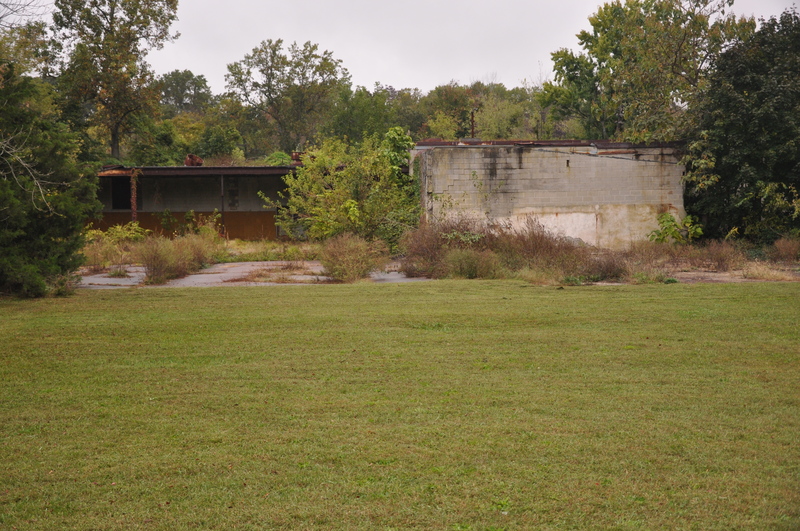
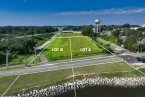
The Department of Natural Resources and Environmental Control is planning remedial action on a plot of land in Milton that once housed a poultry processing plant and served as storage for a Lewes-based paint company.
The Milton Fire Department plans to buy the property with the intent to use it as an overflow parking lot.
DNREC has determined both the land and groundwater on the site are contaminated and require action, but Kate Durant, an environmental scientist at DNREC, said the plan is to limit the property to commercial and industrial uses because the contaminants are not extremely harmful to the public.
“The level of containments isn't high enough to create a risk to indoor and outdoor workers,” she said. “There is an issue with it being residential; if somebody lived there for 30-plus years and was exposed to that soil every day for 12 hours a day.”
The public may comment on the proposed plan through Monday, Oct. 29.
During a Brownfield Investigation in early 2012, soil, groundwater, surface water and sediment samples were collected and screened by DNREC's Site Investigation & Restoration Section. Two surface and two subsurface samples contained benzopyrene at a concentration above residential soil standards.
“That can come from a lot of sources, like cars that are passing by [discharging] emissions out of the tailpipe,” Durant said.
Benzopyrene, she said, is a small byproduct of burning oils and tends to be found in more urbanized areas and close to roadways. The Milton property is located at the intersection of Front and Chestnut streets across from the fire department, a heavily traffic area.
High levels of arsenic concentrations were detected in three samples. Durant said the arsenic may have come from the chicken farming operation.
“We tend to find more arsenic in chicken manure,” she said. “Delaware as a whole has slightly elevated levels of arsenic.”
Groundwater samples contained aluminum, iron and manganese at concentrations above the Environmental Protection Agency's Secondary Maximum Containment Level, which could adversely affect the quality, taste and odor of the water. The Human Health Risk Assessment concluded the chemicals of concern pose an unacceptable risk to future residents. Groundwater is not suitable for consumption, the HHRA said, and could pose a risk to future users if ingested.
Before a Certificate of Completion of Remedy can be issued by DNREC, land use on the plot must be restricted to commercial and industrial purposes, excavation of soil must be prohibited unless given approval by DNREC and installation of groundwater wells for drinking purposes must be prohibited unless consent is given by DNREC.
The fire department has an agreement in place to purchase the property from the Gibbs family, said President Jack Hudson. The Gibbs family previously used the property as storage for the Gibbs Paint Company of Lewes. The plan, Hudson said, is to create additional parking. The department purchased and demolished dilapidated apartments directly across the street earlier this year for the same reason.
“We can't see what kind of condition the buildings are in,” he said. “We might use one of them for storage. I don't know beyond that. One of the things we want to do is get rid of an eyesore for the town.”
Being on the waterfront, he said, the fire department could build a dock for the rescue boat in the future, but no plans are in the works.
To read the full report, go to www.dnrec.delaware.gov/whs/awm/SIRB/Pages/SIRBplans.aspx. The complete file on the site including the Brownfield Investigation Report are available at the DNREC office, 391 Lukens Drive, New Castle, DE 19720. Most documents are also available at www.nav.dnrec.delaware.gov/DEN3. Written comments are being accepted through Oct. 29 at the aforementioned address.

Nick Roth is the news editor. He has been with the Cape Gazette since 2012, previously covering town beats in Milton and Lewes. In addition to serving on the editorial board and handling page layout, Nick is responsible for the weekly Delaware History in Photographs feature and enjoys writing stories about the Cape Region’s history. Prior to the Cape Gazette, Nick worked for the Delmarva Media Group, including the Delaware Wave, Delaware Coast Press and Salisbury Daily Times. He also contributed to The News Journal. Originally from Boyertown, Pa., Nick attended Shippensburg University in central Pennsylvania, graduating in 2007 with a bachelor’s degree in journalism. He’s won several MDDC awards during his career for both writing and photography. In his free time, he enjoys golfing, going to the beach with his family and cheering for Philadelphia sports teams.