












UD team builds living shoreline in Lewes
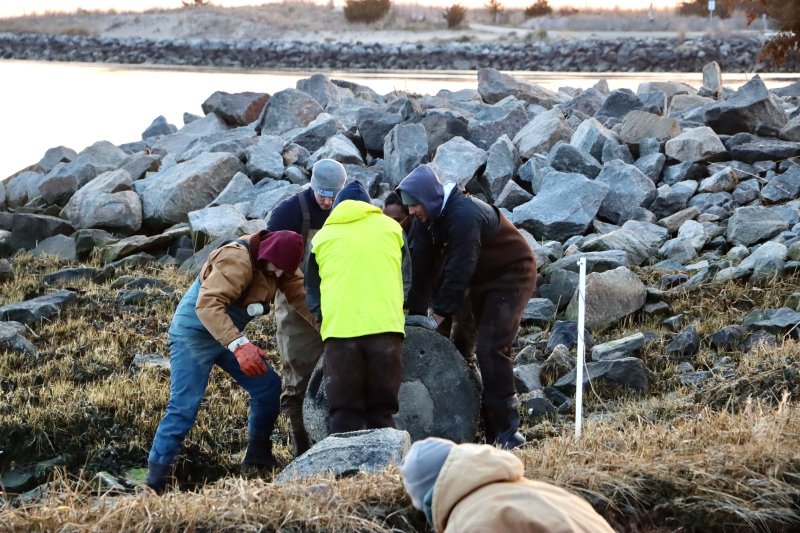
A tiny spit of land off Pilottown Road in Lewes is now home to a big environmental project.
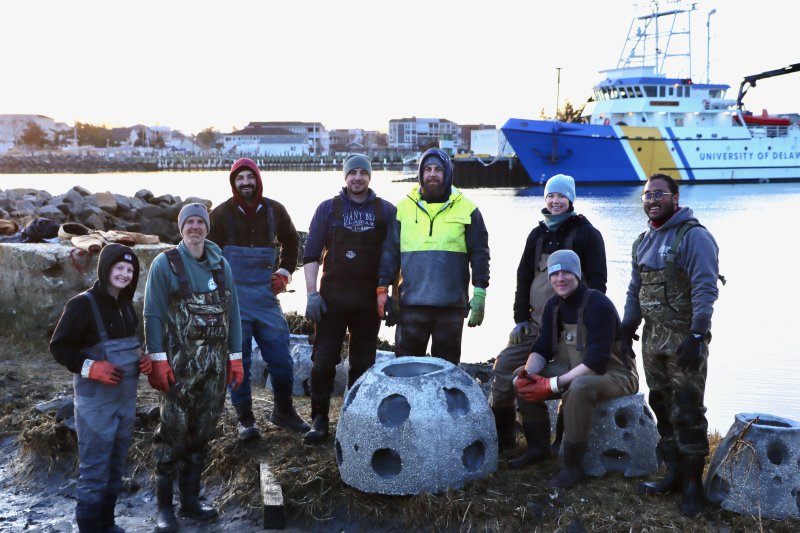
Researchers from the University of Delaware have completed building a living shoreline, designed to protect the Lewes boat basin from erosion caused by rising sea levels.
The area is hard to see from land, located between the Lewes Coast Guard station on one side and the University of Delaware’s boat basin on the other.
During the week of March 23, the team pulled on their boots, and rolled heavy materials through the mud at low tide and into the water.
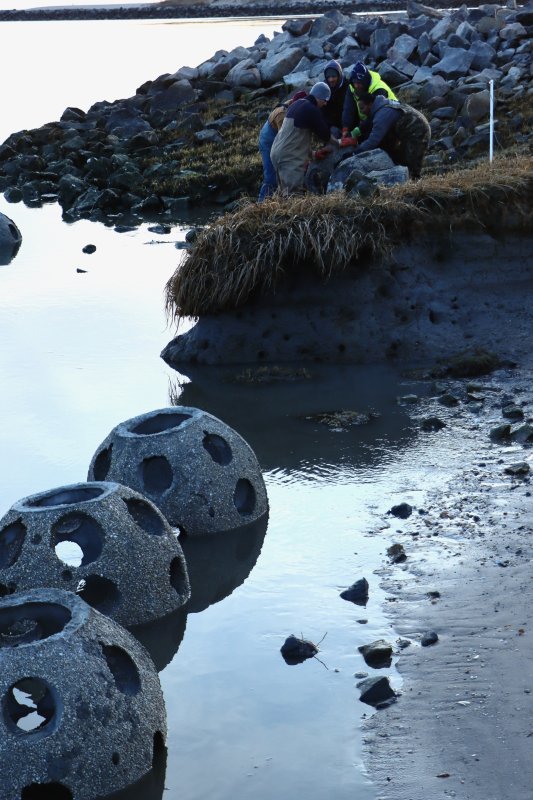
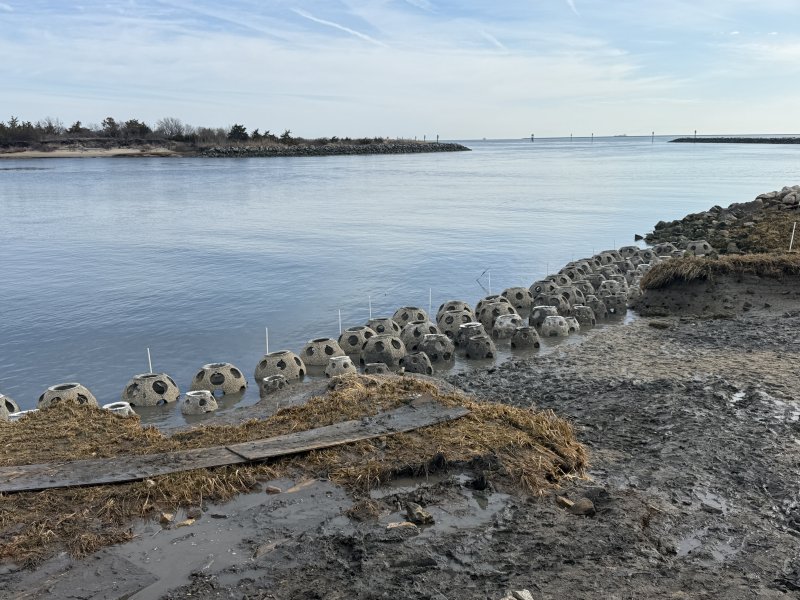
“We’re deploying oyster castles, reef balls; essentially those are going to break wave energy, and the oysters will colonize and live on them,” said Leigh Muldrow, a landscape architect and PhD student at UD.
The oyster castles look like large, concrete pickleballs. The team placed dozens to create the living shoreline, which is about 400 feet long.
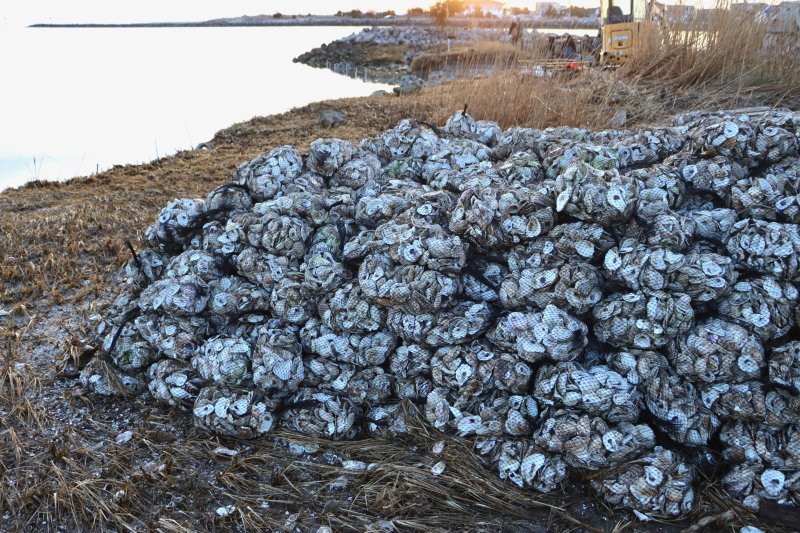
The team also placed 1,800 oyster bags, or oyster mattresses, in layers along the eroded banks. The goal is to form a thriving oyster reef on the small peninsula.
“We’re using old, retired fishing nets and creating bags for oyster bags, then stacking them in layers. As the tide comes in and out every day, the sediment in the water will get trapped in the shells, and it will rebuild the shoreline,” Muldrow said.
The team will complete another phase in May, which will include adding live plants.
They will then monitor the structure, take samples and make sure it’s doing what it is intended to do over time.
The 400-foot-long living shoreline is eventually going to become a haven for fish, like juvenile black sea bass, and a destination for recreational fishing.
It could also be a component in the Blue Economy, which has become a driver for much of UD Lewes’ research.
Ed Hale, the UD assistant professor who is leading the living shoreline project, said they are working with a company that installs thousands of feet of living shoreline each year.
“It’s important to showcase the difference between a bulkhead and traditional shoreline versus this approach, which creates a habitat for blue crabs, black sea bass and all those things people care about,” Hale said.
The installation is the culmination of a four-year initiative, funded by the U.S. Army Corps of Engineers, in partnership with UD’s College of Earth, Ocean and Environment; Delaware Sea Grant; the College of Engineering; Landscape Architecture program; and the Partnership for the Delaware Estuary.

Bill Shull has been covering Lewes for the Cape Gazette since 2023. He comes to the world of print journalism after 40 years in TV news. Bill has worked in his hometown of Philadelphia, as well as Atlanta and Washington, D.C. He came to Lewes in 2014 to help launch WRDE-TV. Bill served as WRDE’s news director for more than eight years, working in Lewes and Milton. He is a 1986 graduate of Penn State University. Bill is an avid aviation and wildlife photographer, and a big Penn State football, Eagles, Phillies and PGA Tour golf fan. Bill, his wife Jill and their rescue cat, Lucky, live in Rehoboth Beach.