












Not all fishermen have a boat. As soon as my youngest son Roger takes my 16-foot tin boat, I will fall into that category for the first time since the early 1970s.
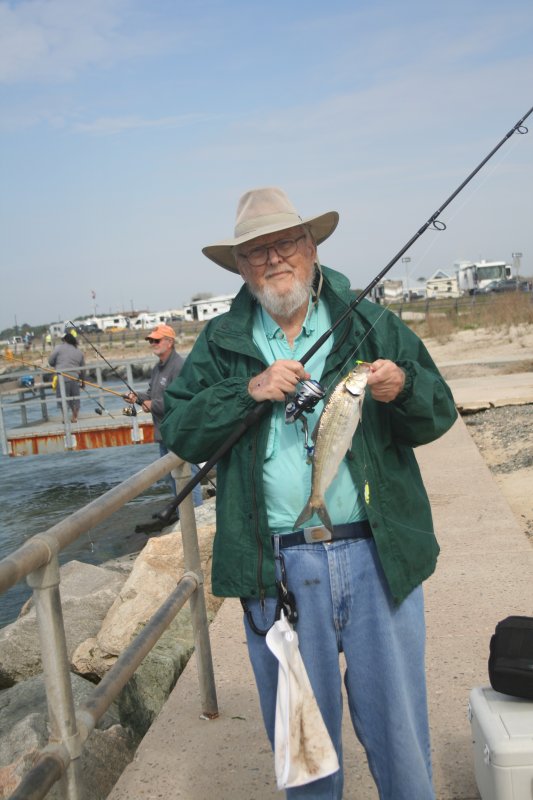
I am sure I will miss my boat, but I can fish the beach and Indian River Inlet as I did for all those years before I acquired that first 14-tin boat with the 15-horsepower motor.
I fished Indian River Inlet long before there were rocks to stand upon. My parents would visit friends who had a cottage in Dewey Beach, and they all would drive to the north side of the inlet west of the bridge and have a picnic lunch. I would fish with squid from the metal breakwater that lined the inlet in those days. This would have been in the late 1940s and early 1950s. Most of what I caught were very small black sea bass.
Once I got my license and my 1951 Plymouth two-door coupe in 1958, I began to surf-fish. I could carry my surf-fishing stuff in the car and an old Army tent that, in those days, I could set up just about anywhere along the beach.
Being able to fish at dawn and dusk improved my catching, and I really got into fishing the surf and inlet. I also took a few trips on the head boat out of the Northside Marina. In those days, the Northside was pretty much a collection of mobile homes.
The inlet has gone through a few changes since then; the last one was a doozy. The place where I liked to fish for so many years is completely changed. This was just west from under the bridge on the north side. There was a beautiful rip there that attracted bait and fish better than any other location along the inlet. Unfortunately, this beautiful current undermined the land and had to be filled in. The Army Corps of Engineers did a great job and placed large rocks at my fishing spot that extend out a good 40 to 50 feet into the inlet. I feel certain this will keep the current from undermining the land, and I also feel certain the fish-attracting rip is now history.
During the 17 years we had our camping trailer at Bay Shore in Ocean View, I always fished the south side of the inlet. I fished there before we bought our first camper, when we stayed in a tent at the south side campground, and I just kept fishing there when we moved to Ocean View.
As far as I can tell, the south side is pretty much the same as it has always been. If you begin down at the point where the ocean meets the inlet, there is a sand bar that has washed out into the inlet. Fish that by allowing your bucktail to wash across the sand bar in the current. Back when we had big trout, that was a sure killer.
Other than that, just fish the rocks and rips as you would with whatever lure you have faith in. For me, that would be a white bucktail with a white worm or Gulp! or Fishbites.
If it’s fall and the fish are on mullet, I would go with a black back plug such as a Rebel or an SP Minnow.
When fishing with bait for tog, I would use some sort of shellfish on a one-hook rig with a bank sinker. This can be a sand flea, peeler crab, fiddler crab or whatever you can catch or purchase. Tog also go for clams or mussels, but this type of bait is hard to keep on the hook as everything in the water, from crabs to minnows, will try to eat your bait.
Tog can take a piece of bait in their mouth, extract the shell, eat the meat and spit out the shell so fast you have to set the hook while the fish is still thinking about eating the bait.
I try to keep my line at a 90-degree angle to the water so the sinker does not go off on its own and get into trouble. I see other anglers cast out into the inlet and allow their rigs to find purchase wherever they may end up on the bottom. Somehow, they seem to get these rigs back. Anytime I try this, I end up donating more structure to the bottom.
Other anglers will leave their rods either leaning against the rail or balancing on top of it. I hold mine and am prepared to set the hook at the first indication of a bite. Since I have a short line from the end of the rod to the rig and a short leader to the hook, I can detect the bite pretty quickly.
-

Eric Burnley is a Delaware native who has fished and hunted the state from an early age. Since 1978 he has written countless articles about hunting and fishing in Delaware and elsewhere along the Atlantic Coast. He has been the regional editor for several publications and was the founding editor of the Mid-Atlantic Fisherman magazine. Eric is the author of three books: Surf Fishing the Atlantic Coast, The Ultimate Guide to Striped Bass Fishing and Fishing Saltwater Baits. He and his wife Barbara live near Milton, Delaware. Eric can be reached at Eburnle@aol.com.