












The founding father many probably haven’t heard about
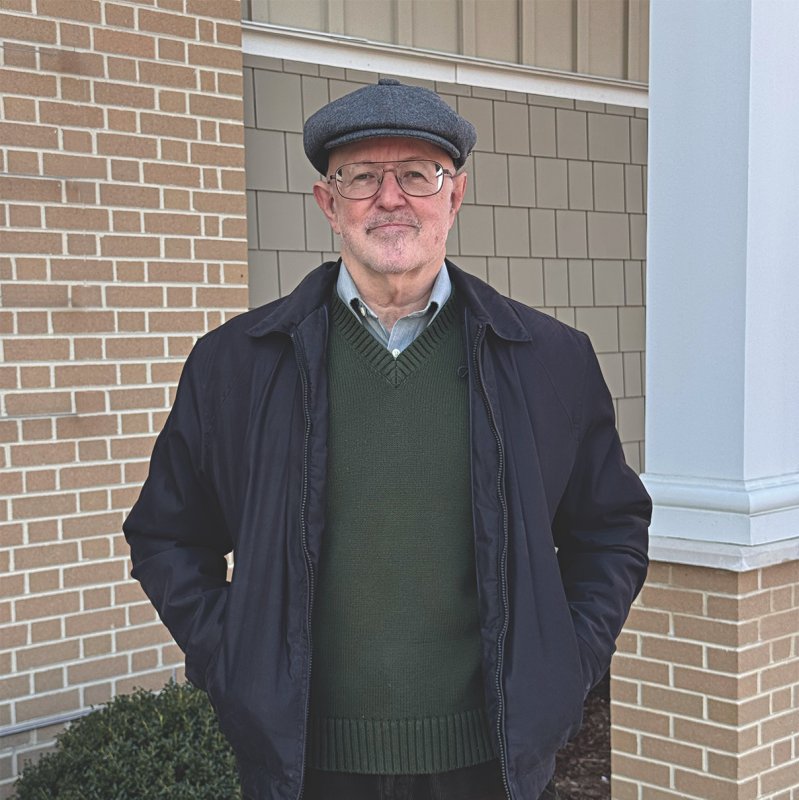
Dan Pritchett, a University of Delaware Osher Lifelong Learning Institute instructor and historian, will present “Delaware in the Revolution – John Dickinson: A New Look,” from 4 to 5:15 p.m., Monday, March 9, at the Lewes Public Library, 111 Adams Ave. The lecture offers a fresh exploration of one of the most fascinating yet often overlooked leaders in America’s founding.
Dickinson, celebrated during his lifetime as the “Penman of the Revolution,” shaped the young republic through his influential writings, constitutional work and political leadership. But his controversial position on the Declaration of Independence continues to eclipse his broader legacy.
“Dickinson’s record is astonishing,” Pritchett said. “He had decades of public service stretching from the Stamp Act crisis through the Revolution and into the framing of the Constitution. Yet he’s remembered almost entirely for one thing: not signing the Declaration of Independence. He had good reasons for that decision, but it has overshadowed his remarkable life. Now is exactly the right time to reexamine who he really was – a deeply principled patriot who fought for the cause, shaped our early political thinking and deserves far more recognition than he gets, even here in Delaware.”
The writer for American rights
Dickinson’s “Letters from a Farmer in Pennsylvania” were among the earliest and clearest articulations of the colonists’ grievances, and the essays became widely read across America and Europe. “Dickinson’s ‘Letters’ offered one of the first clear arguments for colonial rights,” Pritchett said. “He wrote with such clarity that he quickly emerged as a leading voice for American liberties.”
A product of his Quaker upbringing, Dickinson believed that nonviolent resistance was the wisest course for the colonies, though he recognized the need for military preparedness. His caution regarding immediate independence stemmed from a belief that the colonies were not yet ready for the economic and military consequences of declaring themselves a free nation.
“If Dickinson had supported the Declaration of Independence,” Pritchett said, “he probably would have taken the lead in writing it instead of Jefferson. A lot of people assumed he had written it because he had written so much else. And even though he didn’t support the declaration, the moment it was enacted, he joined the fight.”
Dickinson and the cost of patriotism
Although small in population, Delaware played an outsized role in the Revolutionary War. Its soldiers distinguished themselves in Washington’s army, but the colony, like many others, faced deep internal divisions between patriots and loyalists. Within this turmoil, prominent Delawareans such as Dickinson experienced profound personal losses because of their support for American rights.
“People forget that even though Dickinson didn’t sign the Declaration of Independence, he suffered as much as anyone for the cause,” Pritchett said. Loyalists in Delaware ransacked his Poplar Hill home, and the British burned his Fair Hill home in Pennsylvania to the ground and occupied his Philadelphia residence. “They didn’t care whether his name was on the document. The British knew him as an ardent patriot who stood firmly for American rights,” said Pritchett.
About the presenter
Pritchett brings more than four decades of teaching experience to his OLLI classrooms. He taught eighth-grade American history for 34 years in the Capital School District and spent seven years as an adjunct professor at Delaware State University. Since retiring in 2010, he has been a popular OLLI instructor, beginning in 2012, and currently offering courses in both Dover and Lewes.
He is known for blending his two passions – history and music – into dynamic classes that weave together historical narratives and musical interpretation. His widely loved course on Alexander Hamilton, for example, paired Ron Chernow’s biography with selections from the Broadway musical soundtrack. He continues this creative approach with an upcoming class on the musical “1776” and a well‑received course on George Gershwin that has drawn full enrollment, with both in-person and online participants.
Lewes 250 honors the American spirit
Pritchett’s Dickinson presentation is part of Lewes 250, a community-wide celebration marking America’s 250th anniversary in 2026. Organized by the City of Lewes, Lewes 250 includes a yearlong series of events, programs and historical commemorations celebrating the town’s unique role in American history and its connection to the nation’s founding.
Pritchett will give another Lewes 250 talk Monday, April 13, at the Lewes Public Library, in honor of Thomas Jefferson’s birthday: “The Declaration of Independence: What You Didn’t Learn in School.”