












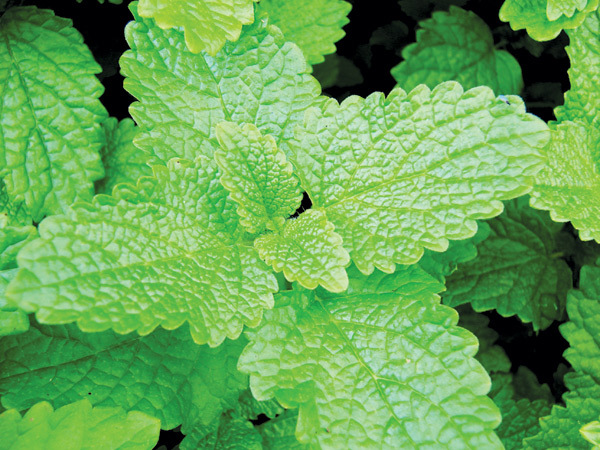
Fresh lemon balm leaves are a delicious choice
Since ancient times, the gummy sap of balsam trees was used to treat wounds. The Bible’s “balm of Gilead” is one of them. Today our word “balm” comes from this ancient balsam tree, so any plant with the name “balm” in it is usually medicinal.
Lemon balm (Melissa officinalis) is a sweet-smelling herb of the mint family.
Its citrusy leaves are used to season teas and potpourri, and even used in liqueurs and yes, were once widely used as a medicine. Lemon balm grows up to two feet tall and blooms in late summer with tiny two-lipped flowers. It prefers full sun, but is somewhat shade-tolerant, and since it is the leaves rather than the flowers that are used, it can be grown even where it might not flower at all. In fact, the taste is best if harvested before the plant blooms.
Because it spreads from underground runners as well as by seed, lemon balm will form large clumps. Because it spreads so easily, lemon balm may become an invasive weed, but can be kept in check by pulling out the young plants. You can also simply cut the flowers before they can set seed.
Because lemon balm is drought tolerant, it is a great low-maintenance plant.
Like most flowering herbs, it attracts pollinators such as bees and butterflies.
While this herb is hardy from USDA zones 4 through 9, in areas of harsh winters, mulch in late fall. Your plants will die down to the roots every winter but sprout again in spring.
You can easily grow lemon balm from stem cuttings, or from seeds. Indeed, the seeds self sow easily, and you may find new plants throughout the garden. Lemon balm is widely available as a plant or seeds. Seeds are available online from sources such as Johnny’s and High Mowing Seeds. To grow from seed you can either direct seed in the garden or start seeds indoors six to eight weeks before your last frost. The seed takes 12 to 21 days to germinate.
Lemon balm thrives in a wide range of soil pH between 5.6 and 9.0, though it does best in a range of pH 6.0 to 7.5. Add compost to the bed before planting and keep the area well watered. Space the plants about a foot apart. Lemon balm makes a great container plant that will release its fragrant lemony scent throughout the year. Keep it in a bright, sunny window and don’t let the roots dry out.
Like many herbs, it seems to do best when crowded, so use a pot that just barely holds the roots.
Fresh lemon balm leaves are delicious paired with cucumbers and tomatoes or added into fruit salads. You can even toss some leaves into your bathwater.
The lemony leaves brew into a pleasant herbal tea and can even be mixed with black tea to add a lemon twist. The tea is said to help relieve insomnia, headaches, indigestion and even anxiety.
With lemon balm in the garden or on the kitchen windowsill, even the stormiest weather will seem “balmy.”