












Harbor of Refuge: Move or lose?
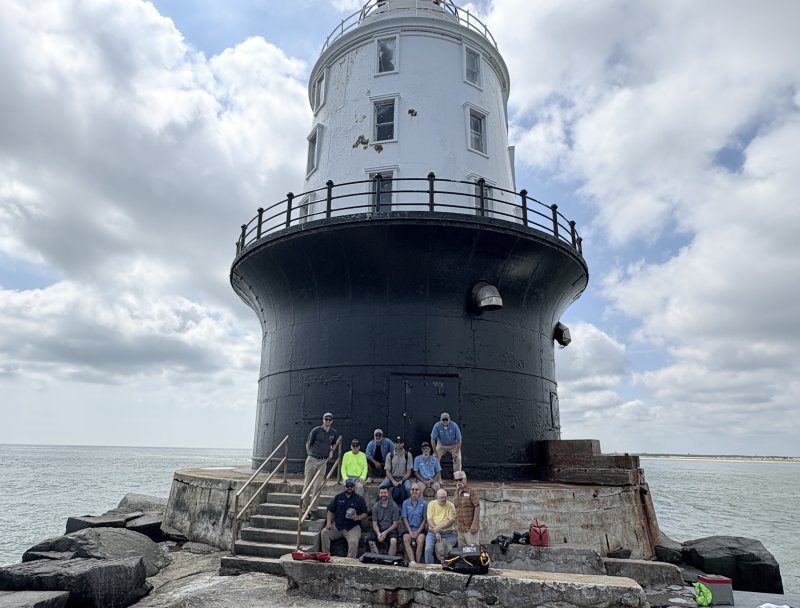
One hundred years ago next month, after having stood watch over the mouth of Delaware Bay for 162 years, the Cape Henlopen Lighthouse collapsed into the Atlantic Ocean. A little more than six months later, the Harbor of Refuge Lighthouse was lit in the mouth of the bay.
Now, an effort is underway to make sure the existing lighthouse at the southern end of a 1.5-mile-long breakwater doesn’t share the same fate as the lighthouse that once stood on land near Cape Henlopen’s intertidal zone.
There’s been a very general conversation about what it would take to move the structure, said Ron Parks, Delaware River and Bay Lighthouse Foundation president. There are a lot of variables, but the foundation is willing to do the work to save the lighthouse if there’s community support to do so, he said.
Delaware River and Bay Lighthouse Foundation is dedicated to the preservation of the Harbor of Refuge Lighthouse. In 2002, after it hadn’t been occupied for nearly 30 years, the foundation assumed caretaking and ownership responsibilities for the lighthouse, which continues to serve mariners as a navigational aid.
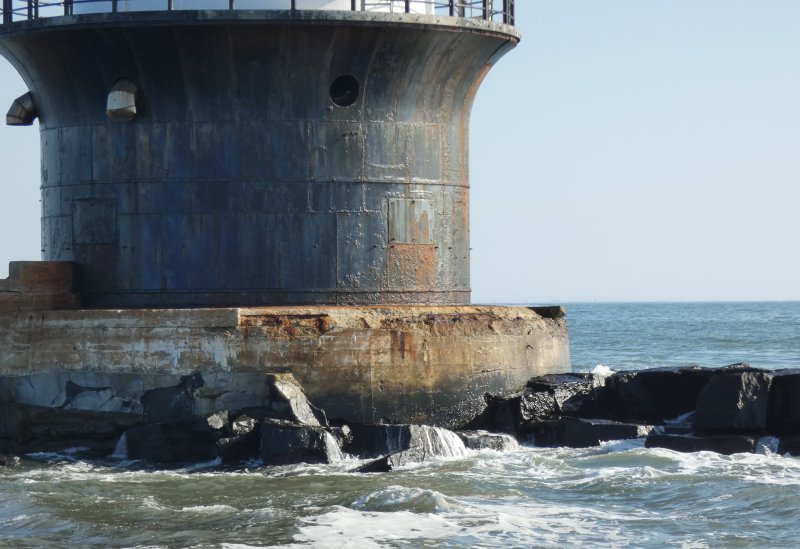
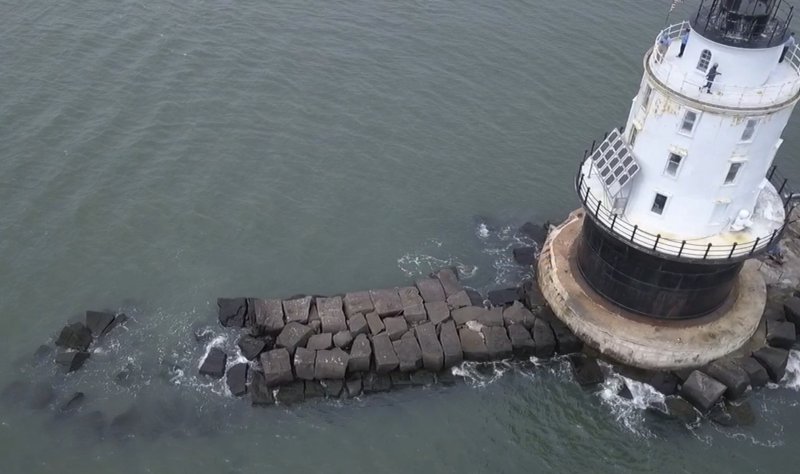
For many years, in addition to the ongoing maintenance, the foundation offered tours of the lighthouse. That changed in late 2023 when the U.S. Army Corps of Engineers issued a report that said a scour area had formed at the southern toe of the breakwater and that it could cost between $90 million and $120 million to repair and stabilize the wall. The foundation has been doing only maintenance on the lighthouse ever since.
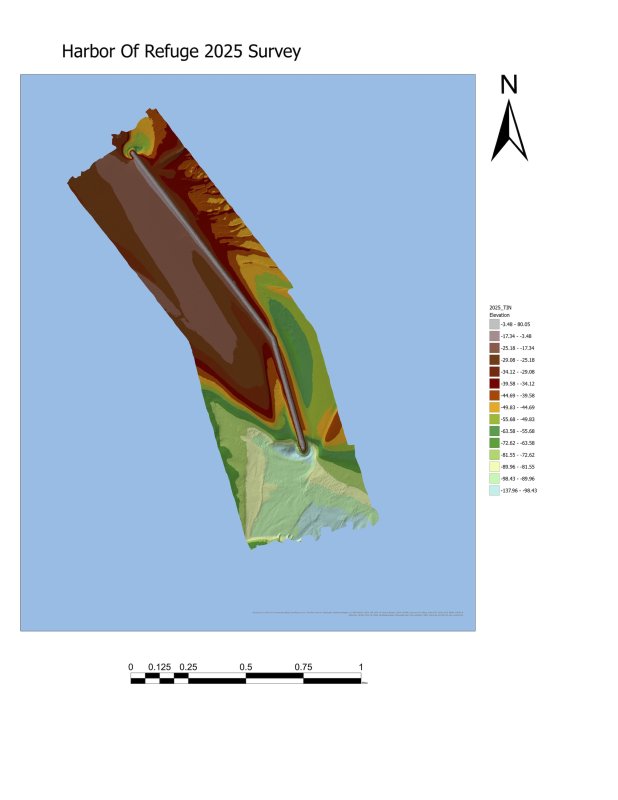
The depth of the water at the time of the breakwater’s construction in 1901 was 50 feet, said Parks. The scour area is now 130 feet, and blocks that formed the breakwater are tumbling into the pit, he said.
Parks said the Army Corps installed a GPS tracking device on the railing of the lighthouse’s light room in August to monitor if the lighthouse is moving. To date, no movement has been detected, he said.
“Coincidentally, 2025 was the first time in a decade that no named storm or hurricane made landfall on the county’s Atlantic coastline,” said Parks.
Steve Rochette, Army Corps spokesperson for the Philadelphia District, confirmed a GPS monitor has been installed on the lighthouse and that there has been no movement. A survey was done in 2025 and the scour is about the same depth now as it was in 2023, he said.
To facilitate the discussion on moving the lighthouse, the foundation commissioned a feasibility study by ICC Commonwealth. The New York-based construction and engineering firm specializes in large-scale construction projects and has overseen a number of lighthouse moves, including Cape Hatteras Lighthouse in North Carolina; Gay Head Lighthouse, Highland Light and Nauset Light in Massachusetts; and Southeast Lighthouse on Block Island in Rhode Island.
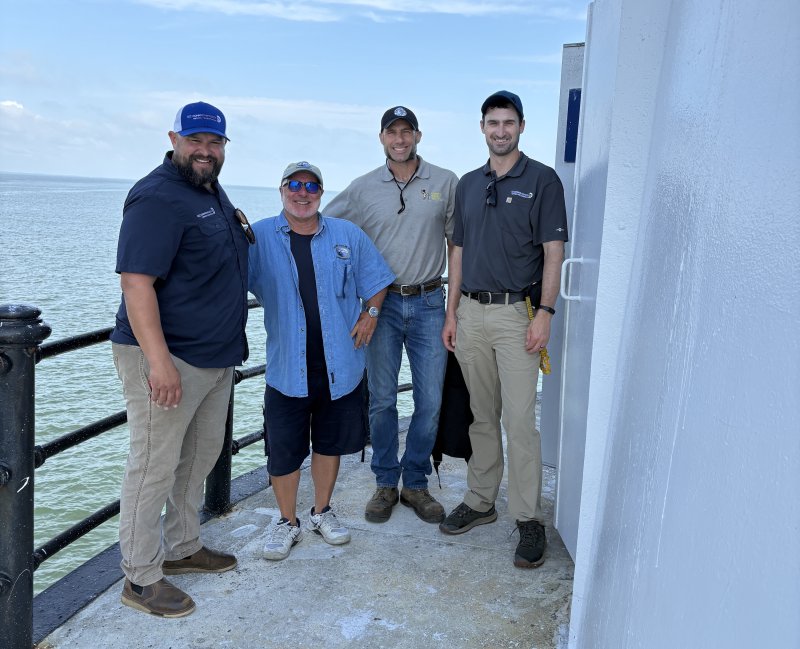
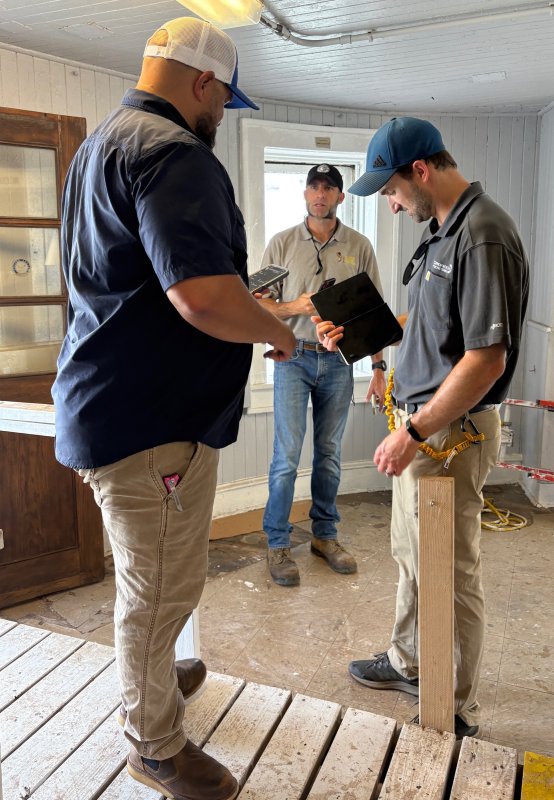
Parks and a team of experts went out to the lighthouse in July. The team included Tyler Finkle, who at the time was ICC Commonwealth division manager, but now owns his own business doing the same thing, called Finkle Preservation & Construction; John Dennan, a structural engineer for ICC Commonwealth; and Gabe Matyiko, Expert House Movers owner.
The foundation received the report in November.
The study determined that the best and most efficient method of moving the structure was to disassemble it into manageable components and transport them to land where they would be reassembled on a new foundation, said Parks. The study was not an engineering analysis, but the projected cost of the project is $4 million to $6 million, which is approximately 5% of the estimated cost to repair the breakwater wall, he said.
“I’m not trying to minimize $5 million, but I actually thought it was something that was within reach,” said Parks. “I know people in Lewes and the surrounding areas value their history.”
There’s a lot of work that would need to be completed before anything is moved, but the approach would be the same as any other lighthouse, said Finkle, listing off engineering studies, reviewing construction documents, site surveys, figuring out where the heavy structure would be placed, and more.
“It definitely can be a success story, and I hope it gains traction,” said Finkle.
Parks said he can envision, years down the road, the lighthouse having a second life as a museum, similar to the way Fort Miles is now, he said.
Something will happen to the lighthouse if nothing is done, but exactly when is unknown, because predicting the future is a tough business, said Parks. Everything is fine, until it’s not, he said.
“[The foundation] is in it for the long haul,” said Parks. “I think this is something that can gather support if the other option is losing it.”

Chris Flood has been working for the Cape Gazette since early 2014. He currently covers Rehoboth Beach and Henlopen Acres, but has also covered Dewey Beach and the state government. He covers environmental stories, business stories and random stories on subjects he finds interesting, and he also writes a column called Choppin’ Wood that runs every other week. He’s a graduate of the University of Maine and the Landing School of Boat Building & Design.