












ICE active in state, Sussex County
Editor’s note: This is the first in an ongoing series about the controversial topic of immigration and how it's being handled in Sussex County.
A Georgetown man and his adult son were in their vehicle when they were approached by masked federal immigration officers asking the men to identify themselves.
The younger man was detained without a warrant after officers broke the window of their vehicle and pulled him out.
Bryant Garcia, executive director of La Esperanza, which provides guidance and legal assistance to immigrants, related the incident that occurred more than a month ago.
Garcia said such arrests have become common in Sussex County during the past year, perhaps once every couple of weeks, under a nationwide crackdown by the Trump administration.
“It’s a pattern,” he said.
Garcia said he often finds out that someone was taken into custody when a family contacts his office for assistance. Garcia said he does not always hear about cases when the person who is detained has no family in the area or the family does not seek help.
Jack Dixon, direct support coordinator for Sussex Help, said more than 100 people were picked up by federal Immigration and Customs Enforcement in the past year, based on accounts he has heard about.
The incidents have not been widely publicized and the general public is not aware of them, said Dixon, whose organization assists families with basic necessities after someone is detained by federal agents,
“We hear of people being detained and deported all the time,” Garcia said. “People think it's not happening here.”
There have been reports of people being detained in Georgetown, Laurel, Millsboro, Seaford and Ocean View, said Dixon, whose group has assisted 40 to 50 families.
Apprehension figures for violations of immigration laws are difficult to obtain.
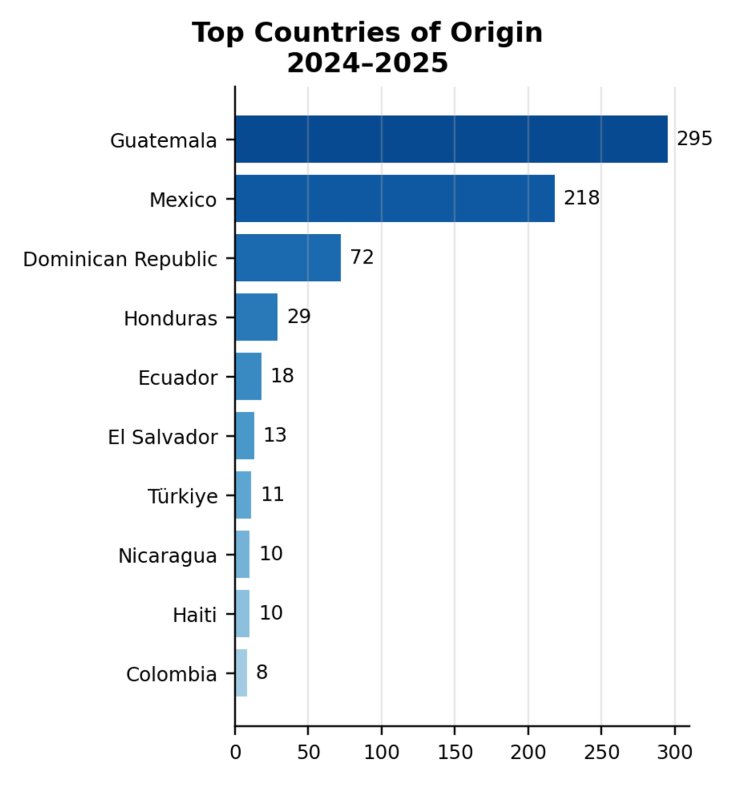
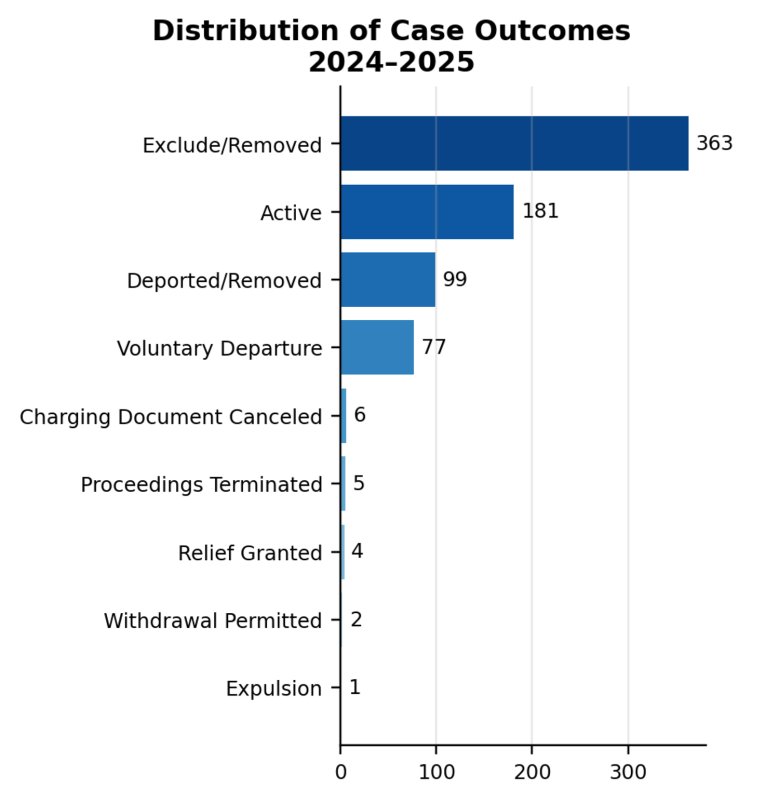
But a team from UCLA and University of California Berkeley obtained information through a Freedom of Information Act request as part of its Deportation Data Project. The data for 2024 through Oct. 15, 2025, is available online.
It illustrates the drastic increase in immigration law enforcement in Delaware and nationwide since the Trump administration began its crackdown in early 2025.
The Deportation Data Project was unable to obtain county-specific data, although it is being sought, said Graeme Blair, a UCLA political science professor and co-director of the project.
The number of street arrests by ICE mushroomed in Delaware to 347 in 2025 through Oct. 15, up from 24 in all of 2024. Figures include probation and parole cases, those “located,” and arrests of people who were not incarcerated.
The number of arrests from local, state and federal incarceration in Delaware remained fairly steady at 132 in the first 42 weeks of 2025, compared to 168 for all of 2024.
There were 508 men and 10 women arrested for most of 2025 in Delaware, compared to 211 men and nine women in 2024.
The data helps support anecdotal evidence provided by organizations working to assist families affected by ICE apprehensions.
ICE officers working in Sussex County typically stake out locations like convenience stores and spot people they suspect are in the country illegally, Dixon said. The agents follow the vehicle and stop it to check out the driver, he said.
In some cases, the driver is pulled from the vehicle, which may be left along the side of the road, he said. The family does not suspect something has happened until the person does not return from work.
“What they've described has been horrific,” Garcia said. “I don’t think people understand that. Even if you agree that people who are undocumented should be removed from the country, I don’t think people can agree to housing people in conditions where they can die and their human rights are violated.”
The U.S. Department of Homeland Security did not reply to requests in recent weeks for figures on detentions and deportations from Sussex County or to explain the current immigration enforcement policy.
“We do not support the tactics that ICE is using in our state,” said Mila Myles, director of communications for Gov. Mat Meyer.
Rep. Claire Snyder-Hall, D-Rehoboth Beach, said she did not know details of ICE activity in the state or county, but she has heard about detentions in several areas. She said she opposes the ICE tactics she has heard about.
Snyder-Hall said she is a co-sponsor of legislation, which may come to the floor for a vote soon, to help to protect immigrants living in the state.
“The bills in general are trying to protect Delawareans from being caught up in this deportation machine that is in other parts of the country,” she said.
The Delaware General Assembly is at various stages of considering pieces of legislation related to immigration law enforcement in the state, although none had passed as of April 2.
House Bill 94 prohibits law enforcement from cooperating with federal immigration enforcement at schools, churches or healthcare facilities. HB 58 restricts police from stopping, questioning or arresting people based on actual or suspected citizenship or immigration status. HB 151 regulates the operation of private detention facilities in Delaware. Senate Concurrent Resolution 123 urges the Delaware River and Bay Authority to stop contracting with companies such as Avelo Airlines that facilitate deportation of undocumented people.
Sens. Chris Coons and Lisa Blunt Rochester and Rep. Sarah McBride have opposed Trump’s immigration enforcement policies and ICE tactics, including violence and the use of deadly force.
The three lawmakers voted against Homeland Security funding March 27 because they want reforms made to its operations, and they have supported proposed reforms.
McBride was among the first in Congress to call for the impeachment of former DHS Secretary Kristi Noem, citing concerns over Noem’s leadership and lack of accountability within the department.
Immigrants come to the United States to find a better life, Garcia said.
“The most common thing is that people want to work and provide their children with a better future and an education,” he said. “People still see the United States as the land of opportunity and a place to build something.”
Some immigrants are also fleeing troubles in their homeland, such as violence and natural disasters, Garcia said.
Many undocumented immigrants have difficulty navigating the lengthy and complicated process to become citizens, he said.
The administration of President Donald Trump has cracked down on illegal immigrants since early 2025.
Prior administrations prioritized removing convicted criminals and others who were considered threats to the public, Garcia said.
“The government was letting people stay and they were building a life,” he said of many undocumented immigrants. “These people have done things the way they have been asked to do them, and now the rug is being pulled out from underneath them. It’s not fair.”
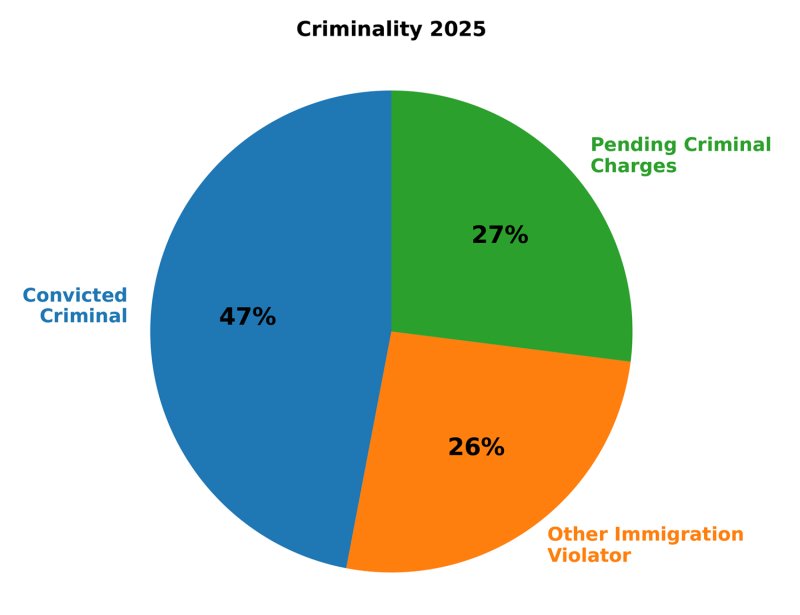
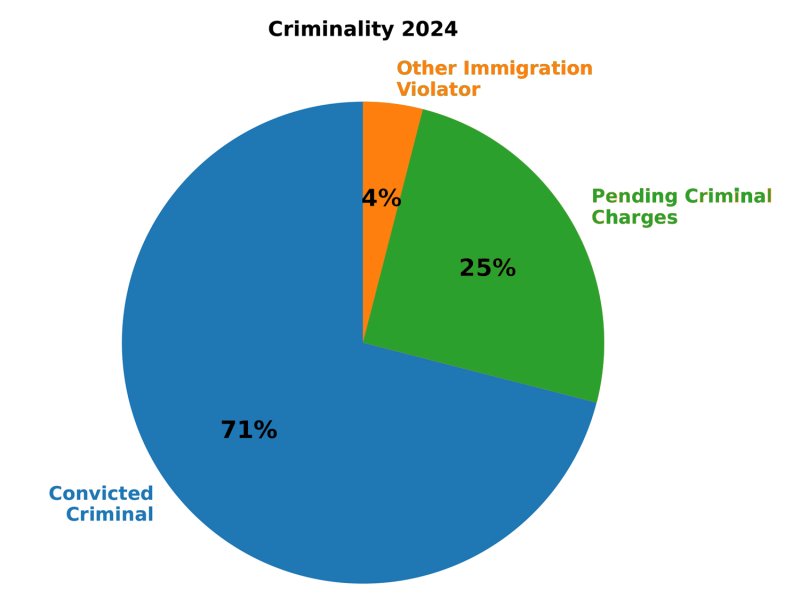
Despite claims by the Trump administration that the stepped-up deportation effort is to remove hardened criminals, Garcia said the people detained in Sussex County through street arrests typically do not have criminal histories.
“Even if not documented, these people are not criminals,” he said. “They have not been arrested or convicted of a crime.”
The undocumented immigrants pay taxes and contribute to their communities, Garcia said. Some are business owners.
The country’s immigration system was widely recognized as broken for many years, but it has gotten worse during the last year under the Trump administration, he said.
“Before, you had immigration judges who were willing to listen and consider each person's situation, and try to give them a chance under law to fight their case,” Garcia said.
Under the current administration, the system has been changed to quickly deport people who are in the country illegally, sometimes without due process, he said.
Taj Magruder, state press secretary for Blunt Rochester, said the senator’s staff has received calls from more than 100 people in the state who have had a family member detained by ICE.
“The senator finds the immigration enforcement tactics completely unacceptable,” Magruder said.
During Trump’s State of the Union speech Feb. 24, Blunt Rochester brought as her guest Maria Mesias-Tatnall, director of outreach and immigration assistance for the Delaware Department of Justice, Magruder said. Mesias-Tatnall helps immigrants and their families, he said.
Blunt Rochester also hosted a private constituent roundtable in early February with members of the immigrant community to hear their stories firsthand, he said.
“It was a really unbelievably jarring and terrifying experience to hear about,” Magruder said.

Kevin Conlon came to the Cape Gazette with nearly 40 years of newspaper experience since graduating from St. Bonaventure University in New York with a bachelor's degree in mass communication. He reports on Sussex County government and other assignments as needed.
His career spans working as a reporter and editor at daily newspapers in upstate New York, including The Daily Gazette in Schenectady. He comes to the Cape Gazette from the Cortland Standard, where he was an editor for more than 25 years, and in recent years also contributed as a columnist and opinion page writer. He and his staff won regional and state writing awards.
Conlon was relocating to Lewes when he came across an advertisement for a reporter job at the Cape Gazette, and the decision to pursue it paid off. His new position gives him an opportunity to stay in a career that he loves, covering local news for an independently owned newspaper.
Conlon is the father of seven children and grandfather to two young boys. In his spare time, he trains for and competes in triathlons and other races. Now settling into the Cape Region, he is searching out hilly trails and roads with wide shoulders. He is a fan of St. Bonaventure sports, especially rugby and basketball, as well as following the Mets, Steelers and Celtics.