













It’s cold, but fishing season isn’t over yet
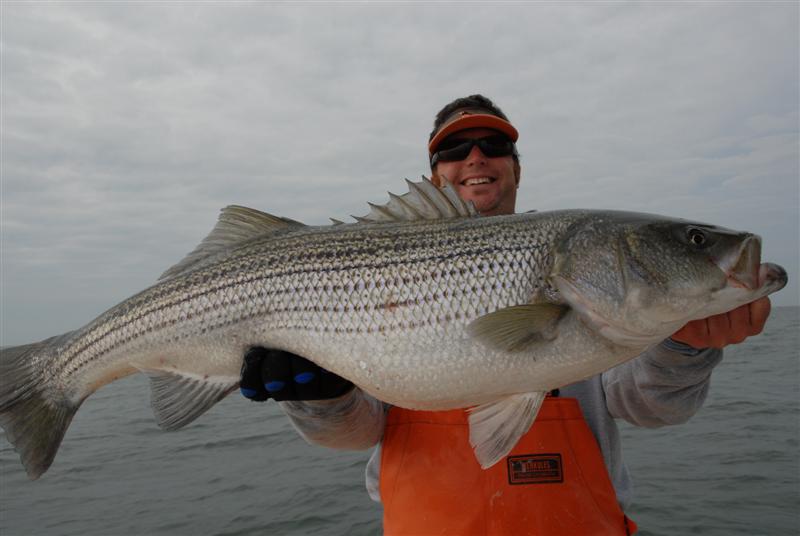
I know the weather has turned colder and the holiday season is upon us, but the fishing season isn’t over. We still have almost a month of sea bass season, and sooner or later those big stripers from New Jersey will come south. I, for one, will be rigged up and ready for them. Will you?
I booked a 10-hour trip on the Angler out of Ocean City, Md., for Monday, Dec. 8. Right now, the weather is a little questionable, but Dec. 9 is looking good, so if they cancel, my reservation will just move to the next day. I went on the same boat last year Dec. 2. I caught my limit and, for the first time in my long and storied career, I won the pool. This year, I will just be happy to catch some fish and have a good time.
As some of you may remember, on my last trip on the Angler, my line parted as I set the hook on what I am sure was at least the pool winner, if not a new world record black sea bass, and my rod hit the overhang and broke. Well, I am back with a new Tsunami rod and new red Spider 50-pound line with a 40-pound fluorocarbon leader attached to the line with a slim beauty knot compliments of my son Ric.
As for the stripers, my son Roger has been chasing them on the surf up in Jersey to no avail. Now, Roger is a legend in our family for catching fish. He can and has caught bass, the largemouth kind, out of a mud puddle. He will stand alongside me and catch keepers while I catch shorts – be it flounder, sea bass or croaker. So, to have him not catch stripers from the beach when some of his friends are doing so is quite unusual. I asked him to check his butt to see if the Golden Horseshoe had fallen out.
For us mere mortals, we need to get ready to catch and probably release stripers from the beach, the inlet and from boats inside the Three-Mile Limit.
While we are on the subject of the Three-Mile Limit, let me impress on you that fishing for striped bass – let along possessing one – outside that zone is a federal offense. The Coast Guard and state marine police will write you a ticket that carries a big fine if they catch you outside the Three-Mile Limit.
The ideal situation is to have birds working over breaking fish – be it in close to the beach or out in a boat. If it is out in a boat, please fish from the edge of the action. Do not run through the birds and thereby put the fish down. I know some idiot will do that sooner or later. At that point, all you can do is get on the VHF and in your sweetest voice thank the captain of the offending boat, calling both by name.
It is important to know what the stripers are feeding on so you can imitate the bait. The last two years up in Jersey, they have been on sand eels, and the hot lure has been the AVA Jig. Working the AVA Jig from a boat is easy. Just drop the lure to the bottom and let it rest for a few seconds. Then jig it up with enough force to disturb the sand as if the sand eel has just left its burrow. Continue until you attract the attention of a striped bass.
Fishing an AVA Jig from the beach is a bit more difficult. You have to work the jig to imitate a sand eel moving across the bottom. Drag and stop. Drag and stop. I must admit, I don’t have any experience with AVA Jigs in the surf.
What I do have experience with is cut bunker and plugs. No birds, I am soaking cut bunker. Birds, I am casting plugs.
Cut bunker on a single-circle-hook bottom rig. I may use a fish-finder rig.
When the birds are diving over breaking fish, the first lure I am going to use is a pencil popper. This thing casts like a rocket, creates a lot of commotion on the surface and should attract the attention of any striped bass in the neighborhood.
You work a pencil popper by almost holding it in place by slowly turning the reel while whipping the rod to make the lure jump up and down while seeming to remain stationary. This imitates a wounded baitfish that a big striped bass cannot refuse.
Of course, you have to find striped bass feeding under diving birds close to the beach.
-

Eric Burnley is a Delaware native who has fished and hunted the state from an early age. Since 1978 he has written countless articles about hunting and fishing in Delaware and elsewhere along the Atlantic Coast. He has been the regional editor for several publications and was the founding editor of the Mid-Atlantic Fisherman magazine. Eric is the author of three books: Surf Fishing the Atlantic Coast, The Ultimate Guide to Striped Bass Fishing and Fishing Saltwater Baits. He and his wife Barbara live near Milton, Delaware. Eric can be reached at Eburnle@aol.com.