













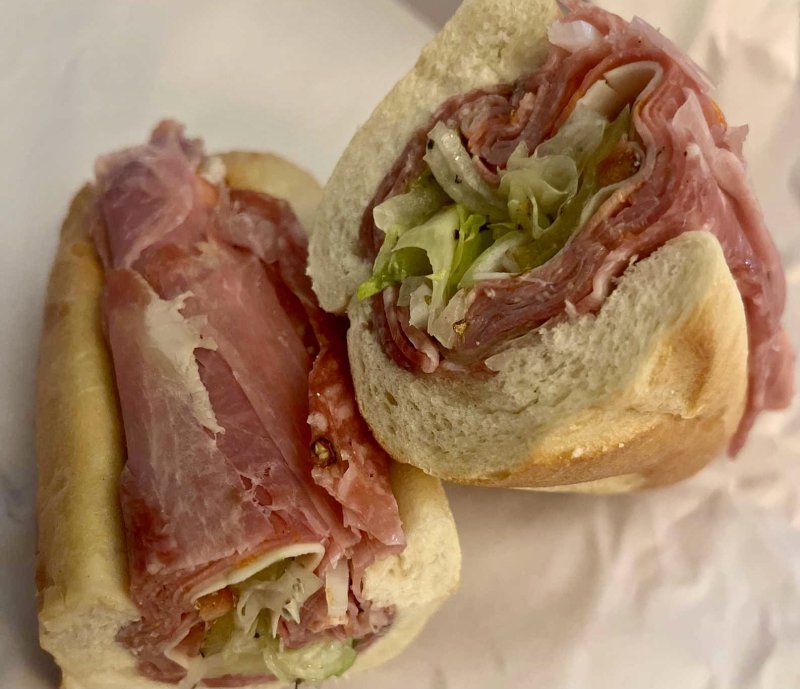
It takes a hero to eat this overstuffed sandwich
We have all likely heard the origin story about the familiar handheld food called a sandwich. In 1762, the Earl of Sandwich requested his staff prepare him a snack of beef between two slices of bread. The tale has him sitting at a gaming table and unwilling to interrupt his play. And in 2004, a chain restaurant was founded by one of his descendants to capitalize on the family legend.
While the original sandwiches were simple combinations of bread and filling, there is another type of sandwich that is both larger and more complex. It also has a wide range of names: submarine sandwich or sub, grinder, hoagie, hero, and po’boy are all regional variations on the same thing: a torpedo-shaped roll, cut in half lengthwise and filled with smoked meats, cheese, lettuce, tomato and oil-based dressing.
Food historians disagree widely about the various titles for these oversized sandwiches, except for the sub, which simply refers to the fact that the bread roll is shaped like a submarine. According to the OED, the first printed record of a submarine sandwich can be traced to a 1940 telephone directory for Wilmington, Delaware, in which a restaurant advertised "submarine sandwiches to take out."
The name “grinder” seems to have originated in New England. Since crusty bread filled with piles of meats and fixings was harder to chew through than white bread slices holding some ham and cheese, eating one was a “grind.” Another urban legend is that grinders are hot sandwiches while those with other names are served cold, a distinction that is rarely made anymore.
We can thank food writer Clementine Paddleworth for her 1936 column in the New York Herald Tribune where she described these sandwiches so large "you had to be a hero to eat it.” Seems like the idea struck a chord and still today we hear overstuffed sandwiches called heroes, while we should be giving the name to the brave eaters.
Hoagie is the name most often heard in the Philadelphia area, and the backstory is quite colorful, if not improbable. The Philadelphia Navy Yard was located on a chunk of land once known as Hog Island, so the workers there were accordingly called "hoggies." This became an early reference to the local sandwich that workers would bring for lunch, and through the mysteries of the Philadelphia accent, this evolved to “hoagie.”
Alternatively, the source of the name “hoagie” may be traced to jazz musician Al De Palma, who opened a sub shop during the Depression. Watching people eat the stuffed sandwiches and thinking, you had to be a hog to eat one, he started calling his big sandwiches "hoggies," and eventually opened branches of his restaurant across the city. Again, we think the Philly accent helped the name evolve to “hoagie.”
The history of the New Orleans po’boy sandwich is rooted in a 1929 streetcar strike, when more than a thousand workers left their jobs. They were cheered on by their neighbors across the city as they took a stand against strikebreakers, aka scabs. They were also generously fed by brothers Bennie and Clovis Martin, who ran a restaurant in the French Market.
When a striking union member walked into the place, Bennie would call out, “Here comes another poor boy,” and the visitor would be given a sandwich of fried potatoes, gravy and spare bits of roast beef on French bread. This kindness became part of a successful business, as the Martins and other restaurant owners sold the inexpensive sandwich to factory workers during the Depression and the tradition continues today.
No matter what you call your overstuffed sandwich – hoagie, hero, sub or grinder – there are lots of options in our area, from traditional sandwich shops to gas station convenience stores. The only limits are your imagination.
Basic Italian Hoagie
Cut the roll lengthwise almost entirely through so the sides stay together. Lightly drizzle the bread with oil. Cover one side of the bread with a layer of cheese. Layer the meats over the cheese. Top with lettuce, onion, peppers and pepperoncini. Sprinkle with salt, pepper and herbs; drizzle lightly with red wine vinegar. Top with a layer of sliced tomato. Fold the bare half over the fillings and wrap tightly in waxed paper. Yield: 1 sandwich.
-

Send questions, comments and recipe ideas to Denise at deniseclemons1008@gmail.com.