












Joint Finance Committee hearings begin
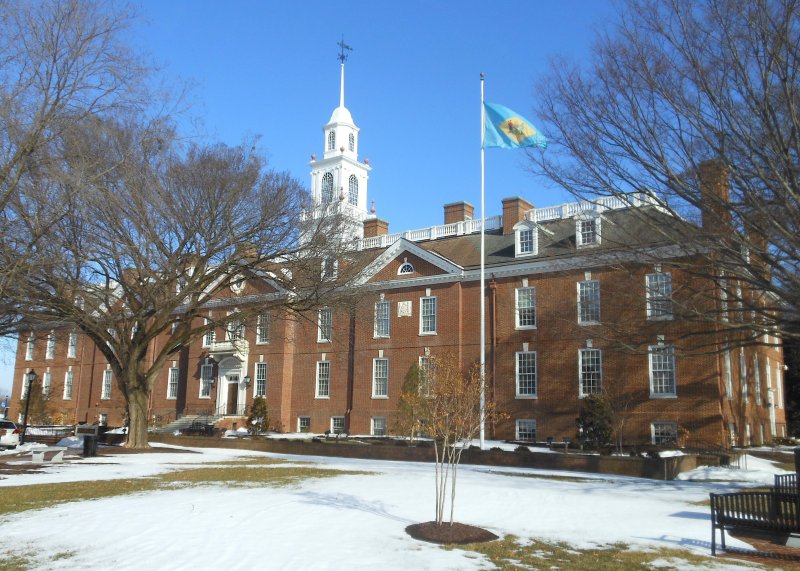
Joint Finance Committee hearings on the governor’s recommended Fiscal Year 2027 budget began Feb. 3, with a preview of what’s to come.
The Office of Management and Budget started off the month-long legislative hearings with a review of budget highlights, prompting questions about program funding, including health insurance for retirees, SNAP benefits and public education.
Although those programs fall under other departments that will be heard later in February, OMB Director Brian Maxwell gave an overview to members who asked.
Sen. Dave Lawson, R-Marydel, questioned Gov. Matt Meyer’s recommendation to move post-retirement health insurance costs out of the dedicated general fund and instead pay for those costs through a special fund using $68.5 million in escheat funds – money from abandoned bank accounts, stocks and other monetary property.
“I don’t know if it’s good to turn that over to an ‘if’ fund and not a dedicated fund,” Lawson said.
Meyer’s budget recommends increasing the escheat cap from $60 million to $614 million.
Funding for the Department of Education is the largest expenditure in Meyer’s budget, making up almost 36%. The Department of Health and Social Services is second at 28%, and no other department is above 10%.
Teachers are expected to get a raise as part of the third year of a four-year initiative to bring starting teacher salaries to $60,000. This year’s goal is for starting teacher salaries to reach $56,243, Maxwell said. Some savings in public education came from a drop in the Sept. 30 student unit count – a number used to pay for teachers and other education resources – which came in at 65 instead of the 225 that was projected.
On the Supplemental Nutrition Assistance Program, which the state briefly stepped in to pay during the 2025 federal government shutdown, Maxwell said new federal rules for 2027 require error rates below 6% or else states have to pay. In Delaware, the error rate is about 11%, he said, and if the state does not drop that percentage, the cost would be significant. Sen. Eric Buckson, R-Dover South, said he understood Delaware’s error rate had been as high as 20%.
When asked what caused the error rate, Maxwell said it had to do with the timeliness of people providing eligibility information, and that the state is looking to reduce the rate whether it has been caused by fraud or other reasons.
“That’s really where we’re getting dinged on,” he said.
On the revenue front, Secretary of State Charuni Patibanda-Sanchez said she expects the legislature to put forth a bill to increase fees up to $50 in some cases.
She said she does not believe the fee increases will affect Delaware’s position as a good state to incorporate. The corporate franchise tax remains the same, she said, and Delaware’s customer service remains strong, allowing some limited liability companies to get a certificate in as little as a half-hour.
“I do not believe any of these fee increases are going to kick us out of competitiveness,” Patibanda-Sanchez said.
Secretaries for the Department of Education, Department of State, Department of Health and Social Services and other departments will have their own hearings with the JFC later in February.

Melissa Steele is a staff writer covering the state Legislature, government and police. Her newspaper career spans more than 30 years and includes working for the Delaware State News, Burlington County Times, The News Journal, Dover Post and Milford Beacon before coming to the Cape Gazette in 2012. Her work has received numerous awards, most notably a Pulitzer Prize-adjudicated investigative piece, and a runner-up for the MDDC James S. Keat Freedom of Information Award.