












Lewes during the Revolution - Part 2

Editor’s note: This article is the second in a four-part series of excerpts from an upcoming book, “Lewes During The Revolution: 1774-1783,” that will appear monthly leading up to the semiquincentennial celebrations on the Fourth of July to highlight Lewes' role in America’s fight for independence.
The British Navy, in the meantime, had its own priorities and orders, including obtaining as many river pilots as possible, seizing American vessels, and establishing a blockade at the mouth of the Delaware to “annoy the Rebels by every measure in your power.”
By late February [1776], the 14-gun sloop HMS Kingfisher slipped into the Delaware Bay at night, unnoticed by Henry Fisher’s watchmen, where it captured the Juno, a Philadelphia-bound brig carrying gunpowder, saltpeter and sulphur from France. The Juno’s crew and pilot escaped and the ship was then taken to the British port at Hampton Roads, Virginia.
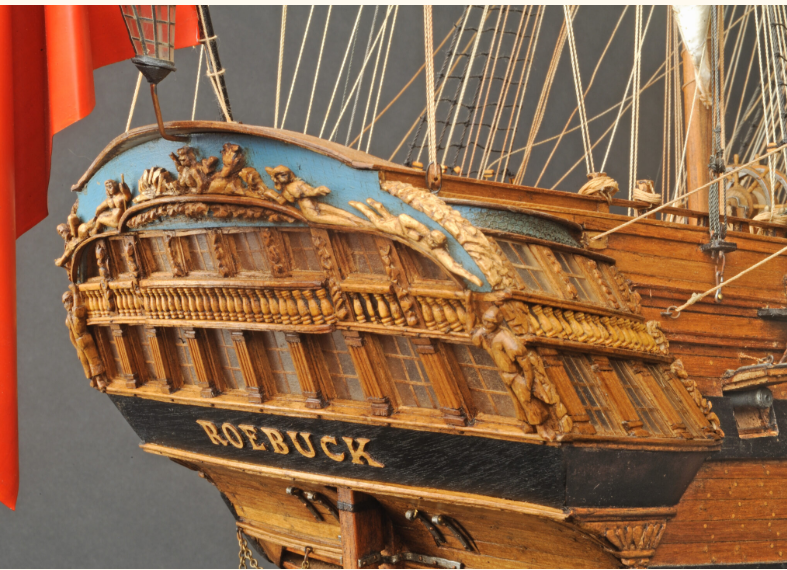
The 44-gun HMS Roebuck was next to arrive, to help blockade the entrance to the bay. She seized a pilot boat, several small sloops and, of most importance, three pilots from Philadelphia. Four more British ships soon arrived to join the blockade force.
This show of force generated an eager flood of Sussex men, nearly 1,000 by Henry Fisher’s count, who arrived as volunteers to defend against an invasion. Joining them was a battalion of fully equipped soldiers of the new Delaware Regiment from Kent County. No more than half that number was needed, and the rest were put under the command of Colonel David Hall of Lewes to build a fort on Pilottown Road. Overnight, Lewes had become an armed camp.
A warning from Henry Fisher about the arrival of a British squadron took a day to reach Philadelphia and brought the speedy 14-gun brig Lexington to the Cape. After a skirmish with the Roebuck, the Lexington, captained by John Barry, engaged and captured a smaller British ship, the Edward, and took it upriver to Philadelphia on April 10 – the first armed British ship taken by the Continental Navy.
The Tories threaten Lewes
Not all those living within 25 miles of Lewes were “hearty in the cause.” In fact, loyalty to Britain was the majority view in Sussex County. With the arrival of the British ships, Tories began opposing the cause, first peaceably, then with violence.
By late May, up to 1,500 Tories were roaming the interior Sussex countryside, disarming those favoring independence and reportedly preparing to attack Lewes from an encampment near Cedar Creek, 19 miles north of Lewes.
In Dover, under direction of the new Congress, the Delaware Assembly was in the process of separating from the Proprietorship of the Penn family and government of the King, and drafting a new constitution for “Delaware State.”
The Delaware Assembly voted to separate on June 14, and five days later, Col. Caesar Rodney brought his militia and a second Continental battalion to Lewes as a show of force. Local Tories Thomas Robinson, Boaz Manlove, Jacob Ingram and Simon Kollock fled to Somerset County, Maryland, where an insurrection was said to be forming.
Rodney was due in Philadelphia July 1 to participate in the vote for independence. His extended stay to protect Lewes resulted in Rodney’s famous overnight ride, through Dover to Philadelphia, to cast the deciding vote for independence on July 4, 1776.
The Declaration of Independence was read to the soldiers of the Delaware Regiment on July 10, and a more formal celebration took place July 20 at the Lewes court house, which sat next to the Ryves Holt House, then a tavern.
The event featured three cannon blasts and three toasts – perhaps the first American celebration of future Fourth of July celebrations across the entire nation.
Fighting in the streets
The first election under the new state constitution was held in Lewes, then the county seat, on October 21. The Whigs, supporting the revolution and being outnumbered, did not participate in the day’s events, described by Fisher as:
“(The) day exhibited such a scene of disaffection to the common cause of America as I think have not been equaled ... since the commencement of the present dispute with Great Britain. The Tories flocked in a number of five and six hundred.”
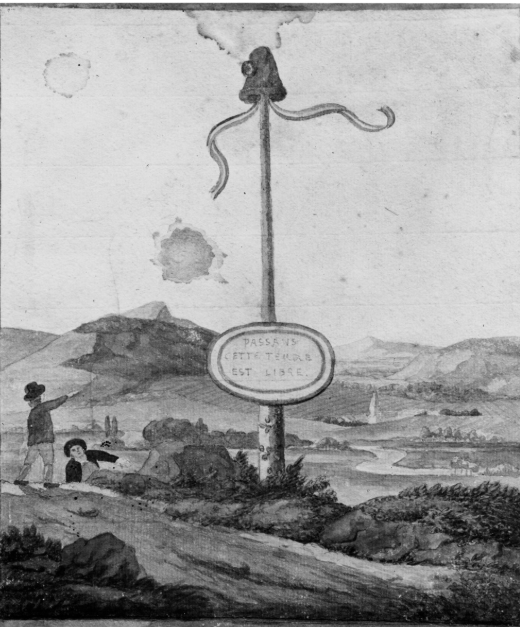
They headed toward Fisher’s home, in front of which stood a tall Liberty Pole. Fisher was dragged from his front door toward the shouting mob threatening to roast him, but two friends, John Wiltbank and Jacob Moore, themselves Tory sympathizers at the time, intervened and returned Fisher to his house.
The Tories then secured an axe and cut down Fisher’s tall Liberty Pole, with their hats thrown into the air and resounding huzzas for King George and General Howe. The top of the pole was removed and carried in derision about Lewes.