












Lewes zoning code changes affect duplexes, lot averaging
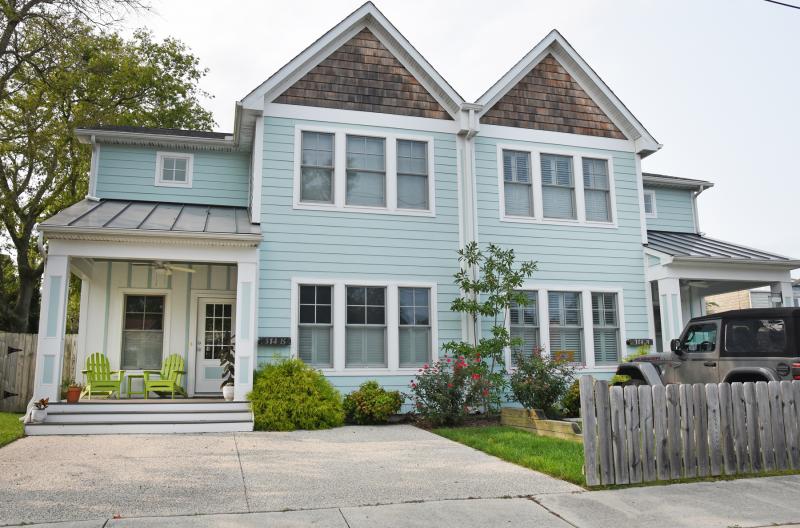
Duplexes are now allowed on lots as small as 6,000 square feet in Lewes’ R-4 and R-4H zoning districts, but there’s a catch.
They cannot be within 600 feet of another duplex on the same side of the street. They must also adhere to design standards and must fit in with the scope, harmony and rhythm of the neighborhood.
Zoning code had previously required a minimum of 2.5 acres in order to build duplexes. Fewer than 50 duplexes already exist in the city, either built prior to zoning codes or built illegally.
Most of the downtown area from the Lewes School to the Lewes-Rehoboth Canal is in either R-4 or R-4H. Of the 700 lots in R-4 and R-4H, 212 fit the criteria for duplexes, said planning consultant Tom West. Most of those properties already have homes on them, he said, and those located within the historic district would likely have a difficult path to approval for demolition or a major renovation.
The approved ordinance moves duplexes from a permitted use to a conditional use in R-4 and R-4H. In addition to the 600-foot separation distance requirement, duplexes must also be designed and constructed to look as one building, they may have only one attached garage per unit and they must keep with the proportion, rhythm, balance and scale of houses within a 600-foot radius. Any future R-4 rezoning requests must also be adjacent to the town center zoning district.
Council voted 3-2 to approve an ordinance that included the changes to the zoning code.
Deputy Mayor Bonnie Osler, Councilman Rob Morgan and Councilman Tim Ritzert voted in favor.
“The comp plan says we need a variety of housing types, but we have to balance that with the marginal increase in density,” Osler said. “Do we think that’s a good trade-off?”
She continued, “I think a fairly minimal increase in two-family dwellings is acceptable.”
Morgan attempted to keep the 2.5-acre minimum parcel size intact, but was unsuccessful in gaining support. He still voted in favor.
“On balance, it’s a wonderfully thought-out improvement to the clarity and substance of the zones,” he said.
Mayor Ted Becker and Councilman Andrew Williams voted against. Becker said some of the restrictions are concerning, such as the 600-foot separation distance.
“I find some of these restrictions to be inconsistent with what already exists in this community,” he said. “I can’t support the items of appearance and things like that. There are some things here that give me pause.”
Lot averaging
The other piece of the approved ordinance allows for lot averaging in major subdivisions in the R-2 zoning district.
A developer may include lots smaller than the minimum lot size requirement of 10,000 square feet as long as the average lot size for all lots within a development is equal to or greater than 10,000 square feet. Lots can be as small as 7,500 square feet, but must maintain minimum street frontage of 60 feet, lot width of 60 feet and lot depth of 75 feet.
Both Morgan and Ritzert voiced concerns that developers may use lot averaging as a way to add more lots to their proposed plan. To protect from that, council added language requiring an applicant to provide a yield plan for the project if it were not to take advantage of lot averaging. Then, the proposed project with lot averaging cannot exceed that number.
“We’re not trying to make more lots available,” Morgan said. “We’re trying to make it possible to take into account wetlands or a valuable tree.”
Lot averaging is only available to major subdivisions of four or more lots. Lots must also be for single-family, detached homes.
Janelle Cornwell, the city’s planning and development officer, said lot averaging is used in many places around the country. Benefits include better protection of natural resources and protected areas as well as providing a better balance in transition areas from small-lot to larger-lot neighborhoods.

Nick Roth is the news editor. He has been with the Cape Gazette since 2012, previously covering town beats in Milton and Lewes. In addition to serving on the editorial board and handling page layout, Nick is responsible for the weekly Delaware History in Photographs feature and enjoys writing stories about the Cape Region’s history. Prior to the Cape Gazette, Nick worked for the Delmarva Media Group, including the Delaware Wave, Delaware Coast Press and Salisbury Daily Times. He also contributed to The News Journal. Originally from Boyertown, Pa., Nick attended Shippensburg University in central Pennsylvania, graduating in 2007 with a bachelor’s degree in journalism. He’s won several MDDC awards during his career for both writing and photography. In his free time, he enjoys golfing, going to the beach with his family and cheering for Philadelphia sports teams.