













Northwest stew is a hearty antidote to sudden spring chills
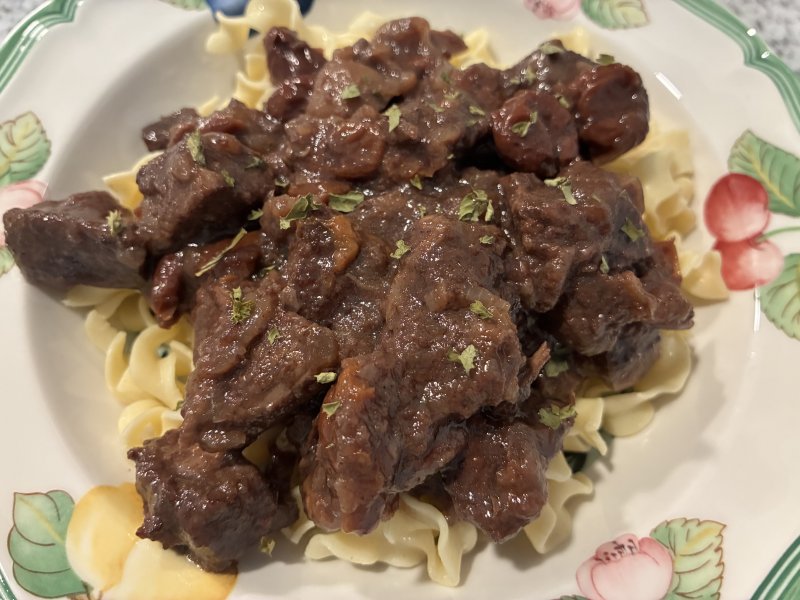
Although Mother Nature teased us with a taste of spring last week, these last few days have been more true to form for the month of March, with a range of temperatures, and fewer opportunities to don shorts and sandals. Whenever the air is chilly, I find myself craving a warm bowl of hearty stew. Fortunately, my generous neighbors, Robert and Christine, shared some of their most recent batch.
From a semantic point of view, the word stew is both a noun (for the food) and a verb (for the method of preparation). According to the Oxford English Dictionary, the verb comes from the Greek tuphos, meaning smoked or steamed. It can also be traced to an Old French verb, estuver, which means to heat in steam. The Middle English word for cauldron also comes from the Old French. Hence, stew can be the food itself or the process required to make it.
When you think about stew, it makes perfect sense to learn that some of the oldest archaeological records provide evidence that stews have been made since ancient times. There seems no easier way to create a meal than to combine meat (often still on the bone) and sturdy vegetables with liquid. The mixture is then cooked it until everything is tender and the liquid has been infused with flavor.
To take the notion one step further, why not keep a pot of perpetual stew on the fire? Exactly as it sounds, a perpetual stew is a cauldron that is maintained for weeks and in some cases years. Perpetual stew is also called everlasting soup or hunter’s pot. We know stews are often more richly flavored the next day, so imagine how savory and succulent it might become if it cooks for an extended period of time.
Instead of discarding the leftovers and washing the pot at the end of each day, additional ingredients are continually added. Trapped hare, barley or beans, bits of onions or potatoes, leftover bones, a splash of wine – add them all to the pot. According to food historians, this tradition was quite common for taverns and inns along trade routes; they always wanted something ready to serve when guests arrived.
What ingredients go into stew? The list is short for the most basic versions: sturdy vegetables (not leafy greens), cooking liquid (wine, beer or stock) and an unglamorous piece of meat. Since the stew pot will simmer for hours over a very low heat, you’ll want to select the least tender cuts. Marbling and connective tissue will help transform the meat into tender and juicy morsels. The difference between soup and stew is that stews are heartier and chunkier.
The selection of vegetables will help define the stew’s flavor profile, e.g., carrots add sweetness and onions contribute caramel hints. Cooking liquid should be carefully considered: red wine adds depth, beer adds nuttiness, stock adds richness, and water is always the last choice. How do you make a good stew? Two simple keys: brown the meat first, then cook low and slow. If you do things right, you won’t need to add anything else (like flour or cornstarch) to thicken the sauce.
I’ve included the recipe for my neighbors’ Northwest Stew (see photo) with dried cherries as a secret ingredient. The onions melt into the liquid, creating a rich background for the tender beef, and there are surprise sweet hints from the cherries. Serve this over red-skinned potatoes or noodles, along with crusty bread to get every last bit of sauce.
Northwest Stew*
Preheat oven to 350 F. Cut beef into 1-inch cubes. Combine flour, salt, allspice, cinnamon and pepper in a plastic bag. Add the beef and shake, coating pieces evenly. Heat 1 T oil in a large, heavy skillet over high heat. Add 1/3 of the beef and cook until browned on all sides, stirring frequently, about 5 minutes. Transfer the meat to a Dutch oven. Repeat with the remaining meat in two batches, adding 1 T oil to the skillet for each batch. Reduce heat to medium. Add remaining 1 T oil to same skillet. Add onions. Cook until onions are soft and light brown, about 10 minutes. Stir frequently, scraping up browned bits and incorporating into onions. Stir in sugar, vinegar, water and cherries. Increase heat to medium-high and cook until onions brown, stirring frequently, about five minutes. Add onion mixture to beef in Dutch oven. Mix in wine, stock and mushrooms. Cover and bake until beef is tender, about two hours. Uncover stew during last 30 minutes of baking. If liquid is too thin, add a small amount of beef stock; if the stew is too dry, add some more red wine. *Adapted from Robert Tunderman.
-

Send questions, comments and recipe ideas to Denise at deniseclemons1008@gmail.com.