











Prescribed burns being held at Prime Hook Wildlife Refuge
Prime Hook National Wildlife Refuge, in partnership with the U.S. Fish and Wildlife Service’s Zone Fire staff, local fire departments, and the Delaware Forest Service, began a landscape burning program at the refuge in March 2017.
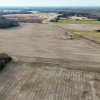
This year’s burn plan includes approximately 700 acres of successional field(s) and marsh containing the invasive plant phragmites (Phragmites australis) within the western portion of Unit II (between Fowler Beach Road and Prime Hook Beach Road). Burns will occur through the week of Oct. 21.
These burns will be contingent upon optimal burn conditions that can change hourly.
The purpose for this year’s burn is to set back field succession to early stages to benefit grassland-dwelling birds, counteract against undesired non-native plant species and remove accumulated wildland hazardous fuels as anticipated in the refuge’s Comprehensive Conservation Plan.
The use of prescribed fire is an effective and cost-efficient method to accomplish these objectives. Trained prescribed burning specialists will conduct the burns and monitor its progress.
Weather conditions such as rainfall, wind speed and direction will determine when the burning will occur. Prime Hook Refuge’s website will be updated frequently to inform the public regarding daily plans.
Prime Hook National Wildlife Refuge consists of over 10,144 acres of marsh, forest and uplands along the Delaware Bay between Slaughter Beach and Broadkill Beach, east of Milton.
For more information, call 302-684-8419 or go to www.fws.gov/refuge/Prime_Hook/. Prime Hook National Wildlife Refuge is located just off Route 16 near Broadkill Beach at 11978 Turkle Pond Road, Milton.