












Punkin Chunkin lesson brings physics to life at Cape High
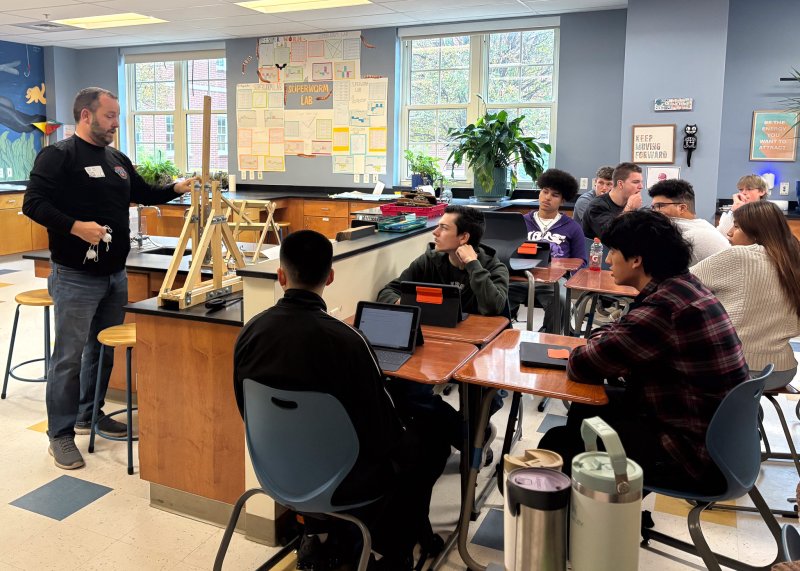
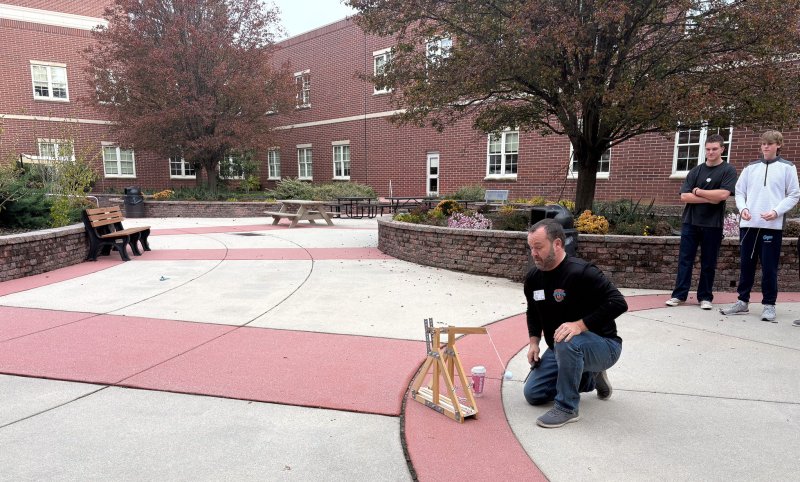
Cape Henlopen High School recently hosted Frank Payton, president of the World Championship Punkin Chunkin Association, for a special presentation in Priscilla Coolbaugh’s Honors Physics class.
Founded in Sussex County, Punkin Chunkin has grown into an internationally recognized competition, and students had the chance to learn about it directly from its leader.
Payton shared the long and colorful history of Punkin Chunkin, describing how the event grew from a fun local challenge into a world championship attracting teams from across the country and beyond. Students learned about the creativity, engineering and teamwork that go into building machines capable of launching 8-pound pumpkins to travel spectacular distances.
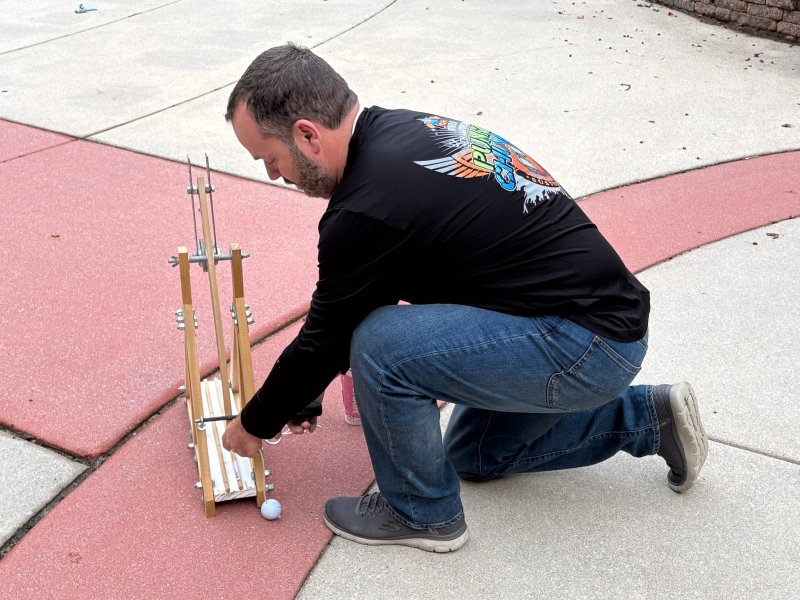
To bring the experience to life, he demonstrated a working model trebuchet and explained why trebuchets, first used in medieval France, are his favorite machines to use in competition. Students were fascinated as he walked them through the mechanics of the trebuchet, explaining how teams adjust their machines to achieve the optimal 45-degree launch angle and maximize distance. Payton also shared videos from past competitions, giving students a behind-the-scenes look at some of the most impressive launches in Punkin Chunkin history.
“Throughout his presentation, Payton emphasized the strong connection between Punkin Chunkin and physics,” said Coolbaugh. “Students were able to see how concepts such as two-dimensional kinematics, projectile motion, energy transfer and mechanical efficiency all play a crucial role in launching a pumpkin successfully. They were also able to appreciate how the formulas and ideas they learn in class apply directly to real engineering challenges.”
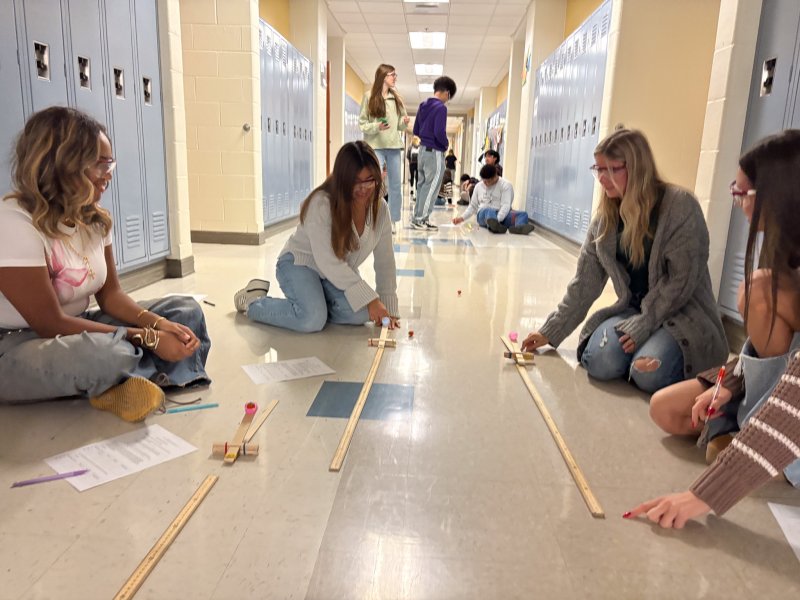
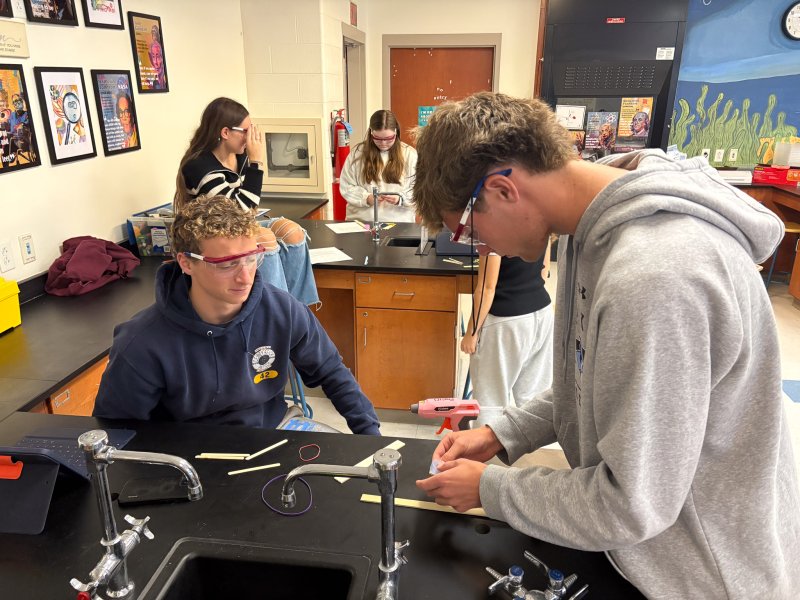
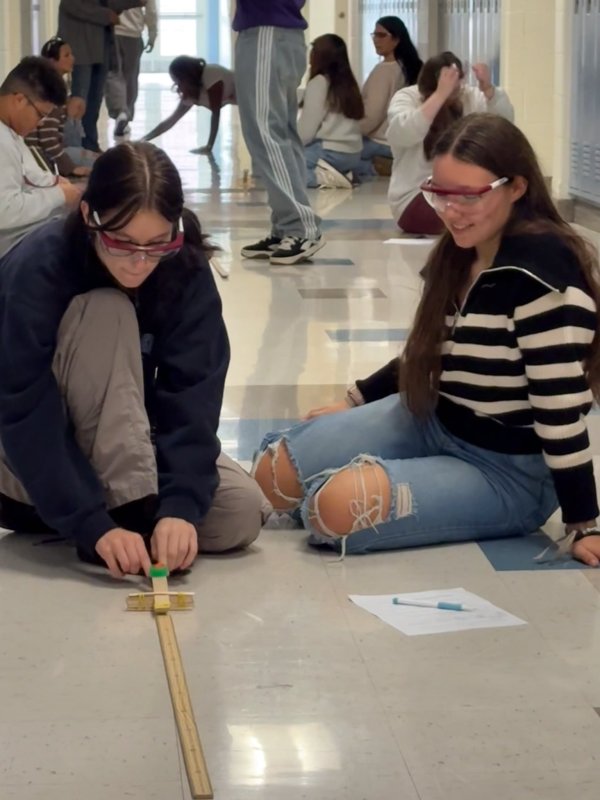
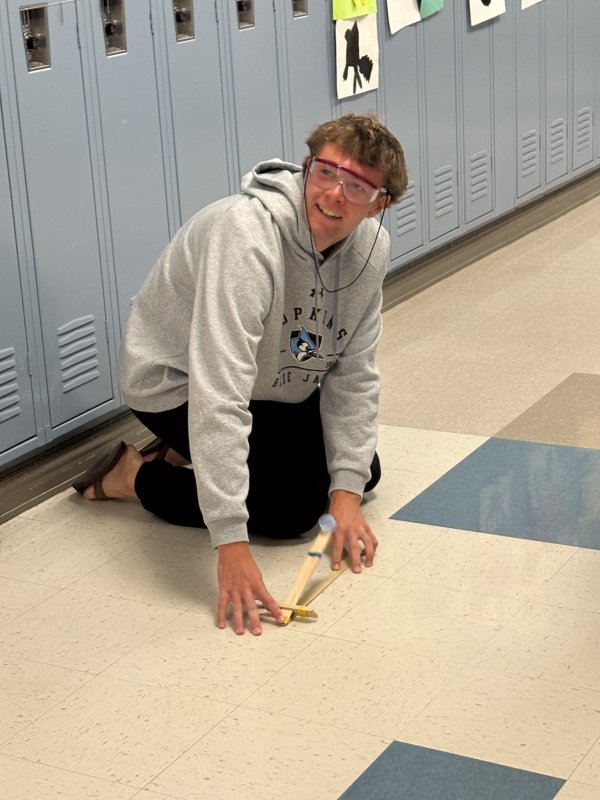
After the demonstration, students had the chance to become engineers themselves. Using a variety of lab supplies, they designed and built their own small catapults. Working in teams, they tested different setups, adjusted angles, modified arm lengths, and experimented with elastic energy, all in an effort to launch a candy pumpkin the farthest distance possible. This hands-on investigation aligned directly with two-dimensional analysis as students observed how both horizontal and vertical components of motion contribute to flight path and distance.
“This event was an exciting blend of local heritage, engineering and physics in action,” Coolbaugh said. “Students left class with a deeper understanding of projectile motion, a greater appreciation for Sussex County traditions and a renewed enthusiasm for STEM learning.”