












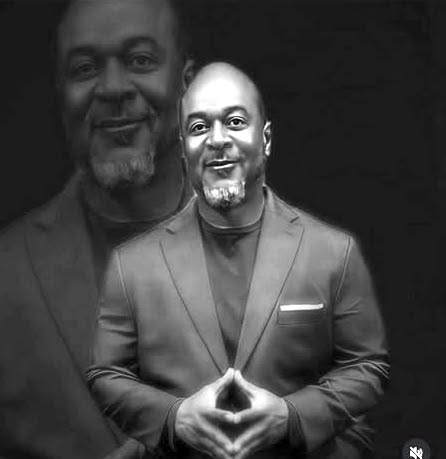
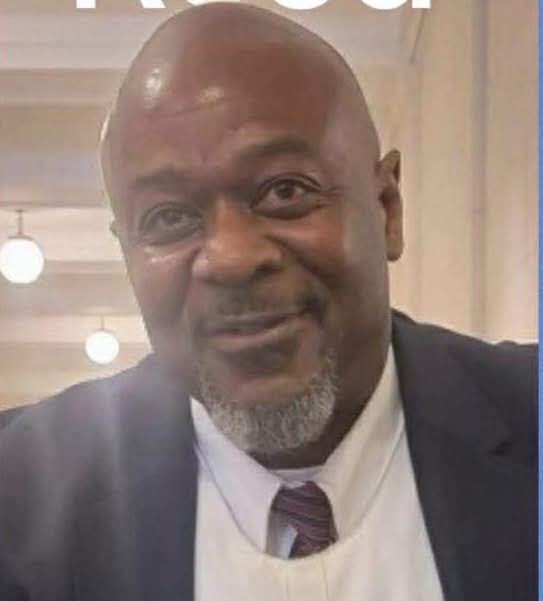
Athletic intelligence and high character - In March 1988, Dr. Chuck Epifanio and I were tracking Sussex Central basketball in the state tournament. Chuck was intrigued by the orchestration of coach Jerry Peden. Chuck’s wife Carol was a guidance counselor at Central. The starting five on that team were Donnie Polk, Robert Ruffin, Tim Slade, Johnny Gibbs and Doug Reed. There was a game versus Salesianum at Delaware State. The house was rocking. Fan cheers pushed the boundaries, talking more junk than Fred Sanford. Sallies was full-court pressing. They were dogged and disruptive. Reed caught a bullet pass from Polk at half court – he had to jump high to snag it. Reed’s back was to his own basket 45 feet away. A Sallies guy was draped on his back. He twisted in midair, saw nothing but moving parts and jersey colors, and hit a streaking Gibbs with a perfect pass leading to a layup. I turned to professor Chuck and said, “Do you know how smart you have to be to process all that information in real time while airborne and make the perfect pass? We are talking about intelligence!” Chuck pointed out that the cerebellum was different from the cerebral cortex, where high-order executive thinking took place. I responded, “You're just mad because you can’t do it, Senor Medulla Oblongata.” Central would lose in the state finals to the Red Devils of Wilmington High 46-39. I’m seeing Reed, the football running back in the open field against a Cape defense. I was defensive coordinator with a simple plan. “Get Reed on the ground before he gets going because once he gets to second level, you are at his mercy no matter the level of your cerebellum or cerebral cortex.” Doug Reed had soft eyes like a beagle at rest. His athletic instincts, combined with speed and explosiveness, was the package, and he always just so gracious. Reed retired after a career as a state policeman. His high school teammates know Doug was simply the best teammate and person, yet inside the game, like lightning crackling, he always brought the heat.
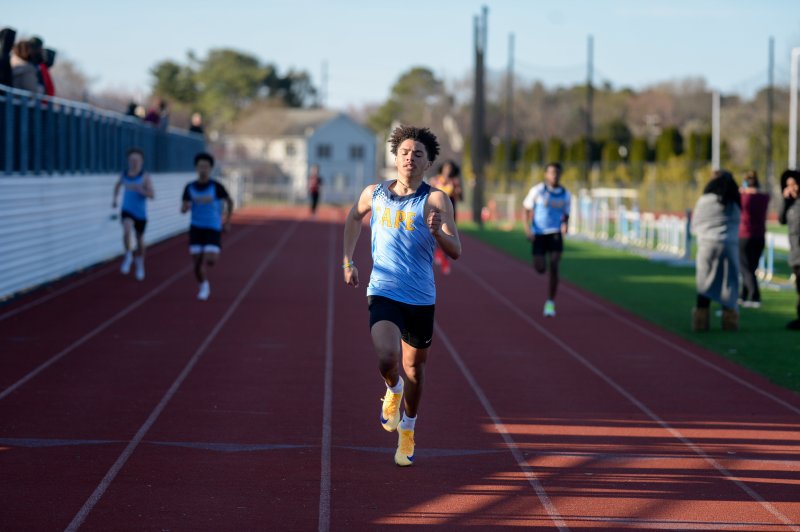
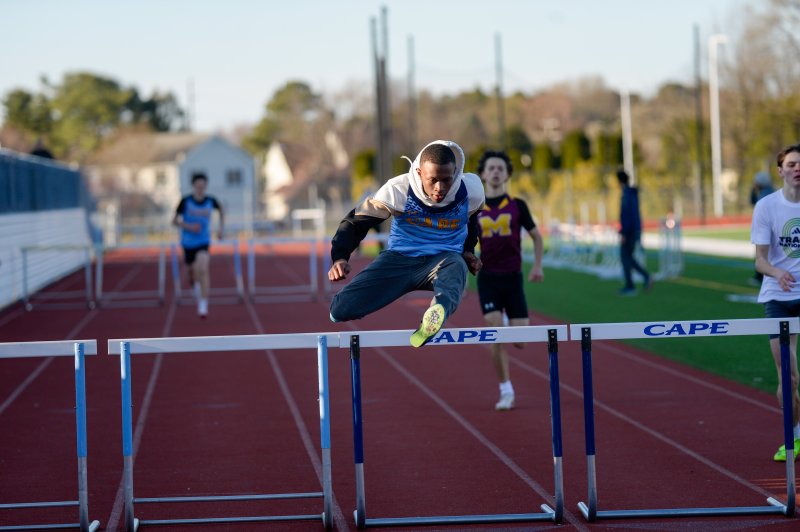
Thirteen coaches - Track is a real sport at Cape with 56 years of tradition. The 2026 edition has a total of 163 boys and girls on the roster, and 13 coaches. And so how come the morning after an afternoon dual meet I can’t find the score? Keeping with the track metaphor, I circled back later just to know that both Cape teams rolled over Milford, which didn’t seem to have a lot of athletes competing, although the Bucs have 58 listed on the combined rosters with only one coach, Brianna Lofland. Elijah Shockley-Taylor won both hurdle events – the 110 highs in 15.5 and the 300 intermediates in 44.2. Jamar Beasely was also a double winner, placing first in the 400 in 51.7 and the 200 in 24.06. Cape’s Bernard Jones won the long jump in 19-feet-3-inches and the triple jump 42-4. Cape won the girls' meet 125-20. Anejah Johnson-Grace won the 100 hurdles in 17.9 and the 300 hurdles in 52.7. Mallory Kauffman won the shot put in 37-1 and the discus 112-6.
Snippets - Mercy, mercy me rules in sports are sometimes trumped by “Sugar Pie Honey Bunch” scenarios, otherwise defined as “I can’t help myself.” Sussex Academy baseball, an 8-10 team last season, beat First State Military Academy 30-0 in a four-inning game. Can’t even imagine the dinner conversations around the kitchen table. “So how was your game today?” Like most fans of college basketball, I’ve been barraged with Capital One credit card commercials, which tell you nothing about rates of interest. Also Car Shield, but my cars are too old to qualify. Broadneck girls’ lacrosse, the defending 4A Maryland state champion, is coming to Cape this Saturday. The JV game is at 11 a.m., followed by varsity game at 1 p.m. Both games will be high-level competitions. Go on now, git!

-

Sports Editor Emeritus
Email Fredman at fredman@capegazette.com