












Saltwater fishing seminar set March 21 in Millsboro
I will hold a saltwater fishing seminar at the Millsboro Library from 11 a.m. to 1 p.m., Saturday, March 21. I plan to cover local saltwater fishing, including fishing at Indian River Inlet, Indian River and Rehoboth bays, the Lewes-Rehoboth Canal, Delaware surf-fishing, Delaware Bay and the Atlantic Ocean. I hope to cover baits, lures and tackle for black sea bass, tog, flounder, blues, croaker, Spanish mackerel, king mackerel, tuna and even marlin. What we cover will depend on the interest of those in attendance.
I like to have fun at my seminars, which I have been doing since the early 1970s. Believe it or not, people still come up to me from those classes and say how much they enjoyed them. Those were reasonably priced. This one is very reasonable – it’s free.
Saltwater intrusion
A recent article in the Cape Gazette caught my attention. It pointed out the danger of saltwater intrusion. I have been aware of this problem for several years, as others have reported the loss of saltwater-intolerant plants as the salt table moved under the land.
Of course, this is all connected to climate change.
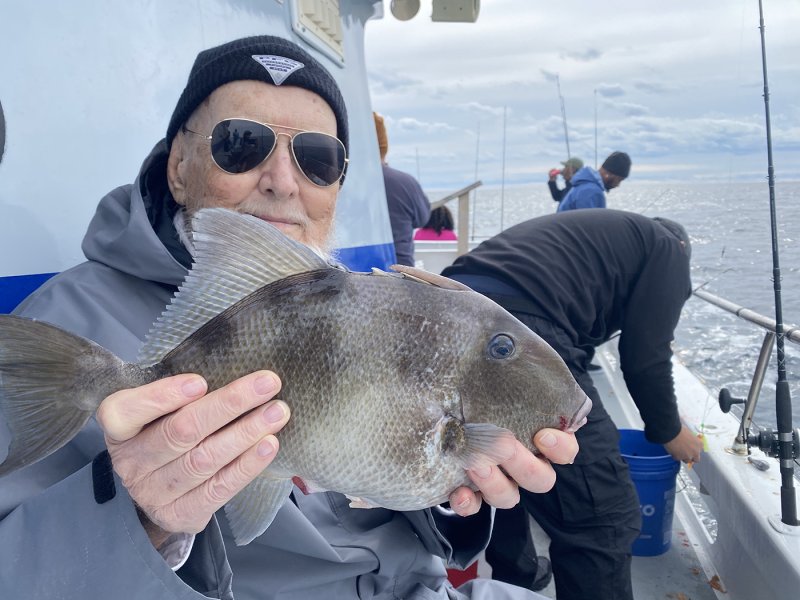
I first saw the effects of global warming when spadefish and triggerfish began to show up off Virginia Beach. At the time, my friend Claude Bain was the director of the Virginia Saltwater Fishing Tournament, and I was a freelance outdoor writer working for several magazines, with a radio and TV show on local channels. Our mutual friend Herb Gorden was also in on the research project trying to find out how to catch these new-to-us fish.
Claude contacted some of his fellow state employes to our south with questions about how to catch spadefish and triggerfish. It seems chumming was the answer, but not chumming with nice big bloody chunks like we use for blues and tuna. No, not these fish with small mouths. You use small bits of chum and small hooks.
Armed with this information, the three of us headed to the Chesapeake Light Tower where there were plenty of spadefish.
Once the boat was anchored so the current would carry the chum toward the tower, we set out a couple of rods baited with small bits of clam. Clam bits were the same as we used for the chum.
After a short period, one of the rod tips began to vibrate. Never one to ignore a vibrating rod tip, Herb jumped up, grabbed the rod and set the hook as if he was striking a 500-pound blue marlin. He almost fell overboard as the fish was long gone with the bait.
It was a slow learning process, but what the three of us learned that day was you have to let a spadefish eat until he hooks himself and the rod tip bends almost down to the gunnel. Once that happens, all you have to do is reel the fish back to the boat.
Triggerfish behave a bit more civilized. Once again, chum and clams are the way to go, but once you get their interest, it is almost too easy to keep them coming.
On one memorable trip, my son Ric took Mike Pizzolato and me to a small wreck off Sandbridge near Virginia Beach. We caught quite a few triggerfish. Once the chum had them coming up off the wreck, we were able to catch them by dropping a piece of clam back in the slick, and the triggers would fight over who wanted to go in the cooler next.
Now, of course, we have both triggerfish and spadefish as well as pompano, red drum, Spanish mackerel and king mackerel in Delaware waters. I have been fishing those same waters since the 1950s, and I can tell you all of those species are relatively new. As an example, in 2024, I caught my very first pompano in the Delaware surf. I am sure I would have caught even more in 2025 except for my broken hip.
Homo sapiens must wake up and do something about global warming or we will vanish as a species. No one hates the idea of electric cars more than me. I had a 1967 GTO and a 1969 Dodge Charger 440 with Hooker Headers and a few other goodies. My grandson will never know that feeling of a big-block V8.
Trees take in carbon dioxide and put out oxygen. Yet, we cut down thousands every day. Ocean acidification is a fact that is destroying coral and all the life forms that depend on the reefs.
Is there any chance we can wake up before it’s too late?
-

Eric Burnley is a Delaware native who has fished and hunted the state from an early age. Since 1978 he has written countless articles about hunting and fishing in Delaware and elsewhere along the Atlantic Coast. He has been the regional editor for several publications and was the founding editor of the Mid-Atlantic Fisherman magazine. Eric is the author of three books: Surf Fishing the Atlantic Coast, The Ultimate Guide to Striped Bass Fishing and Fishing Saltwater Baits. He and his wife Barbara live near Milton, Delaware. Eric can be reached at Eburnle@aol.com.