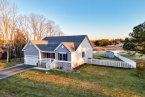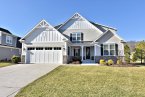













State to hire group to study effect of housing growth on agriculture, state spending
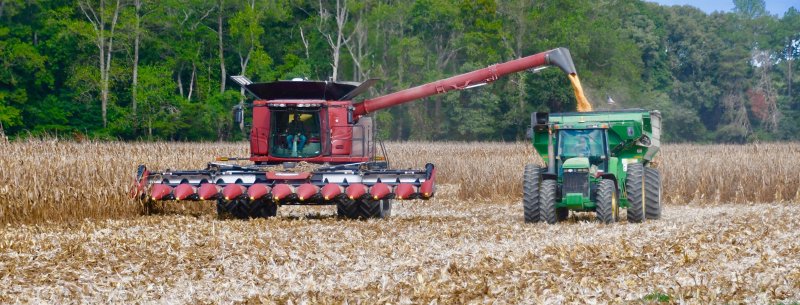
The state plans to hire the American Farmland Trust to update its 2006 study of how housing development has affected farmland, a trend that has continued unabated since the last report.
“The idea of updating is, we want to know how has it gone in the last 20 years, compared to what was found up until 2006?” said Jimmy Kroon, state agriculture deputy secretary.
The 2006 report looked at data going back to 1900, and it studied trends from then through 1970, and the 1970s through 2005.
It found the rate of consumption of farmland far exceeded the growth rate of population and dwelling units. From 1986 to 2005, the population increased 32%, the number of dwelling units increased 39% and the amount of developed land increased by 94%. The state capital budget, per capita, increased by 250% during that period.
Kroon said he suspects the problems from housing sprawl highlighted in that study have worsened in the ensuing years.
“I don’t think our growth has been compact,” Kroon said. “Not so much based on data, but looking around.”
The findings could help the state in implementing policies to make more workable communities and preserve agricultural land, Kroon said.
A contract is expected to be complete soon, and work would begin about a month afterward. The goal is to have the work completed by the end of the year, he said. The study will project the effects of development with and without steps being taken to control growth.
A fast-growing population and larger lots for houses have placed many burdens on the community and environment, Kroon said. They also put pressure on the state budget, increasing spending on roads and schools to accommodate the housing development, which contributed to a growing state debt, he said.
Delaware’s population had been rising for many decades, but 1950 was a turning point when the rate increased sharply; 1990 marked another acceleration. The state’s population cracked 250,000 in the late 1940s. It took less than 60 years to quadruple, breaking 1 million residents in 2021. The latest population tally from July 1, 2024, was 1,051,917, according to the U.S. Census Bureau.
The majority of that growth has been in a booming Sussex County. The county’s population stood at just over 50,000 in 1940. From there, it began to increase more sharply, breaking 100,000 in 1980.
The rate of growth in the county increased a decade later, and the population doubled again in three decades to 200,000 in 2011. The latest figure from the Census Bureau from July 2024 was 271,134.
During a Jan. 12 meeting of the state Cabinet Committee on State Planning Issues, David Edgell, executive director of the Office of State Planning Coordination, offered to provide data to help with the planned study.
Edgell said a lot of information was gathered for creation of the Strategies for State Policies and Spending, which the committee voted to approve Jan. 12. Gov. Matt Meyer signed an executive order Jan. 30, to enact the plan’s provisions.
Susan Payne, a senior farmland viability advisor for American Farmland Trust, outlined the project at the Jan. 12 meeting.
“We would be really excited to work with Delaware,” said Payne, who will lead her agency team on the project. “The value of your agricultural resources here is really incredible for a small state. So, it’s a very interesting place to study because of that outsized impact on nationally significant farmland. We’d be delighted to partner with you.”
Kroon said Feb. 6 he was glad to see that Sussex County, the fastest-growing county in the state, is looking to rein in housing sprawl.
Sussex County Council last year created a land-use reform working group to propose ways to redirect development away from rural areas and encourage construction of more types of housing, including affordable housing.
Council has begun work to draft ordinances for changes that can be implemented more easily, while more complicated matters will be considered during drafting of the next comprehensive plan, due by the end of 2028.
“I’m hopeful that it will have a good impact," Kroon said. “We want to keep construction near the roads and infrastructure that have already been built.”
Denser development patterns are more efficient in providing services, such as roads and public transportation, and preserving farmland and the environment, he said.

Kevin Conlon came to the Cape Gazette with nearly 40 years of newspaper experience since graduating from St. Bonaventure University in New York with a bachelor's degree in mass communication. He reports on Sussex County government and other assignments as needed.
His career spans working as a reporter and editor at daily newspapers in upstate New York, including The Daily Gazette in Schenectady. He comes to the Cape Gazette from the Cortland Standard, where he was an editor for more than 25 years, and in recent years also contributed as a columnist and opinion page writer. He and his staff won regional and state writing awards.
Conlon was relocating to Lewes when he came across an advertisement for a reporter job at the Cape Gazette, and the decision to pursue it paid off. His new position gives him an opportunity to stay in a career that he loves, covering local news for an independently owned newspaper.
Conlon is the father of seven children and grandfather to two young boys. In his spare time, he trains for and competes in triathlons and other races. Now settling into the Cape Region, he is searching out hilly trails and roads with wide shoulders. He is a fan of St. Bonaventure sports, especially rugby and basketball, as well as following the Mets, Steelers and Celtics.