













Take a tip from the old song – accentuate the positive!
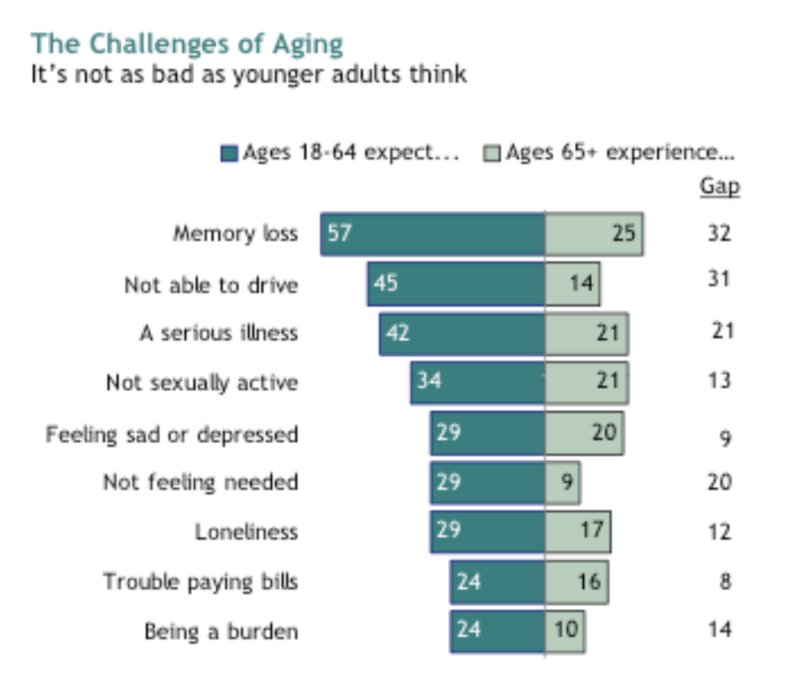
Sometimes aging stinks.
You never thought you’d be the person managing blood pressure or a pill box imprinted with days of the week – or feeling irritated because you forgot to grab something and have to get up again, especially when getting up and down always results in a variety of noises.
But here’s the good news. Research (and a lot of self-help blather) suggests that our senior years can be great. Maybe even the best yet.
Whether it’s called “the paradox of aging” or “the happiness curve,” these findings suggest our happiness hits its lowest point in midlife and steadily climbs after age 50. They’re based, in part, on research that followed an impressive 1.3 million people in 51 countries.
There also is some complicated (for an aging brain) research from Laura Christensen, head of the Stanford Center on Longevity, who suggests that with greater awareness of our mortality, we pay attention to and enjoy “positive things and aspects of the world that produce satisfaction and happiness.”
“As people perceive their future time as limited, they attach greater importance to emotionally meaningful goals and derive more satisfaction from everyday pleasures,” she said.
As we age, other research suggests, we have “greater acceptance, realistic expectations and clearer purpose – contributing to authentic contentment.” And who wouldn’t want more authentic contentment?
Monica Morrow, a Lewes-based therapist, said older people have the opportunity to slow down and enjoy the things they have identified as being emotionally and personally valuable.
“Our brains process emotions differently as we age to give us a positive bias, and our time horizon shifts so that we can focus on meaningful goals and savoring the moment,” she said.
According to Kimberly Gora-Buck, a therapist with Mindful Connections Counseling in Lewes, seniors develop a better sense of their values or what is important in their life.
“They know how they want to spend time or energy and create the boundaries to do so, leading to a truly authentic self,” she said.
And maybe your attitude affects … your attitude.
“By focusing on strengths and challenging negative social narratives toward aging, a person can better connect to meaningful past memories and current life moments,” Gora-Buck notes.
Here are some other related ways that senior years can be rewarding and cheery.
Self-confidence and resilience - Having faced personal and world-wide challenges, we recognize we can handle what comes our way. So, we have more confidence in ourselves and in our ability to bounce back.
“Seniors who are resilient, have high self-efficacy and are more socially integrated report higher levels of well-being and satisfaction, “ Morrow said.
Emotional intelligence - Research at the University of California’s Center for Healthy Aging found that older adults excel at considering different perspectives, recognizing knowledge limits and resolving conflict. It shows that older adults demonstrate “greater emotional stability and experience negative emotions less frequently.”
More time and energy - The extra time we have in retirement allows us to develop more and stronger relationships with families and friends. Grandchildren can provide a unique spark. It’s all good for our attitude and our brain.
Morrow notes that emotional satisfaction is heavily tied to “generativity,” or caring for and guiding the next generation. She said research published in the Journal of Aging Studies showed that seniors who felt needed by their families or communities experienced significantly lower rates of depression and higher daily rates of joy.
We also have time to take on activities of interest – or have more time for routine things so they become less of a chore. Even more time just to do nothing.
Wisdom - One expert described it as a “multifaceted combination of knowledge, judgment and compassion that grows with life experience.”
“Contrary to the notion that wisdom peaks in middle age and then declines, we found that certain aspects of wisdom continued to increase even into the eighth decade of life,” said Dilip V. Jeste, director of the Global Research Network on Social Determinants of Mental Health and Exposomics, and president-elect of the World Federation for Psychotherapy. (Come on, who wouldn’t believe him?)
Decision making - Researchers at the University of California found older adults are better at making many decisions, because they recognize patterns and have experience covering a variety of circumstances. In other words, we have learned from experience. We might not be persuaded to add the car dealer’s upgraded floor mats for $600, drive after two drinks or or gamble on the likelihood that a certain Olympic athlete will tear up.
Understanding these benefits of aging doesn’t mean denying the challenges. But it doesn’t hurt to mix in the positives and lean into them.
-

Jim Paterson has been a writer, editor and illustrator for a long enough time to understand aging. He lives in Lewes with his wife, Marybeth, and their dog, Tucker.