












Trees in Rehoboth’s Grove Park to undergo aeration project
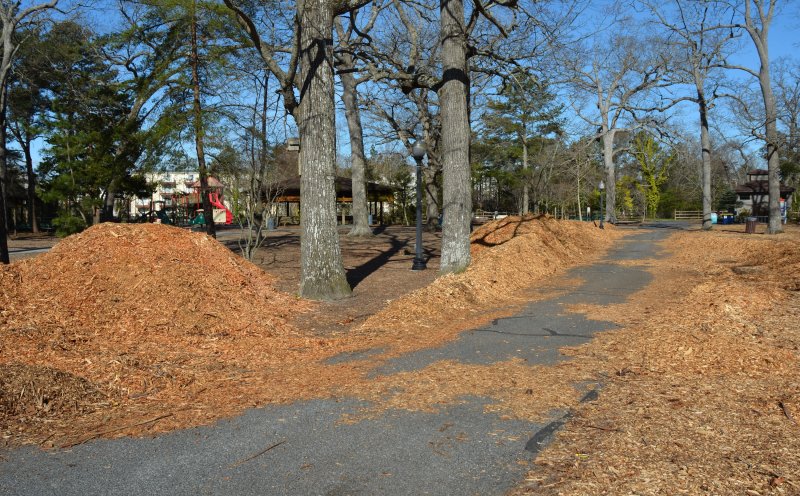
Grove Park in Rehoboth Beach is scheduled to be closed for about 10 days beginning Monday, April 6, so a city contractor can do an aeration project on all the park’s mature trees.
The process will involve shooting compressed air into the ground to expose the roots in a 10-foot diameter around each tree, said Mike Lilly, the city’s urban forestry and parks manager. The soil will be removed and replaced with compost and biochar, he said.
The trees in Grove Park will be the first in the city to go through the aeration process, said Lilly in an email March 25.
When the weather warms, the park, which is located at the far west end of Rehoboth Avenue, is a busy place with many events. It’s one of the few places a large group of people can gather in a shaded venue. Those events draw vendors with vehicles that have compacted the soil around the trees over the years.
The compaction prevents air and water from flowing down to the tree’s deepest roots where water is stored, said Lilly. If the air and water cannot flow into the ground, water can sit just below the surface of the ground and potentially rot away the tree’s roots or, in severe cases, pool on the surface, he said.
After the blizzard earlier this year, in an effort to expedite the cleanup process, the city chipped a bunch of the wood from around the city into large piles in the park. Those wood chips will be spread out after the aeration project, said Lilly.
The work is being done by Bridgeville-based SavATree for about $25,000 – $17,350 for the aeration and soil remediation, the remaining for fertilization injections afterward. According to the contract, tree species include oak, loblolly pine, Virginia pine, maple and hickory.
“Air spading is a non-invasive arboriculture technique using a tool that blasts compressed air to loosen compacted soil around tree roots, allowing for safe excavation, soil aeration, nutrient delivery and inspection for issues like girdling roots without damaging the delicate root system,” said Jeffrey Meredith, SavATree arborist, in his write-up. “It works by directing a high-speed jet to break up dense soil, creating channels for essential water, oxygen and nutrients to reach the roots, improving overall tree health.”

Chris Flood has been working for the Cape Gazette since early 2014. He currently covers Rehoboth Beach and Henlopen Acres, but has also covered Dewey Beach and the state government. He covers environmental stories, business stories and random stories on subjects he finds interesting, and he also writes a column called Choppin’ Wood that runs every other week. He’s a graduate of the University of Maine and the Landing School of Boat Building & Design.