












Developer appeals denial of Stream’s Edge
Sussex County Council has deferred action on an appeal filed by a developer whose subdivision was denied by the planning and zoning commission.
On Sept. 13, 2018, planning and zoning unanimously denied an application filed by Stream's Edge Estates –TBD LCC c/o Michael Daniels for a 42-lot subdivision on a 20-acre parcel on Robinsonville Road, adjacent to Tidewater Landing.
After hearing the appeal at its Feb. 19 meeting, council deferred a vote to a future meeting.
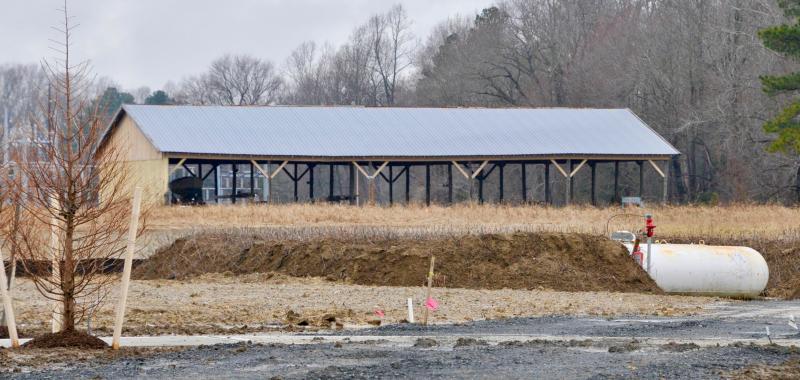
At issue is soil contamination on the parcel.
Environmental issues
Part of the tract proposed for housing was previously home to Sussex Lumber, which operated from 1958 to 1975. The company treated lumber with chemicals resulting in soil and groundwater contamination. Most of the buildings on the site have been burned down.
Delaware Department of Natural Resources and Environmental Control officials confirmed hot spots on the parcel containing hexavalent chromium, arsenic and thallium at concentrations greater than state standards.
The developer’s attorney, Tim Willard, said a remediation plan to clean up the site has been approved and the developer is proceeding with work.
He said in 2009 the commission approved a subdivision on the same parcel, also requiring a clean-up plan; the new plan includes more extensive testing and a new remediation plan.
He said under the plan, about 300 cubic yards – 18 to 20 dump-truck loads – of contaminated soil would be removed and transferred to a 1-acre brownfield site on a lot owned by the developer. It would be covered by an impervious liner, topsoil and vegetation, and preserved as open space. No houses could be built at the site.
He said the developer would maintain the area or sell it to the HOA for $1.
“DNREC has a plan that works. The applicant and DNREC have bent over backward to clean up this property,” he said, adding there was no public objection to the plan.
“Only one group didn’t accept this plan – the planning and zoning commission,” Willard said.
Commission: Too much risk
Assistant county attorney Vince Robertson said the commission questioned why contaminated soil not accepted at state landfills would be safe in a residential community.
During testimony, it was noted the cost of trucking the soil out of state would be too high.
“It’s purely an economic decision and not what is best for the residents of Sussex County or the subdivision,” Robertson said. “It exceeds an acceptable risk for soils to remain on the site and possibly become a future burden to the HOA.”
Robertson said when the 2009 town house project was approved, the contaminated area was listed as less than one-half acre. “When DNREC went back, they found 6 acres that needed to be remediated; that's 28 percent of the site,” he said.
Robertson said numerous inconsistencies concern the commission, such as the total acreage of contaminated soils and their location, the total amount of soil and the height of soil used in the capped area.
The commissioners were not comfortable with the actual location of the hot spots, adding different locations were shown on different site plans. “It’s not compatible with residential uses. We would be putting the burden of a toxic landfill on 42 homeowners,” he said.
Under county code, commission decisions can be appealed to county council. County attorney J. Everett Moore said council has several options: uphold or reverse the commission's decision; send the application back for review; or request the commission have a new public hearing.