













More on wildlife: coyotes, seals, shad, herring, stripers
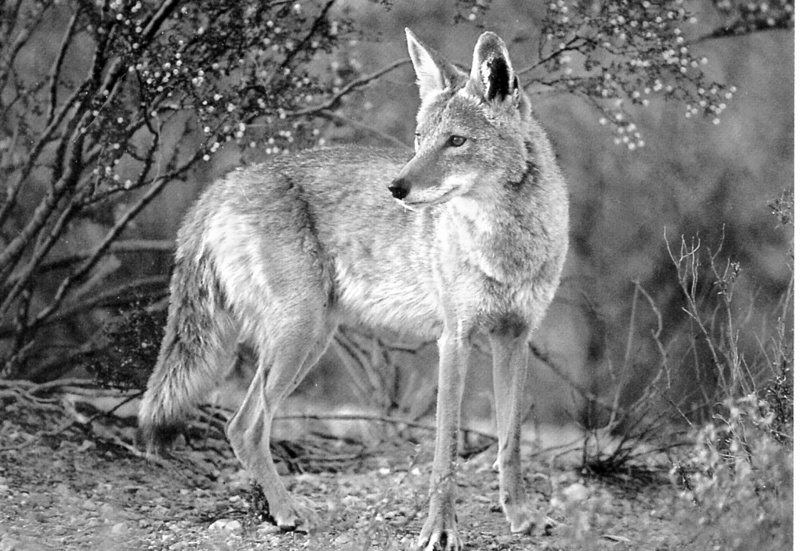
Sue Towers lives on Lewes Beach. After reading last week’s column, which mentions coyotes, she knows she hasn’t been imagining things.
“I am a Californian and familiar with coyotes. I lived in the Central Valley and spent quite a bit of time in the Mojave and in the southern Sierras. Of course out west, in the desert, they are pretty skinny. Still, a coyote is a coyote.
“Last October I was barbecuing on my deck on Lewes Beach, near the Children’s Beach House. I was looking out onto the marsh and noticed two skittish deer in panic and running. Out behind them, more toward the windmill, I saw what looked like a coyote. It was plumper than I'm used to, but it definitely was not a dog. It was a sandy color all over and had that fluffy, telling, coyote tail,” wrote Sue.
“A few weeks later, very early in the morning when I normally take my dog on the beach, I was walking on Washington Avenue, just approaching Bay Avenue. Again, something quickly and suddenly disappeared into the pines and all I saw was that telling, fluffy tail.
“I have not seen it since. It is quite possible it moved along the marsh to the state park area where there is more cover and probably more animals. And, though I do see deer tracks on the beach, my bushes have not yet been munched away, as normal for this time of year, according to the neighbor.”
I’m also working on confirming a story I heard this week about hunters in a field near The Glade - on the edge of the Cape Henlopen State Park marshes - who reportedly shot and killed three large coyotes that ran into their spread of goose decoys. Apparently goose decoys attract more than just geese.
A resident of The Glade, who used to live on Whidbey Island in Washington state, where coyotes are common, said he has without question heard the howling of them at night. If the goose hunting story is true, he may not be hearing them anymore.
When it comes to food, coyotes are real opportunists. Here’s what a Delaware Division of Fish and Wildlife article on the web says about their diet: “One of the keys to the coyote’s expanding existence is its diet. A true scavenger, the coyote will eat just about anything. Identified as a killer of sheep, poultry and deer, the coyote will also eat snakes and foxes, rodents and rabbits, fruits and vegetables, birds, frogs, grass and grasshoppers, pet cats and cat food, pet dogs and dog food, carrion and just plain garbage. Coyotes are active mainly during the nighttime, but they may move about at any time during the day.”
Shad, herring and stripers
Steve Kogler of Teller Wines - also a first-class baker - told me he and a friend were fishing Indian River Inlet a couple of weeks ago near the Coast Guard Station. “We got into fish like I never have before,” he said. “We were catching shad up to a foot long and herring too. Then we were putting the smaller ones on our rigs and started catching stripers as fast as we could pull them in. I don’t think any of the stripers were keepers, but they sure were fun to catch. And the shad and herring were fun too, especially on light tackle. Some of the shad were up to a foot long. They really put up a fight. I know we caught a hundred fish.”
Kogler said the fast and furious action came between 10 p.m. and 2 a.m. Hey, what do you expect from a baker?
Seals at the icebreakers
Ralph Short officially declared the fall and winter striper fishing ended last week after a fruitless trip to the mouth of Delaware Bay.
“The water temperature is down to 42 degrees, and they’ve stopped biting,” said Short.
On the way back in though, he and Tom King stopped near the ice breakers west of the outer wall. “There were seals everywhere,” he said. “There must have been a dozen of them bobbing around the rocks.”
It’s the time of the year when seals start showing up in local waters, following food and making their way down from the colder waters to our north.
Pelicans at Prime Hook Refuge
Krista Scudlark, whose husband, Joe, keeps me posted each year on the arrival of the first ospreys, called this week to say she had seen a flock of pelicans near Prime Hook National Wildlife Refuge. That’s unusual for this time of the year. My guess is they’ve just been hanging around because of the mild winter.
Eagles, red tails, buzzards
The bare landscape of winter reveals more of our abundant wildlife. Keep an eye out on the farm fields. It’s not unusual to see white-headed bald eagles standing out in the middle of them, occasionally standing on an unfortunate wild goose. Bald eagles take them right out of the air.
Geese aren’t their only prey. Last weekend, riding across Sussex, I saw a small pot of buzzards circling in the air above a leafless woods. Among the circling buzzards was a bird about the same size but with flashes of white and light brown. It was a bald eagle and had chosen to dive on one of the buzzards.
Buzzards and eagles often compete for carrion. Eagles usually win.
Keep your eyes peeled and your ears pricked. With all the great wildlife habitat that marks Sussex, you never know what you’ll see or hear.