













No public health emergency yet for monkeypox

As the number of Delawareans with monkeypox ticked up to 11 this week, state officials said they do not intend to declare the virus a public health emergency.
“Monkeypox does not fit the criteria of being a public health emergency,” said Molly Magarik, Department of Health and Social Services secretary, who attended a monkeypox forum at CAMP Rehoboth Aug. 16.
So far, she said, Delaware has posted 11 cases of monkeypox, with no hospitalizations and no deaths.
According to the Division of Public Health, all 11 cases involved men ages 18-64. Four are from Sussex County, six from New Castle, and one from Kent County.
Marci Drees, chief infection prevention officer for ChristianaCare, also attended the CAMP Rehoboth event and said the virus is spread by skin-to-skin or close respiratory contact. “It spreads through close personal contact,” she said.
Drees said some of the cases have presented as sexually transmitted diseases, such as gonorrhea or syphilis, with some rashes confined to the genital area.
For those who have visible pox, Drees said, covering those spots with clothing to prevent contact could be helpful, but isolating is the best way to prevent further spread.
Magarik said DPH will be offering vaccine clinics for certain people. Those who will be given preferential treatment include gay and bisexual men; transgender women or nonbinary persons assigned male at birth who have sex with men; sex workers of any orientation; and staff at establishments where sexual activity occurs.
At Beebe Healthcare, Dr. Bill Chasanov, chief population health officer, said the facility is also securing vaccines for people who are at risk.
The monkeypox virus is similar to the smallpox virus, he said, and those who are old enough to have received the smallpox vaccine decades ago may want to consider the newer vaccine.
“I would not rely on the smallpox vaccine from 40 years ago, and I would get revaccinated to protect myself,” he said during Beebe Healthcare’s monekypox town hall held Aug. 15.
Chasanov said the virus was first detected in the 1950s when scientists were researching polio, and it was later detected in animals in Africa.
Symptoms of the disease are similar to smallpox, but milder, and they usually appear within three weeks of exposure.
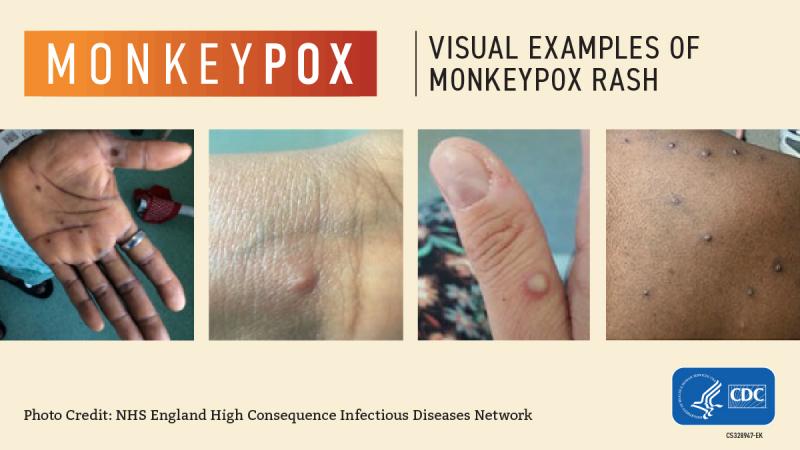
Most people who contract monkeypox will develop a rash, and some will develop flu-like symptoms beforehand, according to public health officials. The flu-like symptoms may include fever, headache, muscle aches and backache, sore throat, cough, swollen lymph nodes, chills or exhaustion. If someone has flu-like symptoms, they usually will develop a rash one to four days later.
The fact that no one in the U.S. has died from the virus is significant, Chasanov said.
“That’s one of the important messages,” he said.
For information on the clinics, call 1-866-408-1899. Information can also be found at de.gov/monkeypox.

Melissa Steele is a staff writer covering the state Legislature, government and police. Her newspaper career spans more than 30 years and includes working for the Delaware State News, Burlington County Times, The News Journal, Dover Post and Milford Beacon before coming to the Cape Gazette in 2012. Her work has received numerous awards, most notably a Pulitzer Prize-adjudicated investigative piece, and a runner-up for the MDDC James S. Keat Freedom of Information Award.