












Belle Mead approval upsets some who want limits on housing growth
The Dec. 16 approval of the largest housing project considered by the latest version of Sussex County Council – which some people expected to put the brakes on the ongoing housing boom – largely drew criticism and disappointment.
More than a quarter of housing development in recent years has occurred in rural areas, where the state had not intended to improve infrastructure to support it. This has overburdened roads, schools, emergency services, medical providers and the environment.
That led to a political upheaval as Jane Gruenebaum, Matt Lloyd and Steve McCarron unseated county council incumbents last fall after campaigning to limit housing development. The three now make up a majority on the five-member council.
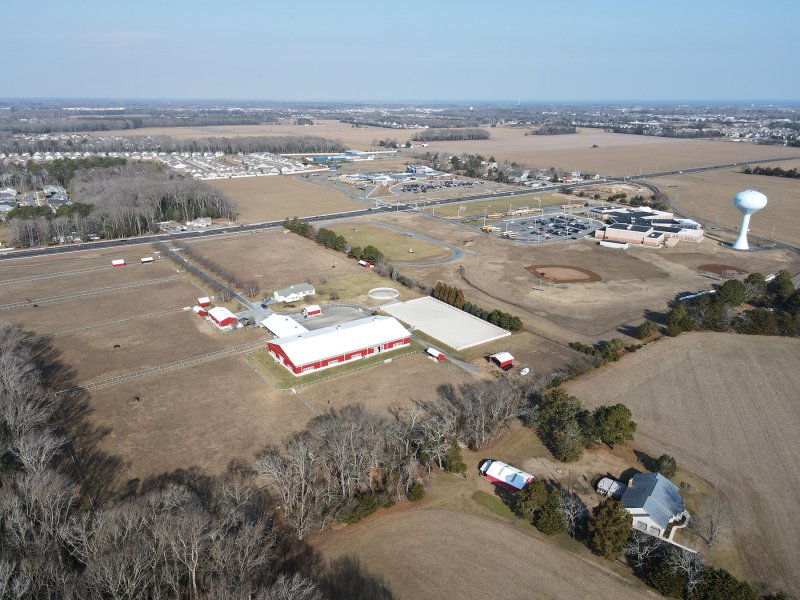
The Belle Mead Farm project on Route 24 near Rehoboth Beach approved Dec. 16 was seen as council’s first test to control growth.
Council voted 3-2 to change the zoning from AR-1, agricultural-residential, to C-4, planned commercial. The project includes 344 multifamily units and 72,000 square feet of commercial where the Love Creek Farm equestrian center is located.
The decision came after council unanimously approved eight amendments Gruenebaum offered to conditions set by the county planning & zoning commission. She tried to soften the effect on the environment, roads and schools, and increase affordable housing in the plan.
Gruenebaum and council Vice President John Rieley cast the only votes in opposition to the zoning change.
Rieley agreed, particularly on the traffic issues. Lloyd, McCarron and Council President Doug Hudson said the project perfectly fit state and county plans for development in the area. McCarron emphasized creation of affordable and workforce housing.
The Route 24 Alliance has raised concerns about Belle Mead and other large development proposals along the road. The group’s board met after the decision to consider how to respond, said its treasurer Judy-Rose Seibert Dec. 17.
“We’re exploring our legal options at this time,” Seibert said. “We believe that those who voted to approve the application ignored the facts and the law.”
She noted that the C-4 rules require interconnectivity between properties, while none is in the plan, and the road infrastructure is not in place to accommodate the project.
Petitions signed by 1,252 people opposing the project were submitted to the county. Cape Henlopen School District also has objected to Belle Mead and other large housing projects, stating schools are already at capacity.
Seibert said she thought Gruenebaum made a compelling case that warranted a unanimous rejection of the zoning change request.
Seibert said she was particularly troubled by the votes of Lloyd and McCarron, which she saw as inconsistent with their campaign platforms.
“I was hopeful for a new direction,” she said.
Others expressed similar sentiments after the decision.
Lewes resident Alison White said she was disappointed, especially with Lloyd and McCarron, who she thought would oppose it.
“This is a complete turnaround,” she said. “They ran on a platform of balancing growth and infrastructure.”
“I’m a native Sussex Countian, I’m a father and I’m a business owner,” McCarron said Dec. 18 when asked about the criticisms. “In every instance, I see housing insecurity for future generations. That application is a way to combat that problem.”
Belle Mead will provide homes for existing county residents in a designated growth area, he said.
While McCarron and Lloyd emphasized affordable housing units in the plan, White said there are not enough, and those that are planned will be too expensive for many who need them.
“I’m disappointed,” said Nathanael Wilson, a resident of East Redden Road on the Milton-Georgetown border. “Especially from Matt Lloyd, who ran on a basis to protect farmland, but we just watched him say yes to a development that is going to clear an actual farm.”
Wilson said he was among about 15 people who protested against development, holding signs Nov. 15 on the Georgetown Circle.
The change of zoning from AR-1 to C-4 was the first C-4 project under county zoning rules, and Gruenebaum cited concerns about the precedent.
Council has been taking steps toward changing the direction of housing growth in the county this year. Early in his term, Lloyd called for a moratorium on consideration of large housing developments in rural areas. The request failed to win more approval on council, but the panel created a 10-member land-use reform working group. It included representatives of developers, affordable housing advocates, farmers, environmentalists and state planners, among others.
The group in September offered 20 recommendations intended to shift housing developments away from rural areas, protect farmland and the environment, and encourage development of diverse housing types, including affordable housing.
Council has moved swiftly to begin considering those suggestions, including some that will be taken into account in development of the county’s next comprehensive plan. Work on that plan, due by the end of 2028, is being expedited to more quickly address the proposed changes.
McCarron said the public needs to be patient while the county creates new rules to solve problems that have been decades in the making, bristling at the insinuation that he and council do not support a new direction.
“I never said I oppose all development ... We will see changes to cluster subdivisions [rules] outside growth zones,” McCarron said. “That was the campaign promise.”
Lloyd defended his vote at the Dec. 16 meeting.
“I ran for council on one core idea, which was to stop growth out of the farmland – keywords being ‘out of the farmland’ – and to make sure it goes where infrastructure either already exists or is planned to be built,” he said. “That’s the standard I’m held to, and that’s the standard I use to evaluate every project.”


Kevin Conlon came to the Cape Gazette with nearly 40 years of newspaper experience since graduating from St. Bonaventure University in New York with a bachelor's degree in mass communication. He reports on Sussex County government and other assignments as needed.
His career spans working as a reporter and editor at daily newspapers in upstate New York, including The Daily Gazette in Schenectady. He comes to the Cape Gazette from the Cortland Standard, where he was an editor for more than 25 years, and in recent years also contributed as a columnist and opinion page writer. He and his staff won regional and state writing awards.
Conlon was relocating to Lewes when he came across an advertisement for a reporter job at the Cape Gazette, and the decision to pursue it paid off. His new position gives him an opportunity to stay in a career that he loves, covering local news for an independently owned newspaper.
Conlon is the father of seven children and grandfather to two young boys. In his spare time, he trains for and competes in triathlons and other races. Now settling into the Cape Region, he is searching out hilly trails and roads with wide shoulders. He is a fan of St. Bonaventure sports, especially rugby and basketball, as well as following the Mets, Steelers and Celtics.