












Panel backs five-year state policies, spending plan
State agency leaders endorsed a five-year plan Jan. 12, that is expected to have profound implications for how public funds are spent.
It will help determine where schools are built and how much funding school districts receive, where roads are constructed, which farmland and open spaces are preserved, which local development projects the state supports or opposes, and where money is spent on public bus service and trails.
It will also guide the state’s input on development of local and county comprehensive plans, and decisions about state agency capital and operating budget requests. Those are only a few of many decisions the plan will affect.
The 2025 State Strategies for Policies and Spending, commonly known as the State Strategies, was approved by the state Cabinet Committee on State Planning Issues. The committee is responsible for the overall pattern of development in the state and for siting major public facilities.
The plan is the state’s primary policy guide, summarizing state land-use goals, policies and strategies, according to the document.
As of Jan. 19, Gov. Matt Meyer had not yet signed an executive order enacting the plan.
In Delaware, municipal and county governments set land-use policies, but the state funds much of the cost of road infrastructure and public services, including state police, and school construction and operation. It also contributes 30% of the cost of paramedic services.
The 55-page draft document and an accompanying map are available on the Office of State Planning Coordination website.
A stakeholder workshop was held in each county, public comments were accepted and state representatives met with local government officials to discuss the process before the Jan. 12 vote.
The plan was drafted by the Office of State Planning Coordination, a division of the state Office of Management and Budget. Staff reviewed each parcel of property to determine the current level of development in an area. Those details can be accessed through the interactive state map.
Local land-use policies, and state policy and spending plans are incorporated in a color-coded map that illustrates four investment levels. They will guide where the state will focus its spending, whether physical, fiscal or natural, according to the plan.
The investment levels range from Level 1, the most urban areas, to Level 4, the most rural. The state emphasizes investment in more densely developed Levels 1 and 2. Level 3 is a transitional area between urban and rural areas. A state goal is to preserve the environment, farmland and other open space in Level 4 and out-of-bounds areas such as wetlands.
The state discourages growth in rural areas, although it has had to improve rural roads where development has occurred.
Local and county governments routinely consult the state map when considering development projects, but as has often been the case in Sussex County, they are not bound by the state’s guidance.
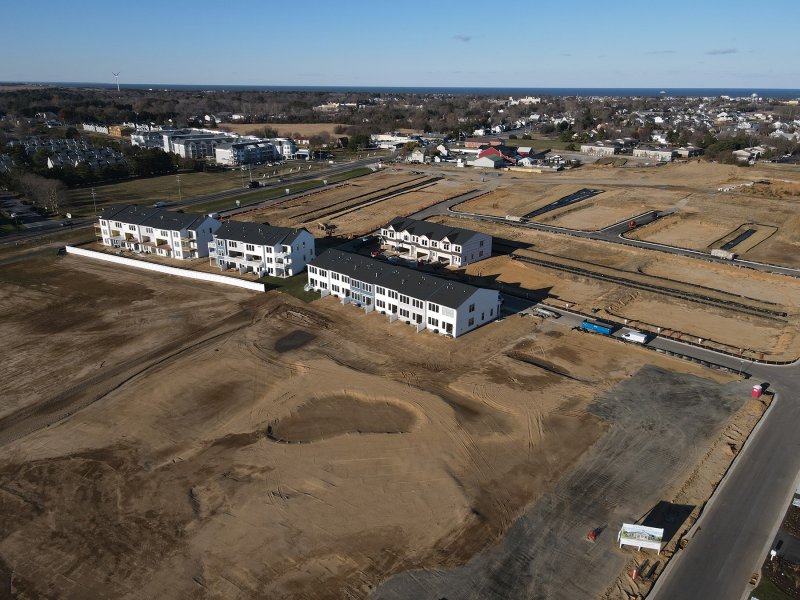
More than 25% of Sussex County construction occurred in rural areas in recent years, where the state did not plan to accommodate it. That has burdened roads, schools, emergency services, healthcare providers and the environment.
David Edgell, director of the Office of State Planning Coordination, served on the 10-member Sussex County Land-Use Reform Working Group that in September released a list of 20 recommendations to redirect growth.
County council has begun working to implement many of those recommendations through new rules and the next county comprehensive plan, due at the end of 2028.
The state Cabinet Committee on State Planning Issues delayed finalizing the 2025 State Strategies for Policies for six months, in large part to await decisions of the working group. However, council decisions on the group’s recommendations are in many cases still months or years away.
By far the fastest-evolving of Delaware’s three counties, Sussex County has faced growing pains in recent years.
After council rejected a proposed large retail center on Route 24 Jan. 13, in part because the road system cannot support it, Councilman Steve McCarron chastised the state for not expanding roads where development has been expected for decades.
Cape Henlopen School District for more than a year has urged county council to not approve large housing developments until the county enacts a fee to fund school construction, as classrooms are at or near capacity. Council is considering creating a building permit fee in its next budget to fund school expansion projects.
A report issued last year found fire departments and their paramedic services are under similar financial strain, and the county is considering additional funding for them, as well.
County development has differed from state intentions because zoning allows up to two houses to be built by right on an acre of land zoned AR-1, agricultural-residential, which covers much of the county. This encouraged rural sprawl during an ongoing housing boom fueled by retirees moving to Sussex County for low taxes in or near beach-front communities.
To keep up with growth projected by the Delaware State Housing Authority, about 2,400 new houses need to be built per year through 2030, according to the State Strategies plan. More than 55,000 more total housing units are expected to be needed by 2050, with the largest share in Sussex County.
This will require a mix of housing types, price points and locations to support affordability, workforce needs and sustainability, while avoiding pressures on infrastructure and community services, according to the State Strategies plan
“It is crucial that infrastructure spending is coordinated with the future distribution of this growth or else state dollars will be stretched across too broad a geographic area and may cause budget shortfalls,” the plan added.

Kevin Conlon came to the Cape Gazette with nearly 40 years of newspaper experience since graduating from St. Bonaventure University in New York with a bachelor's degree in mass communication. He reports on Sussex County government and other assignments as needed.
His career spans working as a reporter and editor at daily newspapers in upstate New York, including The Daily Gazette in Schenectady. He comes to the Cape Gazette from the Cortland Standard, where he was an editor for more than 25 years, and in recent years also contributed as a columnist and opinion page writer. He and his staff won regional and state writing awards.
Conlon was relocating to Lewes when he came across an advertisement for a reporter job at the Cape Gazette, and the decision to pursue it paid off. His new position gives him an opportunity to stay in a career that he loves, covering local news for an independently owned newspaper.
Conlon is the father of seven children and grandfather to two young boys. In his spare time, he trains for and competes in triathlons and other races. Now settling into the Cape Region, he is searching out hilly trails and roads with wide shoulders. He is a fan of St. Bonaventure sports, especially rugby and basketball, as well as following the Mets, Steelers and Celtics.