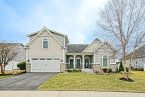













In recent weeks, the Bay Forest Community HOA has voiced concerns about crop residue drifting into their neighborhood. While such complaints are understandable, they prompt a deeper question: Do we value open space simply for its scenic enjoyment, or do we recognize the essential role of working land in our community’s well-being?
The tension between open space and working land is not new. Open space offers aesthetic pleasure – a place to walk, relax and connect with nature. But working lands, such as farms and ranches, provide something far more fundamental: food security, economic vitality and a living connection to the heritage of Sussex County.
Working lands are the backbone of our local and national food systems. Every field of crops represents not just a landscape, but also a livelihood for thousands of Sussex County citizens. The residue that sometimes finds its way into nearby communities is a byproduct of the essential work that feeds families, supports jobs and sustains rural economies. Without active farmland, we risk losing the ability to produce food locally, becoming dependent on distant sources and vulnerable to supply chain disruptions.
Moreover, working lands are dynamic spaces that support wildlife and groundwater recharge. Farmers and ranchers work to ensure that open space is not just preserved, but actively cared for and improved.
Preserving open space for the purpose of community enjoyment is great but isn’t it better to preserve working lands which provide aesthetic enjoyment plus feed us every day?
Ultimately, we must decide whether we recognize that working lands are the foundation upon which open space – and our entire community – depends. By supporting working lands, we invest in our future: a future where food is grown close to home, rural economies thrive and open space is both beautiful and productive.
-

A letter to the editor expresses a reader's opinion and, as such, is not reflective of the editorial opinions of this newspaper.
To submit a letter to the editor for publishing, send an email to viewpoints@capegazette.com. All letters are considered at the discretion of the newsroom and published as space allows. Due to the large volume of submissions, we cannot acknowledge receipt of each submission. Letters must include a phone number and address for verification. Keep letters to 400 words or fewer. We reserve the right to edit for content or length. Letters should be responsive to issues addressed in the Cape Gazette rather than content from other publications or media. Letters should focus on local issues, not national topics or personalities. Only one letter per author will be published every 30 days regarding a particular topic. Authors may submit a second letter within that time period if it pertains to a different issue. Letters may not be critical of personalities or specific businesses. Criticism of public figures is permissible. Endorsement letters for political candidates are no longer accepted. Letters must be the author’s original work, and may not be generated by artificial intelligence tools. Templates, form letters and letters containing language similar to other submissions will not be published.