












States that had enough with overregulation
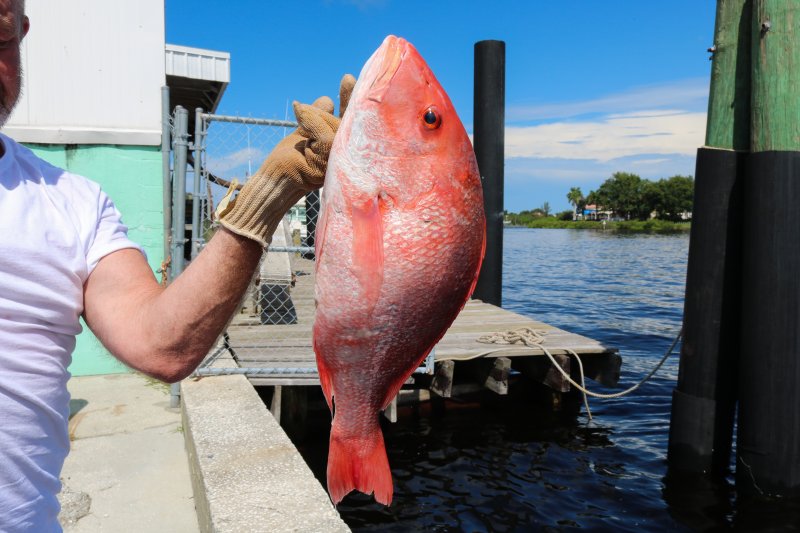
In the latest issue of Salt Water Sportsman, there is an article by Nick Carter on the trouble encountered by states along the Gulf of Mexico and the east coast of Florida over red snapper regulations. It seems there was a decline in red snapper populations, so restrictions were put in place by federal authorities until the stock could rebuild. Sounds like a good idea so far.
What happened was the red snapper stock rebuilt so well that the fish overwhelmed everything else in the water. Still, the federal authorities stuck to their guns and maintained the very strict regulations. Red snapper seasons were restricted to three or four days per year. Meanwhile, trying to fish for any other species resulted in catching red snapper. The release mortality was so high that it ate up all the allowable recreational catch.
The Gulf Coast states finally had enough. Their politicians, conservation groups like the Coastal Conservation Association and recreational fishing business owners decided enough was enough. Their battle cry was common-sense management. The current management might have been under the best available science, but it didn’t make any sense at all.
The states used exempted fishing permits to develop their own collection methods and come up with their own data. This proved to be much more accurate than the data developed by NOAA.
In 2025, NOAA told the South Atlantic states they can’t harvest red snapper because there are too many red snapper. This includes Florida, Georgia, South Carolina and North Carolina. It was the same story. The catch-and-release was creating a release mortality so high it took all the recreational allowable catch except for a two-day season. At one point, the feds wanted to stop all bottom fishing along Florida’s east coast.
In November 2025, Florida Gov. Ron DeSantis announced the submission of an EFP request for a 39-day red snapper season to U.S. Secretary of Commerce Howard Lutnick.
Lutnick is an appointee of our current president and is very likely to approve any measure that will bring economic gain to coastal communities. The measure will have to pass through NOAA before going to Commerce. The other South Atlantic states of Georgia, South Carolina and North Carolina quickly followed suit with their own EFP plans and red snapper seasons designed to collect accurate data.
The South Atlantic states have the advantage of following the plans of the Gulf states that have already done their own EFP studies. They know what works and what doesn’t. Hopefully, with the approval from NOAA, the South Atlantic Council will allow the states to have their EFP seasons and collect the important data.
MRIP
As faithful readers know, I do not put any faith in the Marine Recreational Information Program numbers developed by NOAA.
As an example, in 2024 during Wave 5, Maryland charter boats harvested 58 black sea bass. During the same Wave 5 time period, Maryland party boats harvested 8,099 black sea bass.
The situation was totally different in Delaware. In Wave 4, charter boats harvested 3,465 black sea bass, while the party boats brought in 303 black sea bass.
Both charter and party boats have to have a federal license to operate in federal waters that are beyond the three-mile limit. Inside that limit is considered the state’s jurisdiction.
One of the mandates of the federal license is a requirement that the captain report on every trip. He is supposed to send in his catch report to NOAA, and that is part of the MRIP. It would seem that perhaps Delaware’s party boat captains didn’t follow their responsibilities during Wave 4 for black sea bass in 2024.
Moving to Delaware in 2025, I recently received the MRIP data for Waves 3 through 5 for that year.
Going to black sea bass: The number harvested by charter boats in Wave 5 was 3,186. However, charter boats only harvested 290 during Wave 3 and only 54 black sea bass during Wave 4. Party boats had a really bad black sea bass season. They only harvested 268 during Wave 4 the entire time.
Meanwhile, private and rental boats harvested 35,259 black sea bass during Wave 3, 22,012 during Wave 4 and 40,189 in Wave 5. Now, you would think someone somewhere along the line would look at those numbers and think perhaps something is just not right. Here you have charter and party boats that don’t seem to be able to catch black sea bass, yet a bunch of private citizens can go out of the same ports, fish the same waters and bring back tens of thousands of black sea bass. Could it be that perhaps the charter and party boat captains are not filing their mandated catch reports? Did anyone in authority ask? Remember, this is the best available science.
-

Eric Burnley is a Delaware native who has fished and hunted the state from an early age. Since 1978 he has written countless articles about hunting and fishing in Delaware and elsewhere along the Atlantic Coast. He has been the regional editor for several publications and was the founding editor of the Mid-Atlantic Fisherman magazine. Eric is the author of three books: Surf Fishing the Atlantic Coast, The Ultimate Guide to Striped Bass Fishing and Fishing Saltwater Baits. He and his wife Barbara live near Milton, Delaware. Eric can be reached at Eburnle@aol.com.