













Bill would require snow, ice removal from vehicles
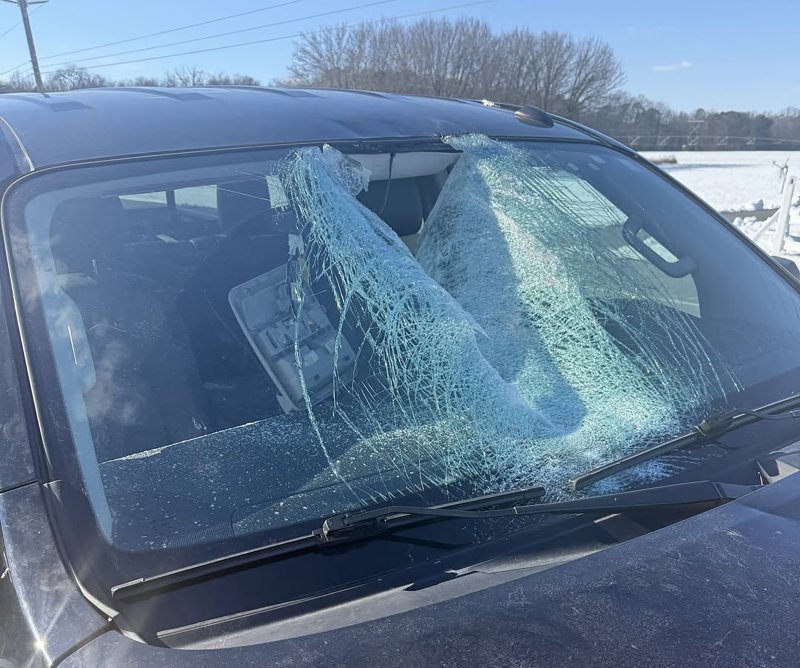
Delaware legislators are considering a bill that would require accumulated snow and ice to be removed from a vehicle before it’s operated. Failure to do so would result in civil penalties in events when property damage or injury occurs.
Senate Bill 233, sponsored by Senate Majority Leader Bryan Townsend, D-Newark, with support from Sen. Russ Huxtable, D-Lewes, and Senate Minority Whip Brian Pettyjohn, R-Georgetown, was introduced Jan. 29, the same day a front-seat passenger was injured when a chunk of ice smashed into the windshield of a car traveling on Route 9.
Georgetown EMS was dispatched at 1:16 p.m., to Route 9 west of Asbury Road for a traumatic injury. Upon arrival, first responders found a car with its windshield smashed. The driver and passenger said they were driving eastbound while a large, unidentified truck was traveling westbound. A large chunk of ice flew off the truck and hit the car. Officials said the ice hit the windshield with such force that it not only broke through, but also dislodged parts of the dashboard.
The passenger suffered numerous facial cuts and was taken to an area hospital for treatment. The driver was uninjured.
Under the proposed bill, penalties would range from $25 to $75 for not removing snow or ice prior to operating a vehicle, and in cases where the ice causes damage or physical injury, civil penalties would increase to $200 and up to $1,000 for a non-commercial vehicle driver. For a commercial vehicle, penalties would be $500 to $1,500. No points are assessed for penalties under the bill, and fines do not apply to vehicles driven on a roadway with a posted speed limit of 25 mph or less.
Previous attempts to pass similar legislation have failed. SB 64 passed the Senate in 2022, but it was never acted upon in the House.

Melissa Steele is a staff writer covering the state Legislature, government and police. Her newspaper career spans more than 30 years and includes working for the Delaware State News, Burlington County Times, The News Journal, Dover Post and Milford Beacon before coming to the Cape Gazette in 2012. Her work has received numerous awards, most notably a Pulitzer Prize-adjudicated investigative piece, and a runner-up for the MDDC James S. Keat Freedom of Information Award.