












Ferry plans rate changes this spring
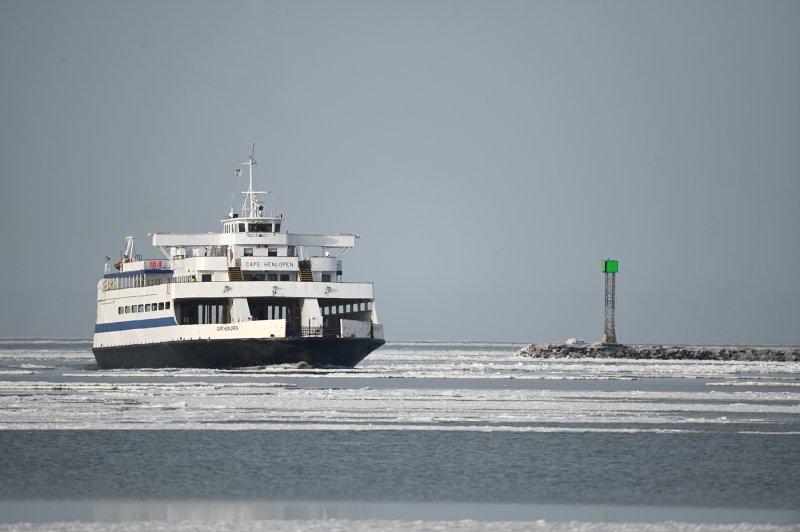
Anyone planning a trip across Delaware Bay aboard the Cape May-Lewes Ferry should plan to book in advance to avoid higher rates.
Under a new rate structure unveiled Feb. 9 by the Delaware River and Bay Authority, the vehicle fares will increase as the boat’s anticipated capacity fills up.
DRBA officials explained the new fare model during a recent virtual public hearing.
For someone traveling on Friday, Saturday, Sunday or holidays in June, July or August, the standard vehicle rate applies up to 50% of vessel capacity. When bookings reach between 50% and 75% sold, the standard fare will get a 5% bump. Between 75% and 90% sold, there’s another 5% bump, totaling 10%. And then, over 90% bookings sold, the cost will be the standard vehicle fare plus 15%. That works out to about $2 per segment, or $6 more if the booking is made when the ferry is more than 90% full.
“Our goal is to incentivize prebooking,” said Terry Anstead, customer service manager. “The more that we can have customers book in advance, the more we can accurately anticipate need. We can put in more departures if possible, we can reduce departures, and we can make sure those folks who need to travel get on the correct departures.”
DRBA is planning several other changes to its ferry fares.
Planned vehicle increases include $4 in spring/autumn and $6 during the peak season. A return-trip discount is set at 10% of the one-way fare.
Adult passenger fares are going up $1, frequent traveler rates are going up 10% and shuttle fares are increasing $2. DRBA is also increasing the handling fee for what it calls show and go, meaning passengers who do not book in advance.
Heath Gehrke, director of ferry operations, said the ferry typically generates $14 million in fare revenue against about $22 million in expenses. Gehrke said they use what’s called farebox recovery to determine how well the ferry is doing compared to other similar operations. Farebox recovery is a transit industry metric that measures how much of a transportation system’s operating costs are covered by passenger fares.
“For public ferries, we actually do fairly well compared to the other public ferries out there,” he said.
The Cape May-Lewes Ferry is not the only operation under the DRBA umbrella. The agency also maintains the Delaware Memorial Bridge and five airports in Delaware and New Jersey. It is supported solely by tolls, fares and fees, and receives no tax dollars.
Gehrke said a 2022 economic impact study found the Cape May-Lewes Ferry returns about $20 to the local economy for every $1 invested.
Gehrke said DRBA typically plans rate changes every other year to address increases in costs.
“We haven’t actually kept up with inflation,” he said. “Our average fare increase over five years is about 2.5%, versus 3.5% on the broadest measure of inflation.”
It’s not all bad news for travelers, as other proposed changes are aimed at helping families and frequent travelers save money.
Currently, children ages 6 to 13 travel free five months of the year. If approved, that time frame will increase to nine months. The only months children will be charged a fare are June, July and August.
And while the six- and 12-packs will increase to maintain parity with new rates, DRBA is still providing a discounted rate that could be up to 35% off the standard rate depending on the time of year. Travelers who purchase the six- or 12-packs are also not subject to the new model that increases fares as available capacity dwindles.
If approved, the new rates will go into effect Wednesday, April 1. Anyone wishing to submit a comment about the rates may email customersservce@drba.net. The presentation may be viewed at cmlf.com/blog/proposed-fare-structure-changes-for-2026.

Nick Roth is the news editor. He has been with the Cape Gazette since 2012, previously covering town beats in Milton and Lewes. In addition to serving on the editorial board and handling page layout, Nick is responsible for the weekly Delaware History in Photographs feature and enjoys writing stories about the Cape Region’s history. Prior to the Cape Gazette, Nick worked for the Delmarva Media Group, including the Delaware Wave, Delaware Coast Press and Salisbury Daily Times. He also contributed to The News Journal. Originally from Boyertown, Pa., Nick attended Shippensburg University in central Pennsylvania, graduating in 2007 with a bachelor’s degree in journalism. He’s won several MDDC awards during his career for both writing and photography. In his free time, he enjoys golfing, going to the beach with his family and cheering for Philadelphia sports teams.