













Mountaire gets emergency variance
Story Location:
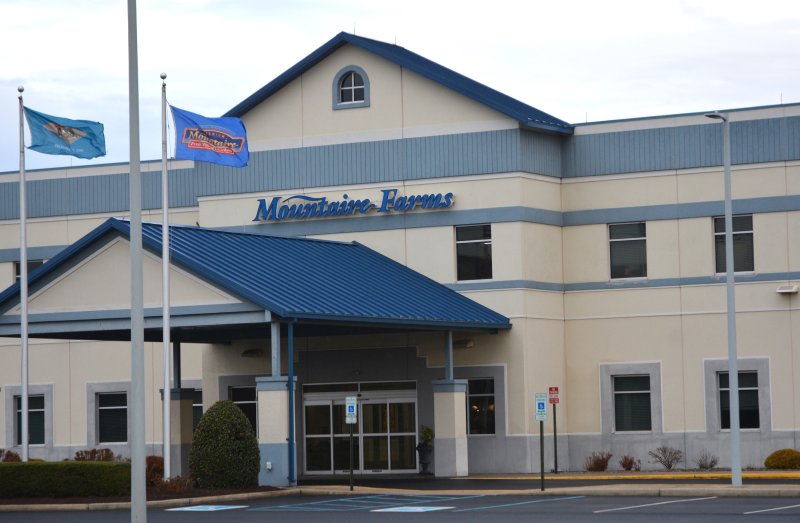
Mountaire Farms of Delmarva
29292 John J. Williams Highway
Millsboro, DE 19966
United States

The Department of Natural Resources and Environmental Control announced March 5 it has authorized a temporary emergency variance to Mountaire Farms to allow additional storage of treated wastewater and the use of wet-weather spray irrigation.
DNREC Secretary Gregory Patterson issued the 60-day emergency variance March 2. It authorizes the use of lagoon freeboard as additional storage for treated wastewater – called effluent – and the discharge of effluent on a limited basis onto Mountaire’s spray fields during wet-weather events and when saturated or frozen conditions exist, subject to the conditions.
“Based on the totality of the circumstances, the department finds that the environmental harms of allowing Mountaire to utilize available lagoon freeboard and engage in limited, conditional wet-weather spray irrigation are significantly less than the environmental harms that will result from repeated shutdowns of Mountaire’s operations,” said Patterson in his decision.
Scott Thompson, Mountaire operations services vice president, sent a letter requesting the emergency variance to the state March 2. He said the company has taken every conceivable measure, including shutting down various processes within the plant to reduce water and canceling production shifts.
Since mid-January, Sussex County has received exceptional and unforeseeable amounts of precipitation and snowfall, leading to saturated conditions in the company’s spray fields, said Thompson. Unfortunately, the levels of precipitation and projected additional precipitation will result in the company’s two storage lagoons reaching their maximum freeboard levels allowable under Mountaire’s operations permit, he said.
“The elevated water levels are the results of Mountaire’s commitment to not spray fields when they are saturated or frozen,” said Thompson.
Since 2021, Mountaire has made upgrades to its wastewater system that have enhanced water quality and increased storage capacity by 33 million gallons. The company can now store up to 55 million gallons.
“There was approximately 3.19 [million gallons] in storage Jan. 24, the day of the first snowstorm, indicating Mountaire was well prepared for the predicted winter weather,” said Thompson, in his application.
In a staff memo to Patterson, Steven M. Smailer, Division of Water director, said there could be a number of negative environmental effects if the emergency variance isn’t granted, including continued shutdowns that would likely cause the euthanization and need for disposal of millions of birds, the disruption of Mountaire’s wastewater treatment facility operations and the offsite migration of the elevated total nitrogen plume through the loss of hydraulic control from production well shutdown.
“In addition, shutdowns of Mountaire’s facility will have significant adverse impacts on the community due to prolonged unemployment and supply chain disruptions which hinder their ability to service areas of the country suffering food shortages due to extreme winter conditions,” Smailer said.
As part of his approval, Patterson set a number of conditions, including:
- Mountaire will maintain at least 1 foot of freeboard, down from 2 feet, for all storage lagoons, which will be measured daily
- Wet-weather spray operations will only be done when all other options have been exhausted
- Mountaire will notify DNREC at least 24 hours in advance of the anticipated need for wet-weather spray operations
- Within five days of wet-weather spray activities, Mountaire will submit a written form with the fields sprayed, how much was discharged, and the time and duration
- All buffer zone requirements must be maintained
- Spray fields must be maintained in such a manner to prevent runoff, and if runoff is observed, wet-weather spray much cease immediately
- At least twice daily, there will be visual verification that no runoff is occurring during spray operations and prioritizing operating on spray fields that are a maximum distance from a receiving stream
- The temporary emergency variance can be revoked at any time.

Chris Flood has been working for the Cape Gazette since early 2014. He currently covers Rehoboth Beach and Henlopen Acres, but has also covered Dewey Beach and the state government. He covers environmental stories, business stories and random stories on subjects he finds interesting, and he also writes a column called Choppin’ Wood that runs every other week. He’s a graduate of the University of Maine and the Landing School of Boat Building & Design.