













Development regs reveal divide in Sussex
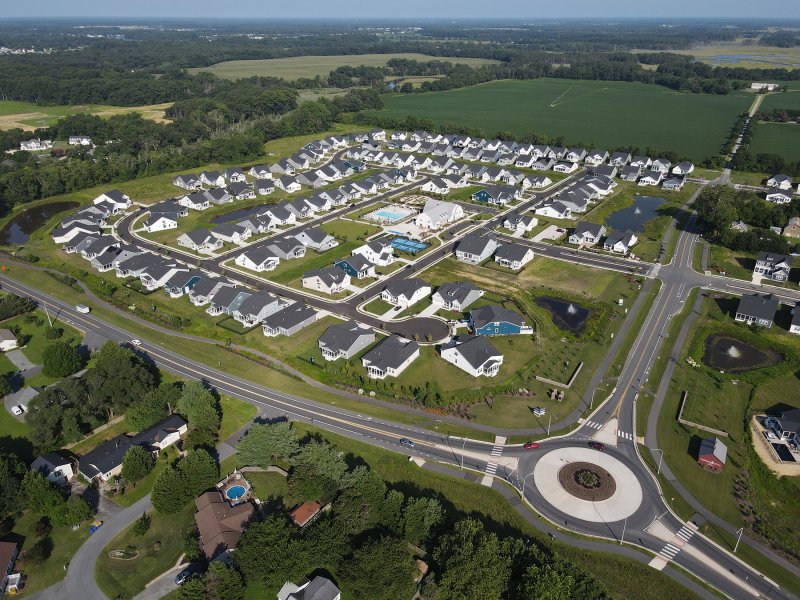
As review began April 1 of the first four proposed Sussex County ordinances to result from an effort to redirect housing development, a struggle between environmentalists and building interests was evident.
Recommendations involve: the Sussex County Rental Program; open space requirements; preliminary plat requirements, interconnectivity and superior design; and subdivisions in rural areas and growth areas.
During Sussex County Planning & Zoning Commission public hearings, the Sussex Preservation Coalition requested amendments to draft subdivision rules, both to ensure development is supported and to limit its burdens on the community.
Other proposed ordinances to establish forest preservation rules and define housing types are expected to be finalized soon and ready for public hearings, said Assistant County Attorney Vince Robertson.
The commission deferred action on the four draft ordinances to an unspecified future meeting. County council will later hold its own public hearings and make a final decision on whether to adopt the results as laws.
The Land Use Reform Working Group’s recommendations were the basis of the rule changes discussed April 1. Other ordinances are expected to be considered later, some of them during drafting of the next county comprehensive plan 10-year update that is expected to be completed by the end of 2028.
Concerns about the first four rule changes were raised April 1 by Sussex Preservation Coalition board member Steve Sinclair, a former Vermont state forester; Joe Pika, who recently replaced Jill Hicks as SPC president after Hicks announced her campaign for a county council seat; and Hicks herself.
During subdivision rule discussions, Sinclair proposed roads be in place or already planned to handle development before projects are approved, and that school and emergency services officials certify they can accommodate or adequately prepare for growth.
“We are a smart growth organization," he said. “We have never been anti-growth. We just want to make things done better, and this is a great example.”
Jon Horner, representing the Home Builders Association of Delaware, disagreed.
“I find it hard to say they’re a smart growth organization when I can’t think of a single project they’ve ever supported,” Horner said. “And beyond that, a lot of the language that they just advocated for wouldn’t be smart growth; it would stop all growth dead in its tracks.”
Fees assessed on future development projects will fund school expansion projects, emergency service costs and road improvements, he said.
Hicks and Horner both served on the 10-member Land use Reform Working Group.
Affordable housing is desperately needed in the county, but the Sussex County Rental Program has drawn little interest. The county is considering amending the rules to make it more financially feasible for developers.
The criteria would be adjusted to set the rent to 60% of the area median income, up from 50%, and the number of program units in a Sussex County Rental Program project would be set at 15%, down from the current 25% of total units. Setbacks and open space requirements would also be eased.
Hicks suggested requiring that 30% of housing units in participating projects offer rent limits or a tiered system geared to different income ranges.
Horner said proposed changes to the Sussex County Rental Program would do more harm than good.
“You are doing the exact opposite of what the SCRP is needed to do,” he said. “You are preventing units from being created, as the projects are not financeable. Period. End of story. Simple.”
Hicks said the program, as designed, would not fill the demand for affordable housing, and the county may fall further behind.
David Hutt, a lawyer with the Georgetown firm of Morris James, suggested amendments to the ordinance to make it affordable for developers to build such units. That includes reducing the number of housing units required in a project, allowing higher rents and eliminating fees, he said.
One of the most significant suggested rule changes would be barring cluster subdivisions with 7,500-square-foot lots on central sewer systems in rural areas.
This is intended to help reduce suburban housing sprawl that has been consuming farmland and forests in recent decades, burdening rural roads, emergency services, schools, healthcare providers and the environment.
Subdivision rules would not affect standard subdivisions or cluster subdivisions on septic systems, which require larger lots.
Horner said he worried county rule changes would not go far enough to shift development toward areas where it already exists and is supported by infrastructure.

Kevin Conlon came to the Cape Gazette with nearly 40 years of newspaper experience since graduating from St. Bonaventure University in New York with a bachelor's degree in mass communication. He reports on Sussex County government and other assignments as needed.
His career spans working as a reporter and editor at daily newspapers in upstate New York, including The Daily Gazette in Schenectady. He comes to the Cape Gazette from the Cortland Standard, where he was an editor for more than 25 years, and in recent years also contributed as a columnist and opinion page writer. He and his staff won regional and state writing awards.
Conlon was relocating to Lewes when he came across an advertisement for a reporter job at the Cape Gazette, and the decision to pursue it paid off. His new position gives him an opportunity to stay in a career that he loves, covering local news for an independently owned newspaper.
Conlon is the father of seven children and grandfather to two young boys. In his spare time, he trains for and competes in triathlons and other races. Now settling into the Cape Region, he is searching out hilly trails and roads with wide shoulders. He is a fan of St. Bonaventure sports, especially rugby and basketball, as well as following the Mets, Steelers and Celtics.