












'What We Do in the Shadows' pulses with humor, horror, humanity
As enduring as vampires have been in cinema (dating back to 1922’s “Nosferatu”), it’s too bad that few films have been able to capitalize comedically on the subject. In leafing through the years of releases, there are a marginal few that have successfully made the most of the familiar genre’s tropes and trappings.
Writers/directors Jemaine Clement and Taika Waititi have added to (and perhaps topped) that short list of successful comedic-vampiric hybrids with “What We Do in the Shadows,” a mockumentary that first debuted last year at Sundance Film Festival and has been lurking in the cinematic darkened corners around the globe ever since. It will get a limited release in New York and Los Angeles this weekend, followed by screenings in Philadelphia and D.C. the following week.
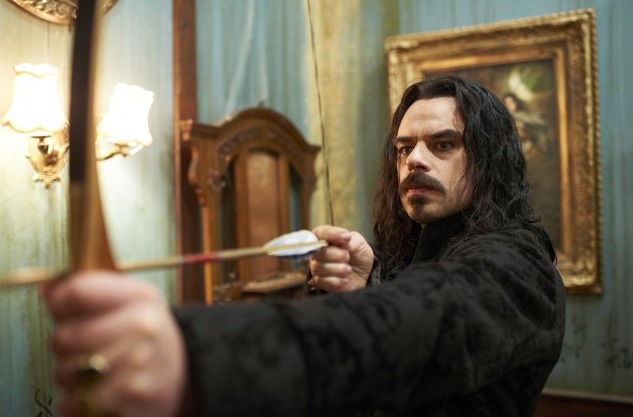
In “Shadows,” a documentary film crew follows a trio of vampire pals - Viago (played by Waititi), Deacon (played by Jonathan Brugh), and Vladislav (played by Clement) - who are just trying to cope with immortality and the mundane day-to-day activities that shift from boring to downright maddening when you have been doing them for centuries.
Washing dishes, cleaning the house and how to properly get out blood stains after a murderous rampage all become debate topics for our leads. And throughout the entirety of the film’s runtime, the results are achingly hilarious.
They are outcasts, misfits - a characteristic that Clement mastered so well with his stellar “Flight of the Conchords” show on HBO a few years back. Despite their misanthropic unity, the three leads could not be more dissimilar. Not only are they from different centuries, but they have had much time to hone their own individual peculiarities. Viago is rules-driven and likes to call a “flat meeting” to address domestic issues; the free-spirited Deacon wafts in and out like the wind; and Vladislav once earned fame (and confidence) in the vampire community for his murderous ways.
Imagine them all like some epoch-spanning “Big Brother” of the undead. In fact, long before the intro credits roll, we are given a glimpse into each of their lives (there’s even a fourth flatmate named Petyr, but he’s from the Nosferatu era and mainly dwells in his stone coffin in the basement). They bicker, they fuss, and they party (after a montage of them trying out different threads for a night on the town, they proclaim in unison “Let’s go out, Vampire Style!” only to cut to the next scene of them quietly taking the bus into town.).
It’s not easy being an old-school vampire in modern times. For example, getting into clubs is problematic for them, as they have to be invited inside, therefore they have to beg the bouncers to ask them in. Vladislav, once an all-powerful vampire, seems to be suffering from “performance issues” after a battle with his nemesis which renders his powers of seduction rather useless and his shapeshifting abilities...um...lacking. And good luck to any of them trying to find a virgin these days!
Clement and Waititi’s screenplay respects both the cinematic and written mythology of its subject matter (something “Twilight’s” Stephenie Meyer wouldn’t know about if it bit her on the neck). Gags run the gamut from lewd to literate, but are seldom unfunny. And the sheer volume of gags ensures that many will zip by while viewers are still catching a breath from the previous one. There are so many throwaway lines I’d love to share, but I am resisting so you can experience them without expectation.
There has not been an ensemble cast so uniformly comfortable and engaging in this mockumentary-style format since the British version of “The Office.” Lines are delivered as though they are improvised on the spot, and even the most seemingly disposable sequences are packed with humor (a chance encounter with some foul-mouthed lycanthropes results in one of them saying “C’mon guys, why do we always have to curse? Remember we’re werewolves, not ‘swearwolves!’”).
And while there is a slight narrative drive (culminating in The Unholy Masquerade, a mixer for the town’s resident vampires, zombies and witches), it’s more just an excuse to throw in even more verbal and visual gags before the credits roll.
In a film that feels right at home with the works of master mocker Christopher Guest (director of “Waiting for Guffman,” “A Mighty Wind” and “Best in Show”), “What We Do in the Shadows” pulses with humor, horror and, yes, humanity. And despite the fact that we are barely two months into the year, it sets the high bar as the comedy to beat in 2015.