













Construction oversight, rain cited as reasons for Rehoboth sludge spill
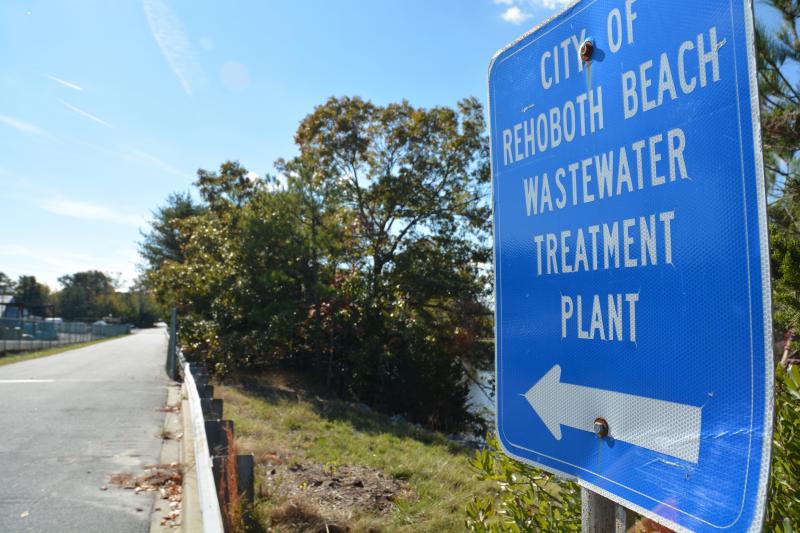
A combination of construction-related oversight and a deluge of rain were the reasons for Rehoboth Beach’s recent wastewater spill.
In an Oct. 30 press release, the city announced approximately 4,000 gallons of partially treated wastewater sludge had overflowed from its Roosevelt Street treatment facility onto the nearby ground and marsh. The spill occurred late Oct. 29 and into early Oct. 30, said the release.
The National Weather Service’s historical data shows the Cape Region received 3.42 inches of precipitation in October. Almost two-thirds of that precipitation came the last week of the month – .84 inches Oct. 26 and 1.42 inches Oct. 29.
A few days after the spill, during a special meeting Nov. 4, Rehoboth Beach Public Works Director Kevin Williams went into more detail on how the spill occurred.
For years now, in conjunction with the ocean outfall construction, the city’s wastewater treatment plant has been undergoing significant infrastructure upgrades. The multimillion-dollar upgrades are expected to help the city meet the growing demands on the system and add decades to the life of the plant.
Currently, said Williams, the headworks building, where all the wastewater enters before being pumped into the wastewater-cleaning oxidation ditches, is being completely rehabilitated. As part of the headworks building construction, he said, the old lines attaching the building to the oxidation ditches are being replaced, so they were cut from the system.
A line bypassing the headworks building has been installed so wastewater can make it to the oxidation ditches while work on the building is completed, said Williams. On the opposite side of the ditches from the entry pipes is an overflow pipe that’s supposed to capture wastewater if it reaches a dangerous level, he said.
The problem, which wasn’t realized until it was too late, said Williams, was that the old lines entering the ditch were lower than the overflow line, and those lines weren’t capped.
“As the water in the oxidation ditch started to rise, we saw it leveling off at a certain elevation, [and were] thinking the system had adapted and was working as planned. But, in effect, the flow had raised to this level and was coming out of that penetration in the wall, and then spilled out onto the ground,” said Williams.
The Delaware Department of Natural Resources and Environmental Control was contacted immediately once the spill was found, said Williams. DNREC recommended cleaning up as much as possible and applying lime to disinfect the area of the spill, he said.
Looking forward, Williams said the overflow system should work as designed because the two old holes have been capped, and the whole system was doubled-checked for other possible issues.
“In hindsight, they certainly should have been capped. In reality, they were about a foot below the level of our overflow pipe, so it would not rise to the level of the overflow pipe,” said Williams. “We just missed it.”
The spill was not the reason the meeting had been scheduled. The main reason for the meeting was for commissioners to discuss a proposal from Sussex County to tap into the city’s ocean outfall. City Manager Sharon Lynn began the discussion on the spill by saying it was a case of bad timing and that the county’s proposal would have no effect on the city’s treatment plant.
Williams reinforced that message during his presentation. He said the county’s proposal wouldn’t affect the capacity of the oxidation ditches at the city’s treatment plant because the county’s proposal is to connect its line directly into the outfall line. He said the county wastewater would already be fully treated at its Wolfe Neck facility.
Rehoboth’s spill pales in comparison to Lewes’ spill that occurred in December 2019. The Lewes Board of Public Works was fined $64,000 by the state after a malfunction at its American Legion Road facility caused a discharge of 3.9 million gallons of partially treated wastewater into the marsh adjacent to the plant over several days.

Chris Flood has been working for the Cape Gazette since early 2014. He currently covers Rehoboth Beach and Henlopen Acres, but has also covered Dewey Beach and the state government. He covers environmental stories, business stories and random stories on subjects he finds interesting, and he also writes a column called Choppin’ Wood that runs every other week. He’s a graduate of the University of Maine and the Landing School of Boat Building & Design.