













Lewes abuzz on lawn equipment, bees
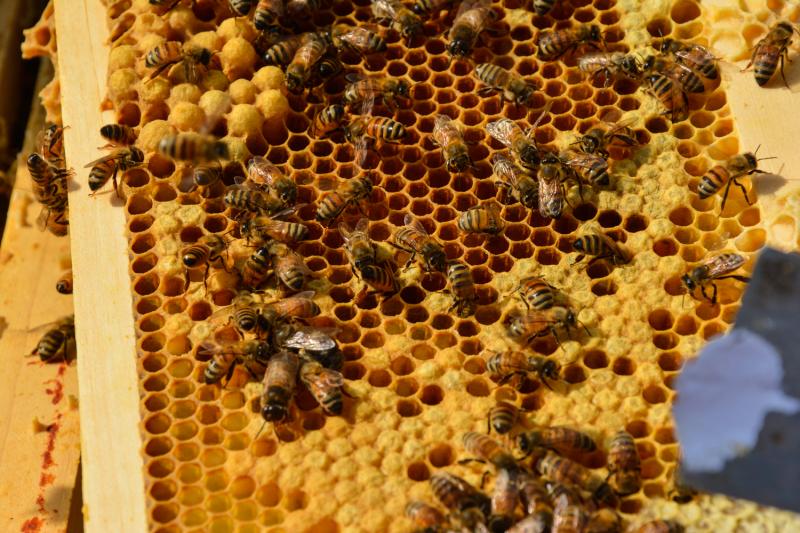
The buzz of gas-powered lawn equipment may soon be replaced by the hum of honeybees in Lewes backyards.
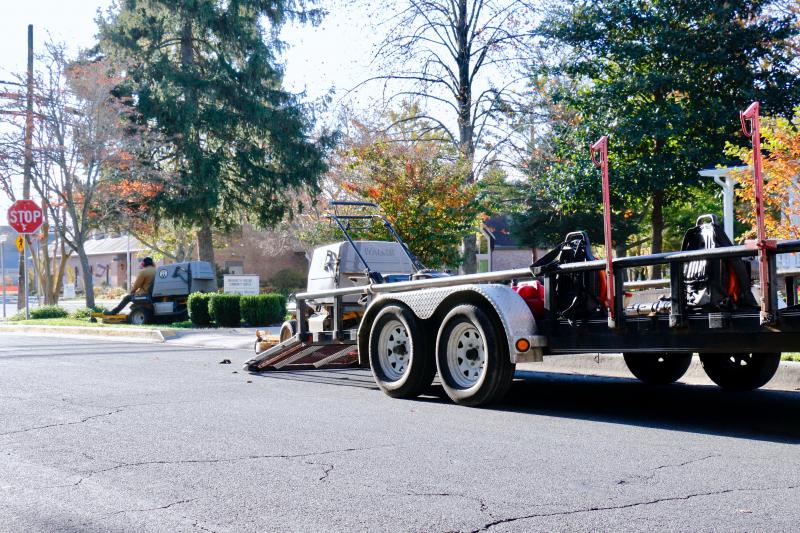
The City of Lewes has a policy to reduce greenhouse gas emissions that contribute to climate change where feasible. The city says gasoline engines emit large quantities of pollutants into the environment, degrade air quality and contribute to hearing loss. Officials have also recognized the effect climate change has had on pollinators, bees in particular. Thinking green, mayor and city council discussed the upcoming ban on gas-powered lawn equipment as well as permitting beekeeping within city limits during its Oct. 27 workshop.
Lawn equipment
Former Councilman Rob Morgan spearheaded an ordinance to ban gas-powered lawn equipment when it passed in 2020, when the dates of Dec. 31, 2022, and Dec. 31, 2025, were established to allow technology to catch up and consumers to purchase new products. Landscaping companies helped draft the legislation and informed officials that battery technology in some equipment has become feasible, but more time was needed for other types.
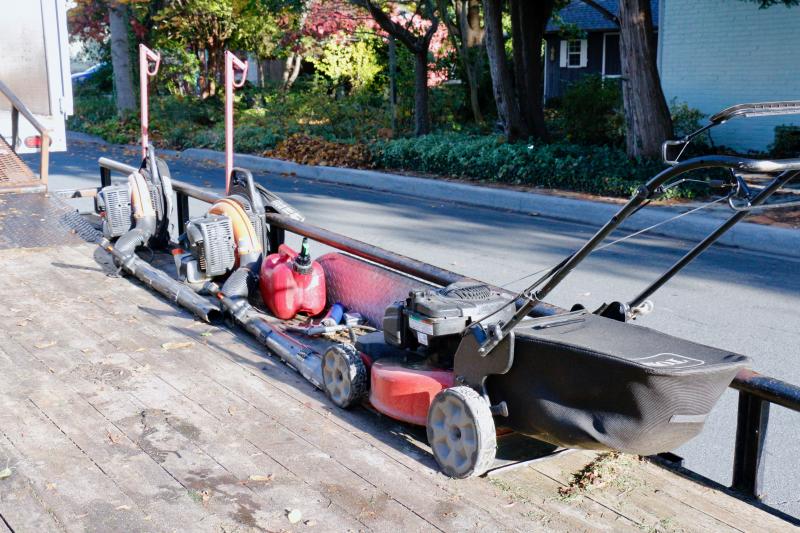
Beginning Dec. 31 this year, all gas-powered lawn equipment will be banned from use by residents and businesses. The only exceptions are leaf blowers, chain saws and string trimmers, which will be banned in 2025. Gas-powered lawn mowers are exempt from the ban.
“If this provision goes into effect this year, we will need to make sure we get that in our bid specifications, and it could change the bidding environment,” said City Manager Ann Marie Townshend.
Townshend said she believed there had not been any major progressions in the longevity of batteries since 2020 and it could be a challenge for landscapers. Companies relying on multiple jobs per day could be hampered by the operational constraints created by a depleted battery. Fearing it could cost residents more money on their services, Townshend said the question is whether mayor and city council want to delay implementation.
The initial ban eliminates handheld devices, including hedge trimmers. While the technology is in place for most small landscaping equipment, there was a question about hedge trimmers. Mayor Andrew Williams, a councilman at the time the ordinance passed, was joined by Councilman Tim Ritzert in explaining the thought process mayor and city council had in 2020. Williams said the feedback they received indicated battery-powered hedge trimmers could work just as well as gas-powered, but that was not the case for chainsaws or leaf blowers.
“Hedge trimmers are not typically run for hours at a time; they’re episodic, and those episodes are fairly short,” Ritzert said.
Williams felt it would be good to discuss the upcoming ban before it took place, in line with former Councilwoman Bonnie Osler’s request in 2020. Williams said that if any two council members feel strongly about amending the ordinance, they can put it on an upcoming agenda for amendment.
“We’re not here to take action on this now; it’s really just to put it out to the community: this is there,” he said. “If there is no amendment, the expectation will be that you use a battery-powered or plug-in.”
Mayor and city council will discuss the ordinance during its Monday, Nov. 14 meeting and could vote to amend the ordinance. If they do not make any changes, the law goes into effect Dec. 31.
Beekeeping
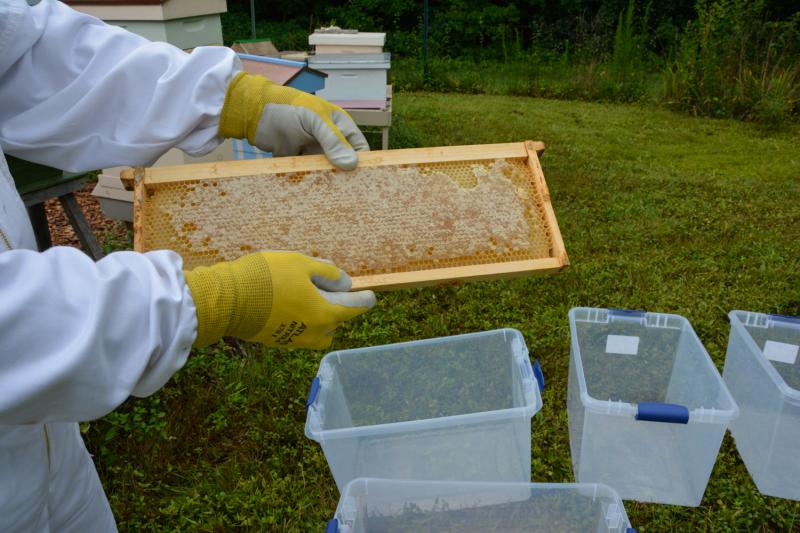
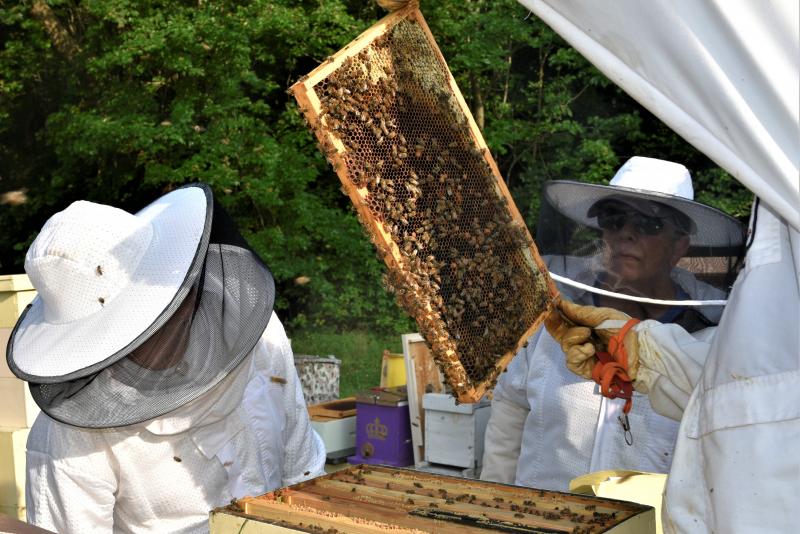
Beekeeping in Lewes is currently illegal, but officials are looking into changing that. According to the Lewes Beekeeping Club, 85% of plants require bees and other pollinators to exist. Sumner Crosby spoke with mayor and city council Oct. 27 about the benefits of beekeeping and how to introduce the practice without risking public safety.
One of the devastating results of climate change has been the decrease in the population of important pollinators, he said. Perhaps no pollinator is as important as the honey bee. In addition to climate change, development and deforestation have wreaked havoc on the habitat of honey bee species. Beekeepers have been able to fill in some of the void by caring for colonies of domesticated honey bees in a controlled environment.
Crosby said responsible beekeeping isn’t just something mandated, but rather desired in the practice. As a principal beekeeper in the Lewes Beekeeping Club, which has about 50 members, he is one of 20 trained members who could care for bees in their respective backyards, but are currently unable to do so. Crosby has been a beekeeper for 20 years and says the Lewes Beekeeping Club is all about educating the public, particularly on the behavior of the Western honey bee.
Crosby said when people come in contact with the Western honey bee as it is among the plants, they should not be bothered by the insect. The closer a person gets to the hive of the honey bees, the greater the risk for aggressive behavior. If Lewes permits the practice, skilled beekeepers could begin maintaining the area of peak aggression.
The state of Delaware requires all beehives to be registered and contain moveable frames. Crosby suggested Lewes establish registration and regulations along those lines.
State law includes inspection requirements to evaluate the health of the hive, check for diseases, and ensure Africanized bees have not been introduced.
“Any beekeeper worth their salt is doing the job of evaluating the health of their hive every time they go in,” Crosby said.
When asked about the potential for native species to be impacted by the introduction of new colonies, Crosby believed that is an urban problem. In an area like Lewes, pollen-producing plants are plentiful and dispersed, but in a place like New York City, there are concentrated areas of limited food sources. The addition of bees, according to Crosby, could help increase biomass levels in backyards without detracting food supplies from native species.
The veteran beekeeper offered his services and welcomed the contributions from others toward developing a new policy on beekeeping. Williams said the next step will be to gather a consensus from council before moving forward.

Aaron Mushrush joined the sports team in Summer 2023 to help cover the emerging youth athletics scene in the Cape Region. After lettering in soccer and lacrosse at Sussex Tech, he played lacrosse at Division III Eastern University in St. David's, PA. Aaron coached lacrosse at Sussex Tech in 2009 and 2011. Post-collegiately, Mush played in the Eastern Shore Summer Lacrosse League for Blue Bird Tavern and Saltwater Lacrosse. He competed in several tournaments for the Shamrocks Lacrosse Club, which blossomed into the Maryland Lacrosse League (MDLL). Aaron interned at the Coastal Point before becoming assistant director at WMDT-TV 47 ABC in 2017 and eventually assignment editor in 2018.