













Lewes BPW investigating wastewater spill
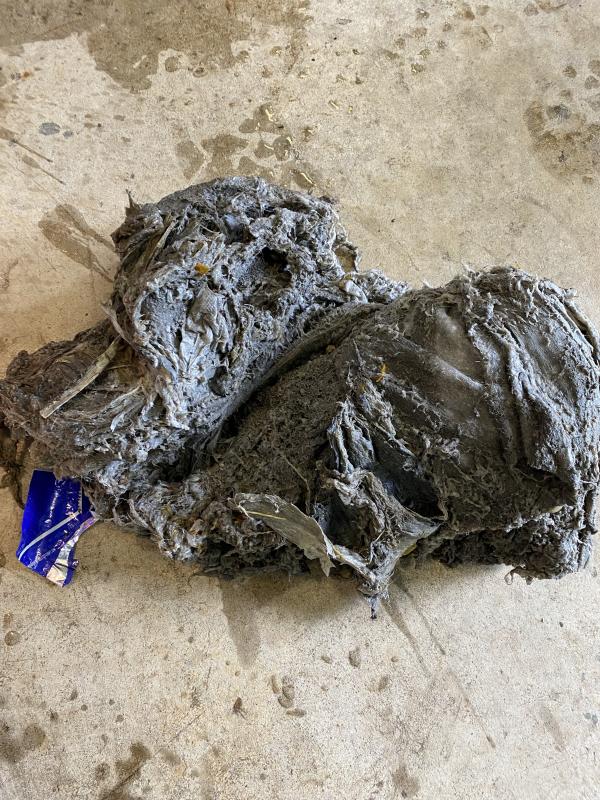
Lewes Board of Public Works and wastewater treatment plant operator Inframark are working to pinpoint just what went wrong Aug. 13-15 that resulted in untreated wastewater spilling into the Lewes-Rehoboth Canal.
A root cause report with proposed corrective actions is expected soon, said Mike Wolgemuth, a regional manager with Inframark.
What they do know is that the spill was directly caused by problems at Lift Station 4, which pumps all wastewater from the town side of the canal to the Howard Seymour Water Reclamation Plant on American Legion Road. BPW President Preston Lee said Inframark noticed an unusual sound coming from the pumps Aug. 13, which indicated a clog. Wolgemuth said it’s a pretty recognizable knocking sound.
When Inframark realized it would be unable to unclog the pump, it procured a backup bypass in the event the station’s secondary pump became overwhelmed. The bypass arrived about 5 p.m., Aug. 13, but was not immediately installed.
“In hindsight we should’ve [installed it],” Wolgemuth said, noting that he was working by himself at the plant that day.
At the BPW’s Aug. 19 meeting, Lee asked Wolgemuth why Inframark didn’t take any action to remedy the problem Aug. 14. Although nothing had happened yet, Wolgemuth agreed they should’ve.
About 1 a.m., Aug. 15, Inframark received an alarm indicating the second of Lift Station 4’s two pumps had also clogged. The bypass was installed and running by 3 a.m. While the pump station was down, wastewater was pumped into a truck from Clean Delaware to haul to the wastewater treatment plant. A few hours after the bypass was installed, the BPW’s wastewater system was back to normal operating levels, Lee said.
But, another issue occurred about 12:30 p.m., Aug. 15, when the bypass suffered a catastrophic failure. Another bypass pump was procured from Delmar, but was not operational until about 10:15 p.m. Trucks from Clean Delaware, Sussex County and the BPW were used from about 1 to 11 p.m. to pump out the system from Lift Stations 3 and 4 and take the material to the treatment plant while the second bypass was installed. It was during this time that a cleanout near Inn at Canal Square began leaking sewage. Inframark estimates 7,500 to 8,000 gallons entered the Lewes-Rehoboth Canal.
The connection to Sussex County’s wastewater system was immediately closed to prevent additional flow to Lift Station 4, Wolgemuth said.
BPW General Manager Austin Calaman said both pumps at Lift Station 4 are back online and the bypass is still hooked up but not in use.
At the Aug. 19 meeting, Board Director Earl Webb asked Wolgemuth how far away back-up resources are from Lewes.
Wolgemuth said Inframark’s nearest plant is in Elkton, Md., with others in Lancaster and near Philadelphia, Pa.
“Two of the guys I had down here are two of my top maintenance guys – one was from Lancaster, one from Bucks County, Pa., and they stayed down through [Aug. 19],” he said.
The pumps at Lift Station 4 were submerged with water during the incident. Since, they’ve been serviced. The motors were replaced for $1,400 apiece, Wolgemuth said. The old motors can be serviced and will be used as backups, he said.
The BPW and Inframark will continue to have a bypass in Lewes to ensure quick response in the future. They are currently renting a bypass for about $3,500 per month. Calaman says the board is considering purchasing a bypass, which range from $60,000 to $100,000 depending on features, size and quietness.
The clog was likely caused by unflushable items being flushed down the toilet, Lee said.
Webb asked Wolgemuth if this was a common problem at Inframark’s other plants.
“We have issues with ragging everywhere in collection systems,” he said.
What makes Lewes’ situation different, he said, is that the BPW’s wastewater treatment plant uses Zenon membranes.
In an email following the meeting, Calaman expanded on how Lewes’ system screens larger debris.
“Right now, the BPW uses grinder pumps at most of the lift stations/pump stations,” he said. “The grinder pumps grind down material and pass it farther along the system until it reaches the headworks where it is screened through a 5 mm and 2 mm screen. Those screens catch most of the debris, but some fine material makes it down to the membranes which then needs to be cleaned off accordingly. Some utilities use ‘non-clog’ pumps instead of grinder pumps, but there is a tendency to have clogs in the collection system because the material is not ground down. Now, some things can be put into place like a manual bar screen that catches larger debris, but it also needs to be cleaned frequently so it doesn't cause problems.”
The root cause report will be released to the public after the BPW and DNREC have an opportunity to review it, Calaman said.

Nick Roth is the news editor. He has been with the Cape Gazette since 2012, previously covering town beats in Milton and Lewes. In addition to serving on the editorial board and handling page layout, Nick is responsible for the weekly Delaware History in Photographs feature and enjoys writing stories about the Cape Region’s history. Prior to the Cape Gazette, Nick worked for the Delmarva Media Group, including the Delaware Wave, Delaware Coast Press and Salisbury Daily Times. He also contributed to The News Journal. Originally from Boyertown, Pa., Nick attended Shippensburg University in central Pennsylvania, graduating in 2007 with a bachelor’s degree in journalism. He’s won several MDDC awards during his career for both writing and photography. In his free time, he enjoys golfing, going to the beach with his family and cheering for Philadelphia sports teams.