













Milton officials debate changes to zoning code
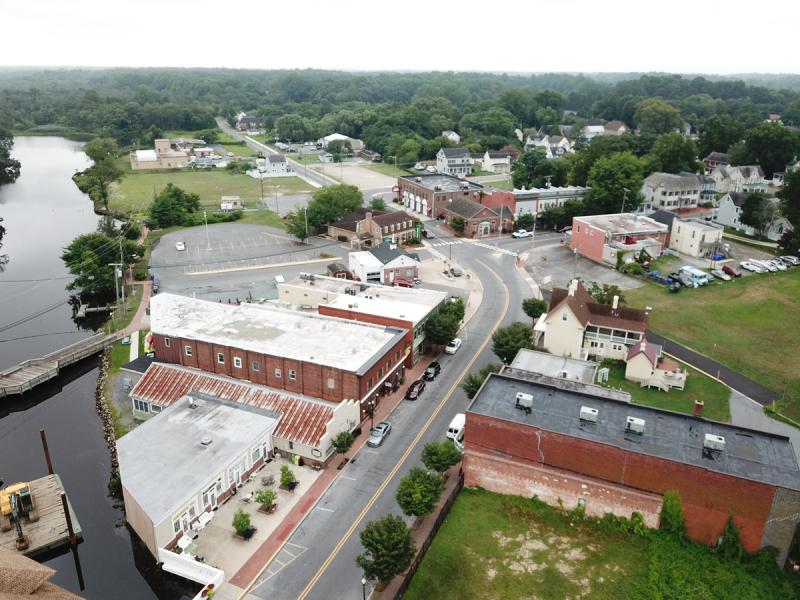
Milton officials have been undergoing discussions about a series of changes to the zoning code to add clarity and set regulations for new zoning uses.
Mayor John Collier said council began looking at changes to the zoning code in advance of the five-year update of the comprehensive development plan in 2023. Changes were developed by the planning and zoning commission, and at council’s Oct. 3 meeting, a workshop was held for council to make its own recommendations to be incorporated into the package. Those changes will be sent back to planning and zoning for additional review.
Officials are also looking at changes with an eye on forthcoming growth, as four major housing developments within town borders are planned, as well as new commercial entities coming on Route 16.
“In my opinion, as growth continues, the town will have to make needed changes to stay on a path to smart growth,” Collier said.
Changes included in the package include clarifying definitions for terms such as government uses, wetlands and public utility services, the last of which were frequently referenced during debate over the proposed Verizon cell tower on Front Street. When planning and zoning approved the special permitted use for the tower, a point of contention for opponents was whether the tower constituted a public utility service and whether such a utility could be built within a floodplain area.
While council has a separate ordinance clarifying regulations for wireless communications towers, the new zoning ordinance would define a public utility service as the erection, construction, alteration, maintenance or operation by utility companies, or public safety companies or agencies, of underground, surface or overhead gas, electrical, steam, wastewater, stormwater or water transmission systems, including but not limited to poles, wires, mains, drains, sewers, pipes, conduits, cables, fire alarm boxes, police call boxes, traffic signals, light stations, telephone lines, hydrants, pumping stations and other similar equipment reasonably necessary for the furnishing of adequate services by such companies or agencies or for the public health, safety or general welfare. The ordinance further defines a public utility system as any use or structure associated with providing public utility services.
The town’s experience with the cell tower led council to consider other types of commercial development that could come to Milton that needed to be defined in the zoning code, such as medical marijuana dispensaries.
“I think it is critical that if we’re going to allow this type of an entity to at least make an application here, we need to first define it,” Collier said. “Let’s be prepared.”
The zoning changes also aim to correct typographical errors, add electric vehicle charging stations as a permitted accessory use and require additional information on preliminary site plans, such as source water information and access points. The changes would also require building elevations, landscape plans and lighting plans to accompany an application. Much like at the county level, the revised zoning ordinance would require posting on properties subject to a public hearing.
During its discussion Oct. 3, council focused on wanting to shore up regulations within the town’s Marine Resources Use District, the section of town along the Broadkill River that’s home to the current wastewater treatment plant. The district aims to protect the riverfront as a public resource while allowing for certain permitted uses, such as parks, art galleries, boat slips, single-family homes or restaurants. Part of the new language on restaurants mentions high turnover, which caused Councilwoman Randi Meredith to ask, “Do we want fast food in the Marine Resources District?”
Town Solicitor Seth Thompson and Project Manager Tom Quass said the planning and zoning commission had a hard time allowing standard restaurants and excluding other types of restaurants.
Councilwoman Lee Revis-Plank asked for additional language to better address flooding and buffers within the district, which Collier agreed with.
Council plans to continue discussing the zoning changes, likely at its Monday, Nov. 7 meeting.

Ryan Mavity covers Milton and the court system. He is married to Rachel Swick Mavity and has two kids, Alex and Jane. Ryan started with the Cape Gazette all the way back in February 2007, previously covering the City of Rehoboth Beach. A native of Easton, Md. and graduate of Towson University, Ryan enjoys watching the Baltimore Ravens, Washington Capitals and Baltimore Orioles in his spare time.