












New pilot launch, new UD chief, old Lewes astronomy
Daily life along the Delaware coast, whether on beaches or Boardwalk, or fishing or sail boats, includes watching the constant comings and goings of the tankers, freighters and other ships in Delaware Bay to and from Delaware River ports.
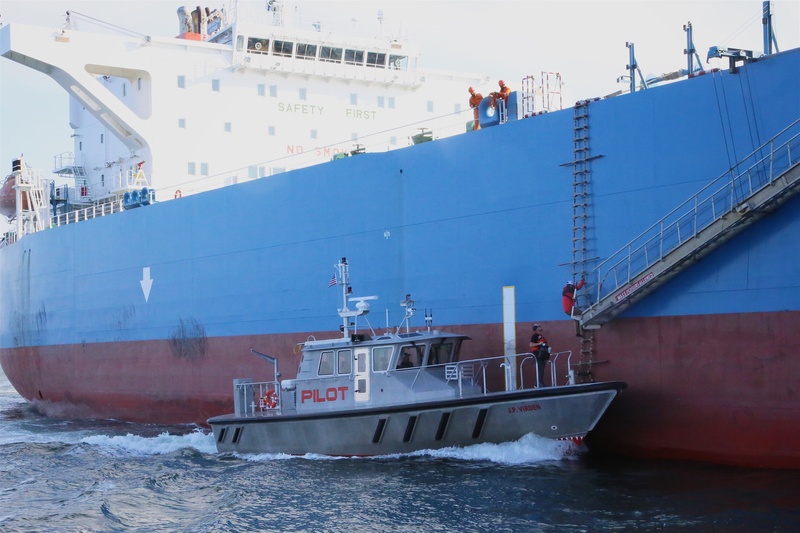
Part of that action is the ferrying of members of the Pilots Association for the Bay and River Delaware between the ships and the pilots’ station alongside the Cape May-Lewes Ferry terminal.
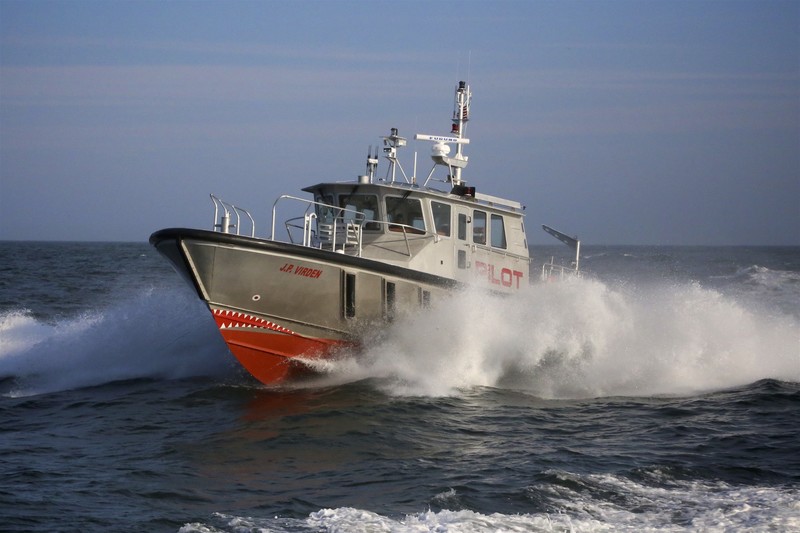
The launches used to deliver the pilots to the ships have to be seaworthy and powerful to deal with the often-rough waters where the bay and ocean meet. On Friday, Nov. 6, the pilots took delivery of the newest vessel in their launch fleet. Named for one of the founders and first president of the pilots association, the J.P. Virden went into service on the same day as her arrival in Lewes. Capt. Stuart Griffin, a pilot in the association, said Gladding and Hearn Shipbuilders of Somerset, Mass., custom-built the vessel for the Delaware pilots. She measures 52-feet-6-inches in length overall, displaces 56,000 pounds of water and gets where she’s going with the help of twin Volvo 650-horsepower diesels. Griffin said the pilots may replace one of their current launches - the Delaware or the Philadelphia - with their new vessel.
New university chief coming
Dr. Nancy Targett, acting president of the University of Delaware, dean of the College of Earth, Ocean and Environment, and a resident of Lewes, spoke to Lewes-Rehoboth Rotary members this week. She said she is getting a taste of the challenges of heading one of the nation’s leading universities - at least temporarily - and gaining a better understanding of the breadth of its influence and activities. “I am not in the running for the presidency on a more permanent basis. The search committee has been working hard, and the new president should be announced before the end of the year. That person will take over on July 1, 2016.”
Targett said she has also enjoyed some of the perks of being the president. “I got to drive the Zamboni [the machine that shaves the ice of the skating rink] and go down in the mini-submarine that was in Lewes in early October. We’re fortunate that Delaware has such a great university offering a great educational value, especially to our in-state students.” She said the university accepts 90 percent of the Delaware students who apply, and about half of them choose to attend. At any one time, she said, Delaware students represent almost one-third of the student body at the Newark campus.
Lewes’s astronomical history
An article in this week’s entertainment section discusses the pending placement of a historical marker in the Bethel Cemetery in Lewes on Friday, Nov. 20. The marker commemorates the placement of a temporary astronomical observatory on that location in 1769 to observe the planet Venus crossing the face of the sun. It’s a rare celestial occurrence - akin to a mini eclipse.
The temporary Lewes observatory, however, was one piece of what is considered one of the world’s greatest astronomical challenges of the 18th century: measuring the distance of the Earth from the sun. Observing the Transit of Venus from many places all over the planet and measuring the time it took to complete the transit provided key information to answer the question. Jim Morrison of Rehoboth Beach researched the Lewes observatory history and pushed for three years for placement of the marker. He coauthored an expansive paper about the Lewes aspect of the initiative. It’s an amazing story that I’ll spend some more time on in next week’s column.