












Spring is coming at Lewes Fourth Street Preserve
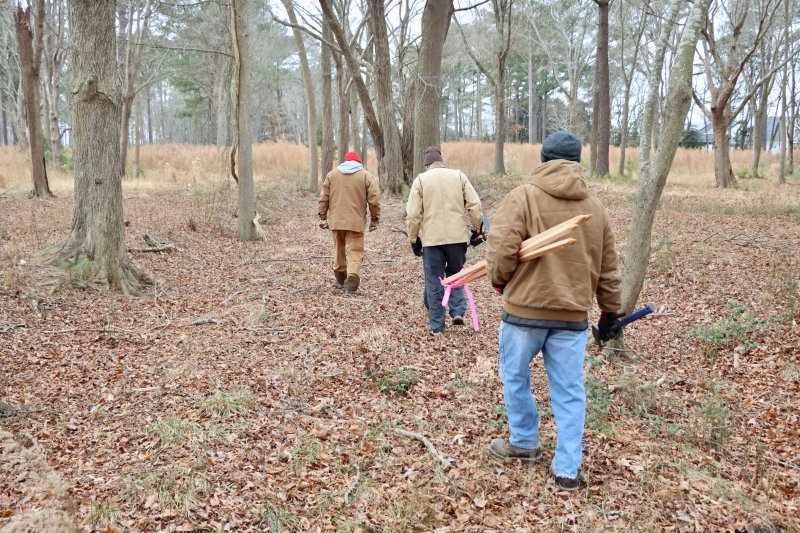
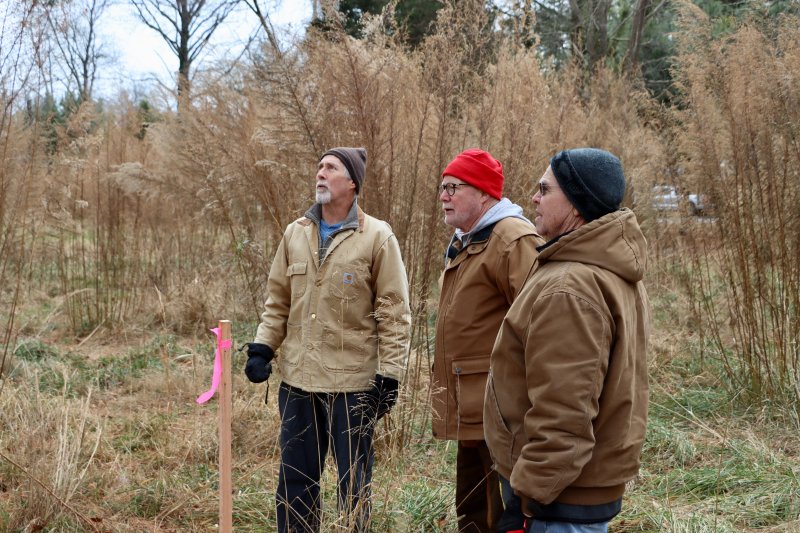
Like some of the first settlers of Lewes, three men made their way through the Fourth Street Preserve Jan. 3.
Rodney Robinson, Scott Wilkinson and Jim Ford were there to map out the first jobs that need to be done to turn the land into the state’s first urban forest.
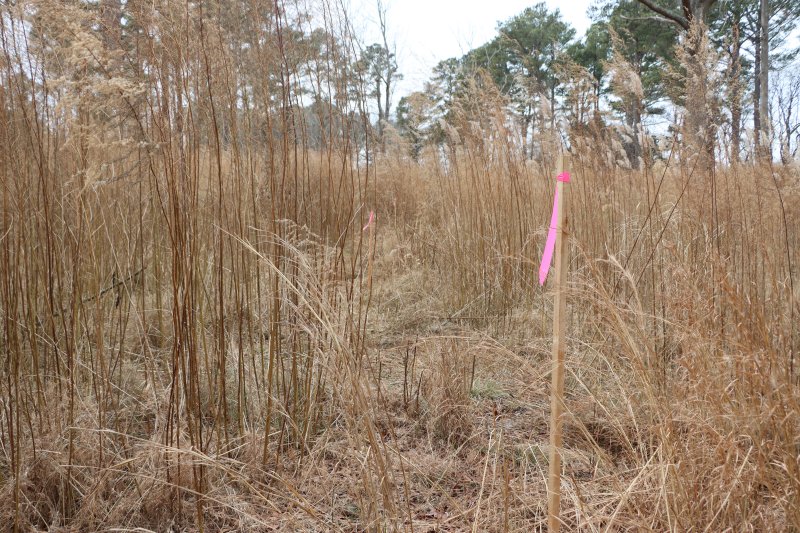
During a visit in December, they staked out a rough location for a circular loop trail.
The January mission was to determine where three habitat islands – clusters of trees – will fit on the smaller 7-acre portion of the preserve.
Wilkinson said those trees will be the first sign that the restoration is taking shape.
“You’ll have a forest and small spot that grows rapidly. So, if you want an early win with some visible impact, this is the way to go,” he said.
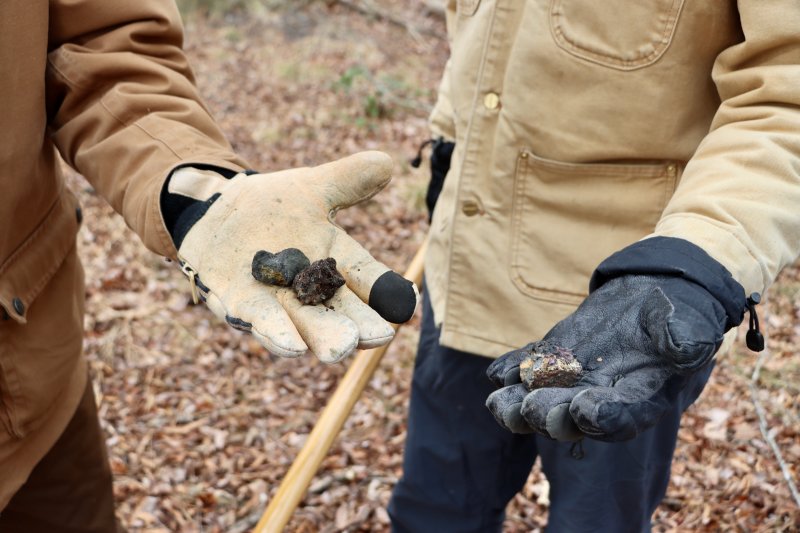
The men walked the old Queen Anne railroad bed, which runs through the center of the parcel. They dug into the soil to pull up some slag, a coal-burning byproduct used as ballast along the tracks more than 100 years ago.
Ford led the fundraising effort that raised $8 million for the city to buy the 30-acre parcel, which was the first deeded land in Delaware in 1670.
The land will be kept as a preserve, not a traditional city park, in perpetuity.
Robinson, a landscape architect, and Wilkinson, a master naturalist, have been tasked with designing how the preserve will look and function.
A certified arborist will soon come in to determine which trees should stay and which should go. Volunteers began removing invasive species in November.
“We need to identify dead, dying and diseased trees and invasives,” Ford said during a briefing to the Lewes Fourth Street Preserve Subcommittee Dec. 17. “We might need to cut down additional trees, but the idea is that we leave cut materials in their natural state.”
Ford said those materials could be used as boundaries for the trail or to make benches.
He said they are eligible for a grant for the tree removal.
The designers are also planning to cut back the dog fennel – the tall, native grass that now dominates the preserve.
Ford said they determined they will need two to three bridges to span gaps at the entrances on Fourth Street and on Canary Drive. He said they hope to use volunteers from local tech schools and scouts to help with the design.
City engineers will also begin a year-long process to take soil borings and monitor groundwater.
Ford said the total cost for the restoration is an estimated $825,000. He said $400,000 has already been raised through pledges and donations. The city said the preserve is eligible for money from its new resiliency fund.
Taryn Davidson, state urban and community forestry program coordinator, is planning to hold a planting demo day in April.
A ribbon-cutting celebration is planned for the spring.
Robinson has said it will take 10 years for the preserve to become a full-fledged forest.

Bill Shull has been covering Lewes for the Cape Gazette since 2023. He comes to the world of print journalism after 40 years in TV news. Bill has worked in his hometown of Philadelphia, as well as Atlanta and Washington, D.C. He came to Lewes in 2014 to help launch WRDE-TV. Bill served as WRDE’s news director for more than eight years, working in Lewes and Milton. He is a 1986 graduate of Penn State University. Bill is an avid aviation and wildlife photographer, and a big Penn State football, Eagles, Phillies and PGA Tour golf fan. Bill, his wife Jill and their rescue cat, Lucky, live in Rehoboth Beach.