












Sussex council looks at workforce housing ordinance
No one disagrees that there is a drastic lack of affordable workforce housing in Sussex County, especially on the eastern side of the county. How to get those units built has been an ongoing issue.
Sussex County officials are banking that a new workforce housing ordinance will provide better incentives to persuade developers to build affordable rental units in their projects.
At the top of the list of incentives would be a change that multifamily projects providing affordable rental units would be a permitted use - without the need for public hearings - in defined growth areas in the county, including the coastal area, developing areas and town centers.
Projects would still be subject to preliminary and final-site reviews by Sussex County Planning and Zoning Commission. Currently, nearly all multifamily projects, such as apartment complexes, require rezoning and two public hearings as well as site-plan approval.
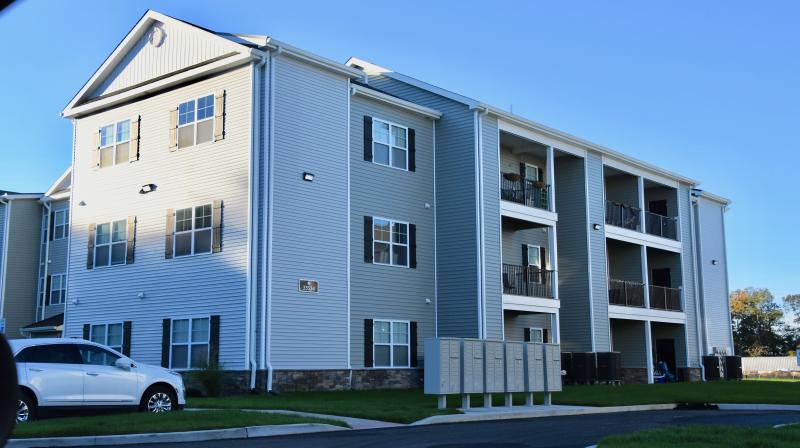
Only one project - Coastal Tide Apartments off Plantation Road near Lewes - has been built using the current workforce housing ordinance. “We have not provided enough incentives for developers,” said assistant county attorney Vince Robertson.
Robertson said that would in turn save developers months of time. He said site-plan reviews are usually acted on within two months while zoning changes with two public hearings take from six months to a year to reach a vote.
Robertson said a permitted maximum density of 12 units per acre would make multifamily projects economically viable.
Other proposed regulations include:
Perimeter buffer of 100 feet, but the width could be flexible based on proximity to neighboring developments.
Maximum height to 52 feet and 4 stories, which is a 10-foot increase from current standards.
Central water and sewer; 50 percent open space; sidewalks on all streets; walking and bike trails to be interconnected and permitted in the perimeter buffer; and interconnections to any commercially zoned adjoining properties.
Flexible parking standards; all views from units directed toward open space; and located no more than one-half mile from a DART route or future bus route.
Affordable rental units
Brandy Nauman, director of county community housing and development, said under the proposed ordinance, developers would be required to build 30 percent of the units as affordable units based on 80 percent of area median income. In Sussex County, that’s a household income of $60,100 for a family of four and $48,100 for a two-member family.
She said based on Tidewater Apartments rates, affordable units rent for $595 a month for a one-bedroom apartments, $715 for two bedrooms and $825 for three bedrooms. Market rates for the apartments are $1,525 for one bedroom, $1,725 for two bedrooms and $1,995 for three bedrooms.
The affordable units are required to be of the same construction as other units and be interspersed within the complex.
All screening, rental agreements and background checks would be handled by the project’s property management company.
Enough of an incentive?
District 5 Councilman John Reiley asked whether the removal of public hearings was enough of an incentive to entice builders.
County Administrator Todd Lawson said the incentive was based on local developers’ feedback and recommendations from the county’s land-use consultant. “They are building these types of units today all at market rates,” he said. “It’s not working today. We have to try something different.”
Council directed Lawson to begin the process to write the ordinance. He said it would probably not be available for introduction until early in 2022.
District 2 Councilman Cindy Green said the lack of workforce housing is only part of the problem. “Our work is not done. We have to make sure not to avoid affordable housing along the way,” she said.