












Lewes unveils Bay Avenue plans
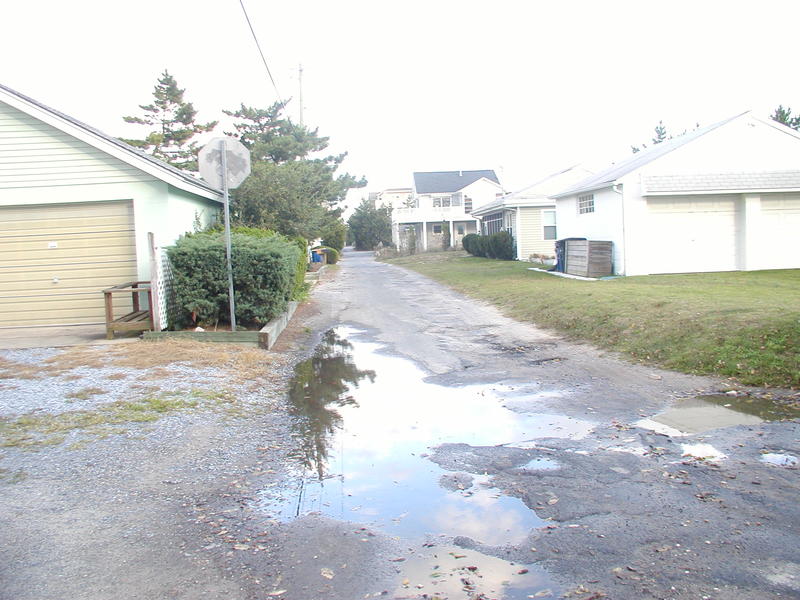
At an estimated cost of more than $3 million, replacing utility lines underneath Lewes’ Bay Avenue and resurfacing the street is called the most expensive project of its type in city history.
Details of how the project would proceed were made public at an Oct. 13 joint meeting of Lewes Mayor and City Council and Board of Public Works.
“You may not agree with the decisions, but you have to agree with the decision-making process,” Lewes Mayor Jim Ford said before the panels delved into project specifics. The process has involved numerous meetings with Bay Avenue residents concerned about disruption the project would cause and the road’s appearance when complete.
Ford said sewer-line installation would probably begin early next year, and take six weeks.
He said depending on how that goes, water line installation could begin in February. Ford said street paving would be bid as a 90-day contract and could start in March. He estimated the project could be complete by the end of June.
Sanitary sewer and water lines
The Board of Public Works is overseeing installation of the street’s sanitary sewer and water lines. Darrin Gordon, BPW general manager, said sewer lines would be installed using cured-in-place technology, which eliminates an open-trench.
He said a fiberglass sock is inserted into the existing pipe, which is then pressurized using water or steam. The fiberglass is cured and forms a lining that is tight fitting, seamless and corrosion-resistant. The cured-in-place method would give the sewer line an added 50-year lifespan, Gordon said.
He said costs of using cured-in-place technology, which takes less time, could make the project less expensive than using open-trench.
Gordon said if the open-trench method were used to install the sewer line, groundwater would be encountered at a shallow depth.
“We would have had to do some well pointing and had other problems that would have been more expensive than cured-in-place, which is estimated to be the most economical way to go,” Gordon said.
He said there are not many contractors who have cured-in-place expertise, and the board has not yet sought bids for the job.
Approximately the first third of the water line, from Savannah Road to the Children’s Beach House, is underneath dunes. Directional drilling under Bay Avenue will be used to install a new pipeline. Gordon said the cost would be comparable to open-trench but there’s significantly less street disruption.
Gordon said each component of the BPW’s projects would be bid separately, as would street and roadway paving, components the city is handling.
He said initially, the city and board thought using a single contractor would cost less because of savings in construction setup and breakdown.
“We believe it would be more economical to allow individual companies that are specialists in those areas to bid on them individually,” Gordon said.
12-foot roadway planned
Ford said the avenue would have a 12-foot wide paved surface with a 16-foot wide passageway. The paved surface would be wide enough for pedestrians and vehicles to use the street.
The wider passageway makes it less cumbersome for large emergency, utility and delivery vehicles to use the street.
Because Bay Avenue has a history of poor drainage, porous pavement would be used throughout the project. There has been controversy about pervious pavement because of maintenance concerns. Some manufacturers of the material recommend vacuuming it as many as 16 times a year.
But City Councilman Ted Becker, who is also chairman of the city Street Committee, said porous pavement has been used in the city for more than a decade without any vacuuming maintenance.
He said it is used on New Hampshire, Odessa, Rhode Island and Nebraska avenues – all intersecting with Bay Avenue.
Becker estimated porous pavement could cost an additional $300,000. He said Delaware Department of Transportation, Department of Natural Resources and Environmental Control, and Sussex County Conservation District have endorsed its use for the project. The city has a pending grant for $100,000 that would help defray costs.
Porous pavement was also used on Iowa Avenue, but water still pools on the street. Ford said engineers have examined the street and determined the pervious surface is percolating properly.
Ford said the city council would likely discuss Bay Avenue speed limits, direction of traffic flow, parking limitations and emergency vehicle access during the panel’s meeting at 7 p.m., Monday, Nov. 21.