












Saltwater intrusion has environmental, financial ramifications
Ruined crops, damage to infrastructure and contamination of fresh drinking water are a few of the issues that come with saltwater intrusion, said Dr. Holly Michael, director of the Delaware Environmental Institute at the University of Delaware. It’s a complex and growing issue, and if there are ways to predict where it will affect things the most, then there could be ways to help manage it, she said.
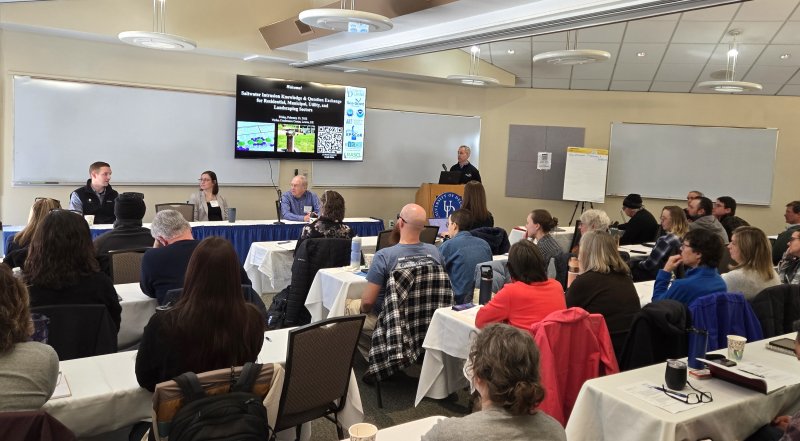
Michael was addressing dozens of industry professionals, academics, local officials and state employees who had gathered Feb. 13 for an event hosted by the University of Delaware and Delaware Sea Grant at the Virden Conference Center in Lewes. Titled Saltwater Intrusion Knowledge & Question Exchange, the event focused on the considerations residential, landscaping, utility and municipal sectors have to take into account when planning for saltwater intrusion. It featured scientific presentations, a state agency and industry panel, and a series of small-group discussions.
Michael, who’s been with the university since 2008, was the event’s keynote speaker. She said coastal groundwater is squeezed between two sources of contamination – saltwater and on-land pollutants – that cause problems with water quality.
Speaking to saltwater intrusion, the saline groundwater begins to move inland and mixes with fresh groundwater, creating a brackish area, said Michael. It doesn’t take much saltwater, just 1%, to ruin fresh water, she said.
Not only does the saltwater turn freshwater brackish, which is when the two mix, it can also push up the freshwater table because the brackish water is heavier, said Michael. Pushing the water table up can be a problem because most vegetation doesn’t want its root system wet all the time, she said.
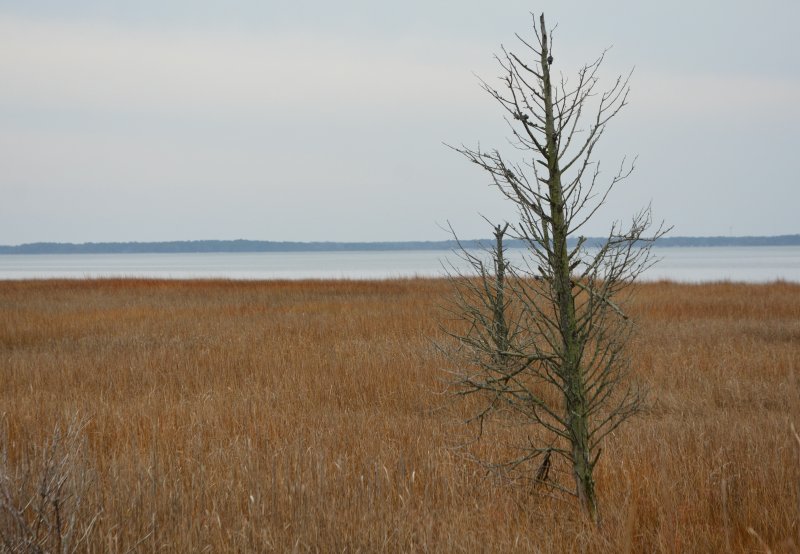
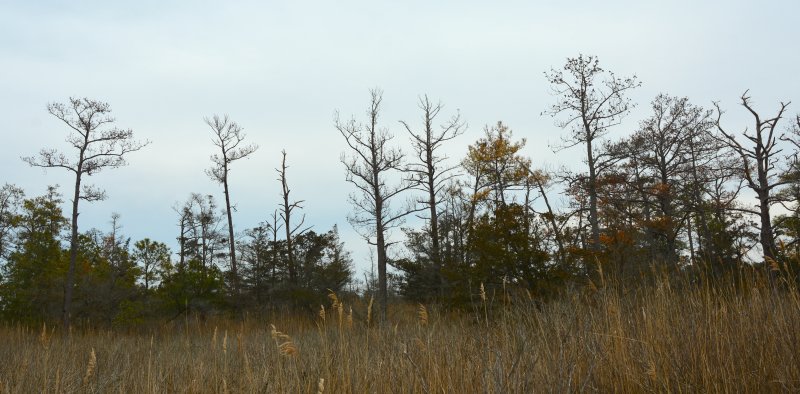
There are two types of saltwater intrusion destroying farm fields and forests near the state’s coastal marshes – fast, which includes storm surges and high tides, and slow, which includes sea-level rise and a higher water table. Neither is ideal, but the vegetation can handle the fast intrusions better than the slow, said Michael. However, at some point, the two issues will cross, she said.
It can have an effect on utilities if it gets in the water supply because the infrastructure isn’t built for saltwater, said Michael. The introduction of saltwater can cause corrosion, she said.
Dr. Leah Palm-Forster, from the university’s College of Agriculture & Natural Resources, was on hand to talk about the economics of saltwater intrusion and the decisions landowners have to make in response. She said there’s not a lot of data at this point, but they’re in the early stages of a multiyear study to gather that data.
There can be conflicts, said Palm-Forster. For example, research suggests sacrificing land in one area might help prevent saltwater intrusion in another area, but the question is, should there be some financial compensation to help everyone as a whole, she said.
Between 2011 and 2017, an estimated 20,000 acres of farmland were converted to marsh across Delmarva, causing between $39 million and $109 million in losses, said Palm-Forster, pointing to another study done in 2023.
The question is, when are things going to be bad enough to change behavior, said Palm-Forster. Prevention and the mitigation of risk need to be done in advance because waiting to respond won’t be effective, she said.
Dr. Ashley Norton, with the state’s Division of Water, said a number of permitting programs overseen by the state are impacted by saltwater intrusion, including large water allocations, wastewater systems, on-site septic systems and well permitting. The effects of rising groundwater are huge, she said.
The state is exploring its role in the regulatory process and continuing to expand monitoring efforts, said Norton. The state is also looking to continue to incorporate saltwater intrusion and salinization impacts into future permits processes, she said.

Chris Flood has been working for the Cape Gazette since early 2014. He currently covers Rehoboth Beach and Henlopen Acres, but has also covered Dewey Beach and the state government. He covers environmental stories, business stories and random stories on subjects he finds interesting, and he also writes a column called Choppin’ Wood that runs every other week. He’s a graduate of the University of Maine and the Landing School of Boat Building & Design.