












Trout opening day is set for March 7
As I write this, I am looking at 12 to 14 inches of snow. And yet the opening of Delaware trout season is just a few days away. I am not sure how the snow will affect the stocking program at the two ponds. I don’t know if Newton Pond near Georgetown and Tidbury Pond near Dover are covered with ice, but I hope not. I recently drove up to Delaware City and was surprised to see the ponds up there were ice covered. They also had considerably more snow than we did at that time, but I am pretty sure we have caught up now.
Opening day on both ponds is Saturday, March 7, and that will be for youths 16 and under beginning at 7 a.m. All anglers may fish beginning Sunday, March 8, one-half hour before sunrise until one-half hour after sunset.
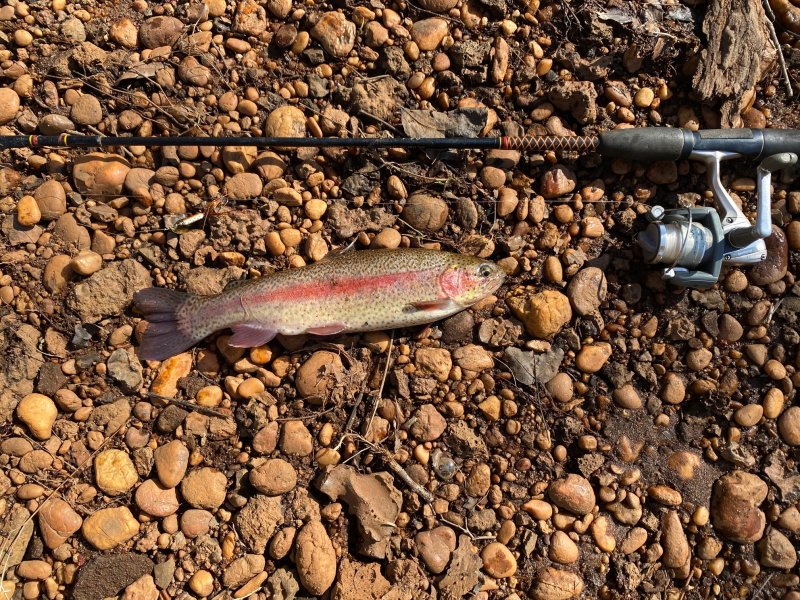
The state has changed its trout supplier this year, and it sounds like it is for the better. The Division of Fish and Wildlife will be stocking 300 pounds of 10- to 12-inch rainbow trout and more than 300 pounds of 14 to 17-inch rainbow trout. Trophy-sized trout weighing 3 pounds or more will be included in the stocking just to add a little excitement.
In order to get in on the fun March 7, you must be 16 or under, have a kid that is that age or grab a neighbor’s kid. Most parents will be glad to have you take one or two of their little darlings, especially if you return them tired out with enough fish for dinner. On top of that, they don’t even need a fishing license.
But you do. You must have a fishing license with a Delaware trout stamp. The money raised from the trout stamp goes into a fund to purchase next year’s trout.
While you can’t fish until 7 a.m., you should plan to arrive at either pond well before that time. Opening day will be crowded. Get there very early, pick out a good spot and make sure the kids have plenty of room. Kids will often go back to sleep. Some of the adults have been known to drift off as well.
Once the fishing begins, we can hope it will be a little hectic. With a little luck, the fish will be hungry and the kids will be catching one after the other. As the adult, you will be busy taking trout off the hooks and rebaiting. I find a cooler is much better than a stringer for keeping fish fresh and easier to put the fish away.
I certainly look forward to better weather for opening day. I do recall fishing in the snow at Wilson Run in Brandywine Springs State Park on opening day with my two sons, Ric and Roger, and that was in April. Ah, Delaware weather, you got to love it.
One theory shot to heck
I, along with at least several others who are much smarter than me, were somewhat excited about the prospects for a good young of the year striped bass report in 2026 due to the cold winter and plenty of snow cover. One of the reasons for our excitement was the cold and snow cover was thought to produce plenty of plankton for the just hatched striped bass to eat.
Now a study by a team of Maryland Department of Natural Resources personal led by DNR biologist Jim Uphoff has determined there has been plenty of zooplankton for the young striped bass to eat right after they hatch. They believe the problem occurs before and right after the fish hatch. The water temperature, water flow and the general effects of climate change all conspire to make it difficult for the eggs and tiny larva to survive.
The year 2026 is beginning with some very cold water temperatures in the Chesapeake Bay and its tributaries. How this will play out come striped bass spawning season remains to be seen.
One theory has been that the water in the spawning river warms up too fast, and the eggs do not have time to develop properly or the larva are forced to grow up too fast.
I recall back in the 1970s when Bob Pond, who invented Atom lures, studied striped bass larva in the various spawning rivers. He was a very intelligent man, but he didn’t have a degree in science, just a feeling that the problem with stripers was a problem with the larva.
At this time, I was serving on the State-Federal Striped Bass Management Board and learning that there were as many theories about why stripers were in trouble as there were members of the board.
Then the fish recovered all by themselves.
-

Eric Burnley is a Delaware native who has fished and hunted the state from an early age. Since 1978 he has written countless articles about hunting and fishing in Delaware and elsewhere along the Atlantic Coast. He has been the regional editor for several publications and was the founding editor of the Mid-Atlantic Fisherman magazine. Eric is the author of three books: Surf Fishing the Atlantic Coast, The Ultimate Guide to Striped Bass Fishing and Fishing Saltwater Baits. He and his wife Barbara live near Milton, Delaware. Eric can be reached at Eburnle@aol.com.