



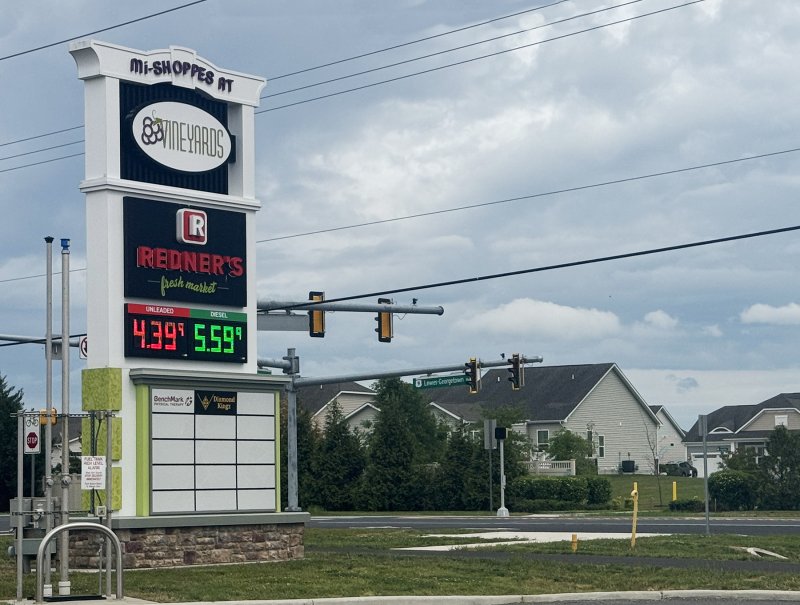
 While gas prices remain above $4 per gallon, Delaware motor fuel tax stays locked at 23 cents per gallon, the lowest among surrounding states. NICK ROTH PHOTO
While gas prices remain above $4 per gallon, Delaware motor fuel tax stays locked at 23 cents per gallon, the lowest among surrounding states. NICK ROTH PHOTO
While gas prices remain above $4 per gallon, Delaware motor fuel tax stays locked at 23 cents per gallon, the lowest among surrounding states. NICK ROTH PHOTO
As gas prices in Delaware continue to hover around $4 per gallon, the state’s motor fuel tax remains steady at 23 cents per gallon.
The tax hasn’t been changed since 1995, but revenue has been on a steady decline over the last several years, said Delaware Department of Transportation Secretary Shanté Hastings during a recent presentation to the Bond Bill Committee as part of its annual review of capital improvements ahead of a new fiscal year.
The revenue from the motor fuel tax has dropped from $138.7 million in Fiscal Year 2020 to $129.7 million in FY 2026. DelDOT anticipates the tax revenue to drop to $113.5 million by FY 2032.
“This is result of the increased number of electric and hybrid vehicles paired with the increased fuel efficiency of vehicles in general,” said Charles “C.R.” McLeod, DelDOT’s director of community relations. “Our motor fuel tax consumption decreased from FY 24 to FY 25 and is projected to continue for FY 26 and out.”
The University of Delaware published a report in August 2024 regarding the impact of electric vehicles and improved fuel efficiency. The report presented several options to make up the revenue shortfall, including an alternative fuel vehicle fee for EV owners, highway use fee, mileage-based user fee, public-charging fee for EV drivers, a retail delivery fee for retail orders delivered by vehicles that use public infrastructure, an increase to the motor fuel tax, increased tolls and increased DMV fees.
Delaware has one of the lowest gas taxes in the region, as Pennsylvania’s is 58.7 cents per gallon, Maryland’s is 46.2 cents, New Jersey’s is 45 cents and Virginia’s is 41.6 cents. There are no plans to increase the gas tax at this time.
In August 2025, DelDOT implemented increases at tolls on I-95 and Route 1. Overall, toll revenue has been steadily increasing in recent years, rising from $170.4 million in FY 2020 to $226 million in FY 2026. The revenue jumped up from $182.9 million in FY 2025 due, in part, because of the new, higher toll rates. DelDOT says it has more than 80 million toll transactions annually.
For Fiscal Year 2027, DelDOT projects $1.12 billion in revenue. The agency receives $350 million from the federal government, $299.9 million from the Division of Motor Vehicles, $127.1 million from the motor fuel tax, $166.7 million from I-95 tolls and $98.4 million from Route 1 tolls. The remaining $78.5 million comes from a variety of sources, including $30 million from the state’s General Fund.
On the expenditure side of the ledger, DelDOT spends 44% of its money, $496 million, on operating expenses for the agency and the Delaware Transit Corporation. The capital budget accounts for 56%, or $624.5 million.
Hastings provided an update on federal funding. In April 2025, several projects totaling $11.5 million were up in the air due to federal funding cuts. As of April 29, DelDOT has received the green light on six projects that were in limbo. Among them are improvements to the Rehoboth Park & Ride. Projects cut include the Low Carbon Transportation Materials Grant Program.
During the presentation, DelDOT listed its assets. It maintains 89% of Delaware’s roads, as well as 1,803 bridges, more than 1,200 traffic signals, nearly 6,000 street lights, 400-plus miles of guardrails, 238 miles of sidewalk, 37 miles of bike paths and 1,693 miles of storm drains. DelDOT also has 1,434 fleet vehicles and 534 DART buses.
DelDOT also tracks other statistics throughout the year. It has 1.15 million DMV transactions annually, operates 5.3 million fixed-route trips, 866,000 paratransit trips, 654,000 SEPTA trips and estimates vehicles travel 9.6 billion miles on the state’s roads.
As part of its federal discretionary grants for FY 2027, DelDOT plans to purchase 22 battery-electric hybrid buses and rehab 51 fixed-route buses. Additionally, DelDOT plans to replace eight fixed-route buses, 74 paratransit buses and six DART Connect buses.
While gas prices remain above $4 per gallon, Delaware motor fuel tax stays locked at 23 cents per gallon, the lowest among surrounding states. NICK ROTH PHOTOEvent Details :
Premier Listing
Sponsored Content



















Premier Listing
Sponsored Content
Real Estate Marketplace
Sponsored Content


In the Market
Sponsored Content